

Eric Gofreed
Well-Known Member
My contributions for today's Winged Wednesday are bugs recently photographed in my yard after dusk. My setup consists of two 60-watt lights, a light panel, an on-camera flash with a diffuser, and a 90 mm macro lens. The bright lights attract insects from a long distance. The insects land everywhere but I photograph the ones that land on the light panel because I want to concentrate solely on the colors and intricate anatomy of the bugs.

This is a Checkered Melon Beetle (Paranapiacaba tricincta). He is about .25 inches, the size of a ladybug.
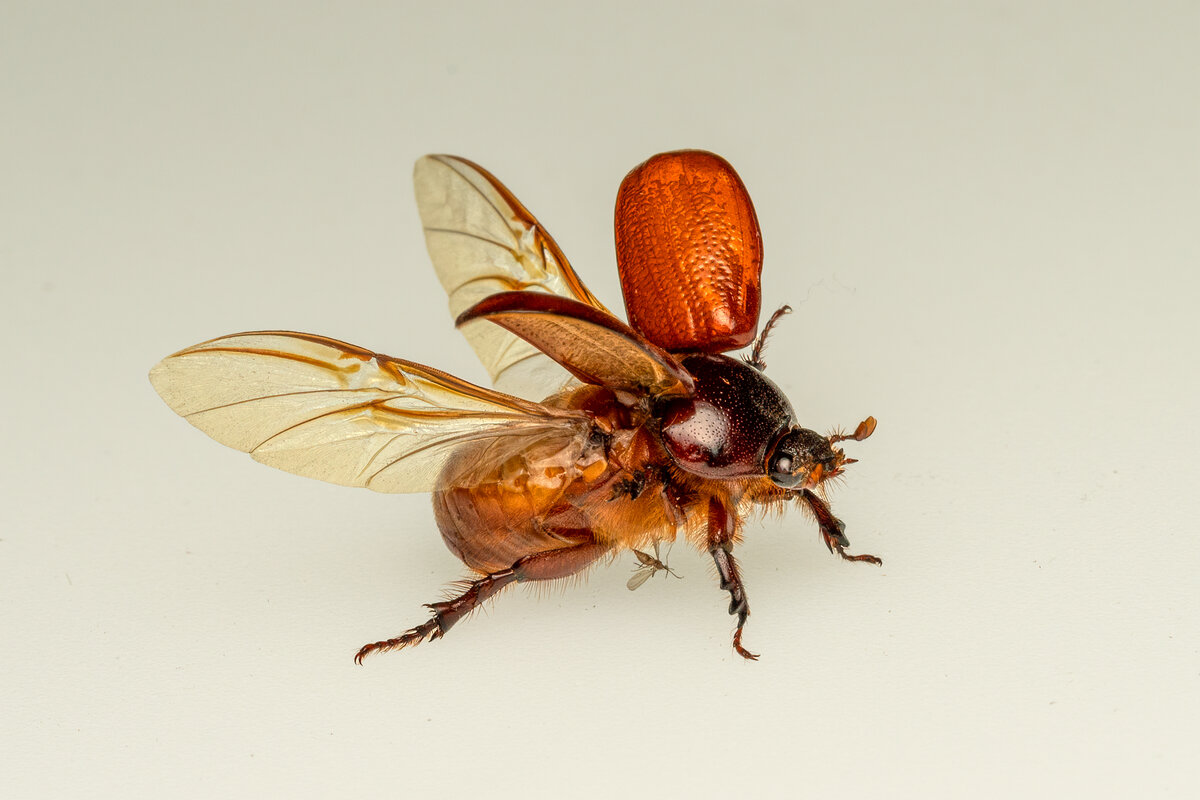
This is a Carrot Beetle (Tomarus gibbosus). He's a half-inch long and dines on flowers above and below ground. In numbers, these guys can
ruin a garden in a hurry. I am clueless about the tiny insect on the ventrum of the beetle. The on-camera flash is set to 1/8 to 1/16 power
stopping motion to @ 1/3000 to 1/6000 second
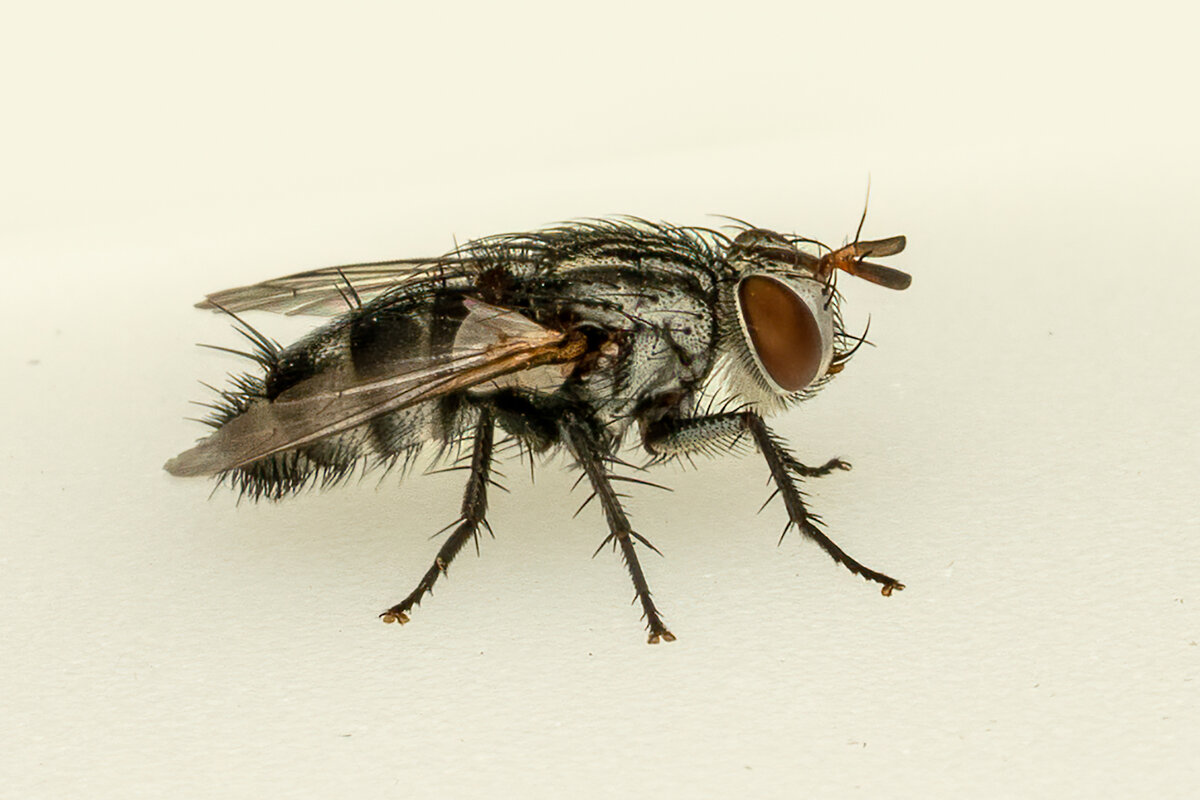
This is the Common Flesh Fly whose larvae (maggots) typically feed on decaying meat. (Genus Sarcophaga).

This is the Three-spined Grass Bug (Stenodema tripinosum). He is the smallest and most numerous of the bugs attracted to my set-up.
Notice the long needle-like proboscis. It is a piercing and sucking arrangement to siphon nutrients from the plant.
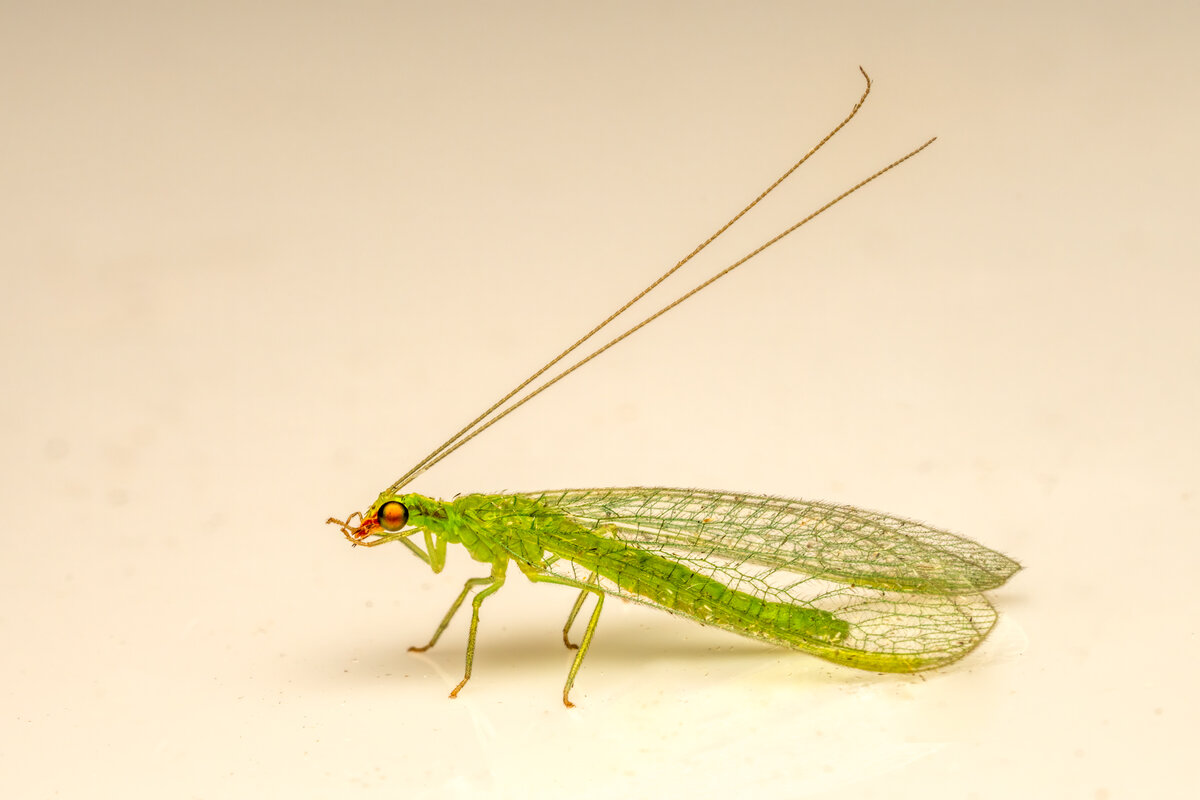
Green lacewings are a common and beneficial insect for your garden, They eat many species of soft-bodied insects that harm your plants (aphids, treehoppers,
caterpillars, mites, and more)
This is a Checkered Melon Beetle (Paranapiacaba tricincta). He is about .25 inches, the size of a ladybug.
This is a Carrot Beetle (Tomarus gibbosus). He's a half-inch long and dines on flowers above and below ground. In numbers, these guys can
ruin a garden in a hurry. I am clueless about the tiny insect on the ventrum of the beetle. The on-camera flash is set to 1/8 to 1/16 power
stopping motion to @ 1/3000 to 1/6000 second
This is the Common Flesh Fly whose larvae (maggots) typically feed on decaying meat. (Genus Sarcophaga).
This is the Three-spined Grass Bug (Stenodema tripinosum). He is the smallest and most numerous of the bugs attracted to my set-up.
Notice the long needle-like proboscis. It is a piercing and sucking arrangement to siphon nutrients from the plant.
Green lacewings are a common and beneficial insect for your garden, They eat many species of soft-bodied insects that harm your plants (aphids, treehoppers,
caterpillars, mites, and more)


