

Eric Gofreed
Well-Known Member
Due to COVID-19, I have become a recluse. So I'll kick off today's Winged Wednesday with some photos from Ecuador last September. Te first two photos are the male and female Ecuadorian Hillstar. It is native to the Andes of Ecuador and small area of southern Columbia. Its main habitat is high-altitude mountain grasslands. We found these two at @17,000 feet on Volcano Antisana. Regrettably, I couldn't get close to the male.

The male Ecuadorian Hillstar

The female tends to the nest and feeding of the chicks by herself. It was cold and windy so the females were hunkered down on the nest.

This the male Tyrian metaltail... a tiny hummingbird.

This is the female Tyrian metaltail. The trumpet flower is a pollinated by the sword-billed hummingbird as he enters the flower from below. The small-billed metaltail is feeding from a hole at the base of the flower made by a "Flowerpiercer "
 .
.
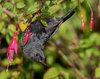
This is a glossy flowerpiercer. His bill easily pierces the base of flowers to access the nectar; bypassing pollination process. These holes allow small-billed hummers to feed on the larger flowers.

This is the Sword-billed Hummingbird. The extremely long bill is designed to feed on the nectar from trumpeter flowers. Of course, the trumpeter flower gets pollinated as the sword-bill feeds on the nectar.
The male Ecuadorian Hillstar
The female tends to the nest and feeding of the chicks by herself. It was cold and windy so the females were hunkered down on the nest.
This the male Tyrian metaltail... a tiny hummingbird.
This is the female Tyrian metaltail. The trumpet flower is a pollinated by the sword-billed hummingbird as he enters the flower from below. The small-billed metaltail is feeding from a hole at the base of the flower made by a "Flowerpiercer "
This is a glossy flowerpiercer. His bill easily pierces the base of flowers to access the nectar; bypassing pollination process. These holes allow small-billed hummers to feed on the larger flowers.
This is the Sword-billed Hummingbird. The extremely long bill is designed to feed on the nectar from trumpeter flowers. Of course, the trumpeter flower gets pollinated as the sword-bill feeds on the nectar.
Attachments
-
 216.9 KB Views: 165


