

Trent Watts
Well-Known Member
A couple of Focal World participants asked if I would share my Macro techniques. By no means am I an expert on this subject so would welcome other macro photographers to weigh in with other gear and suggestions.
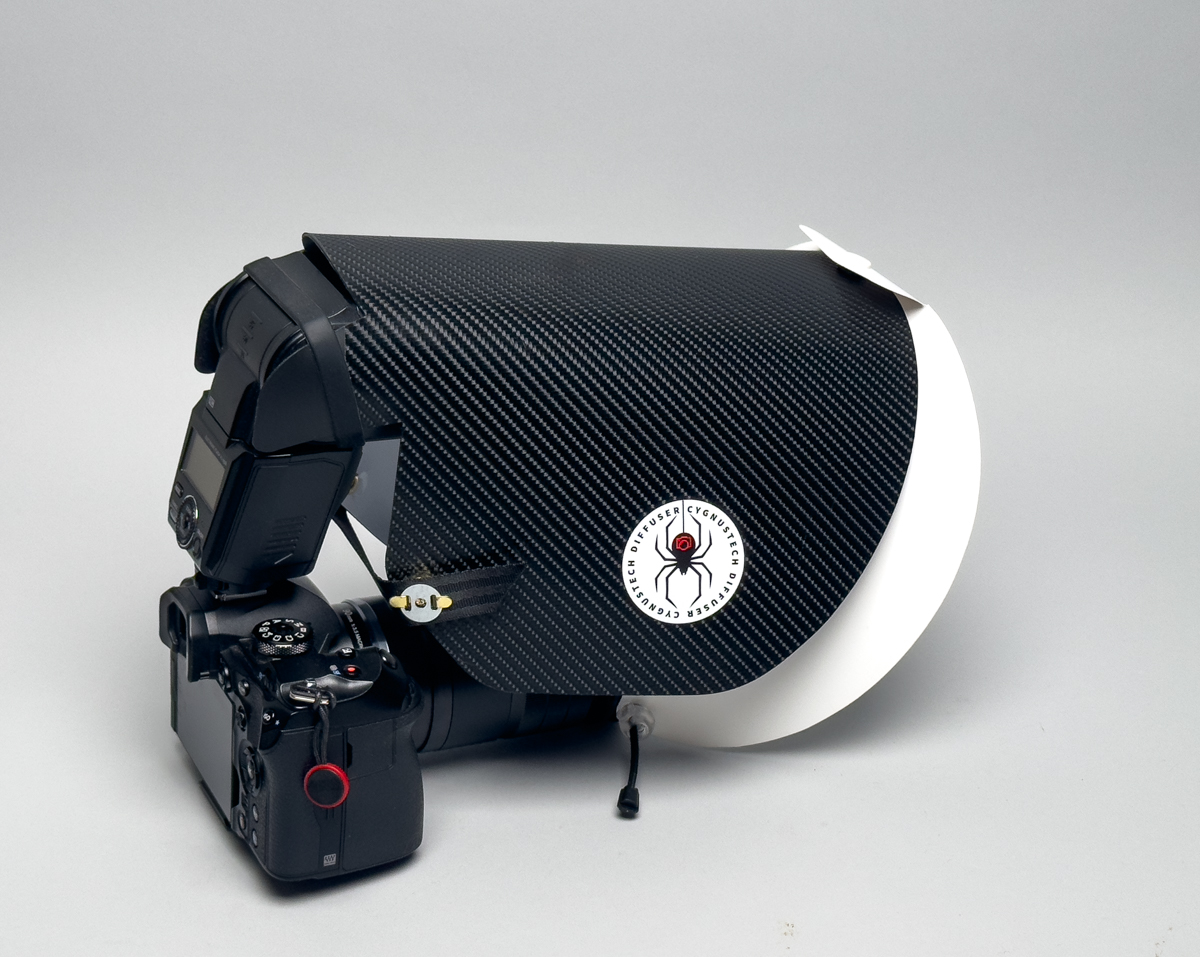
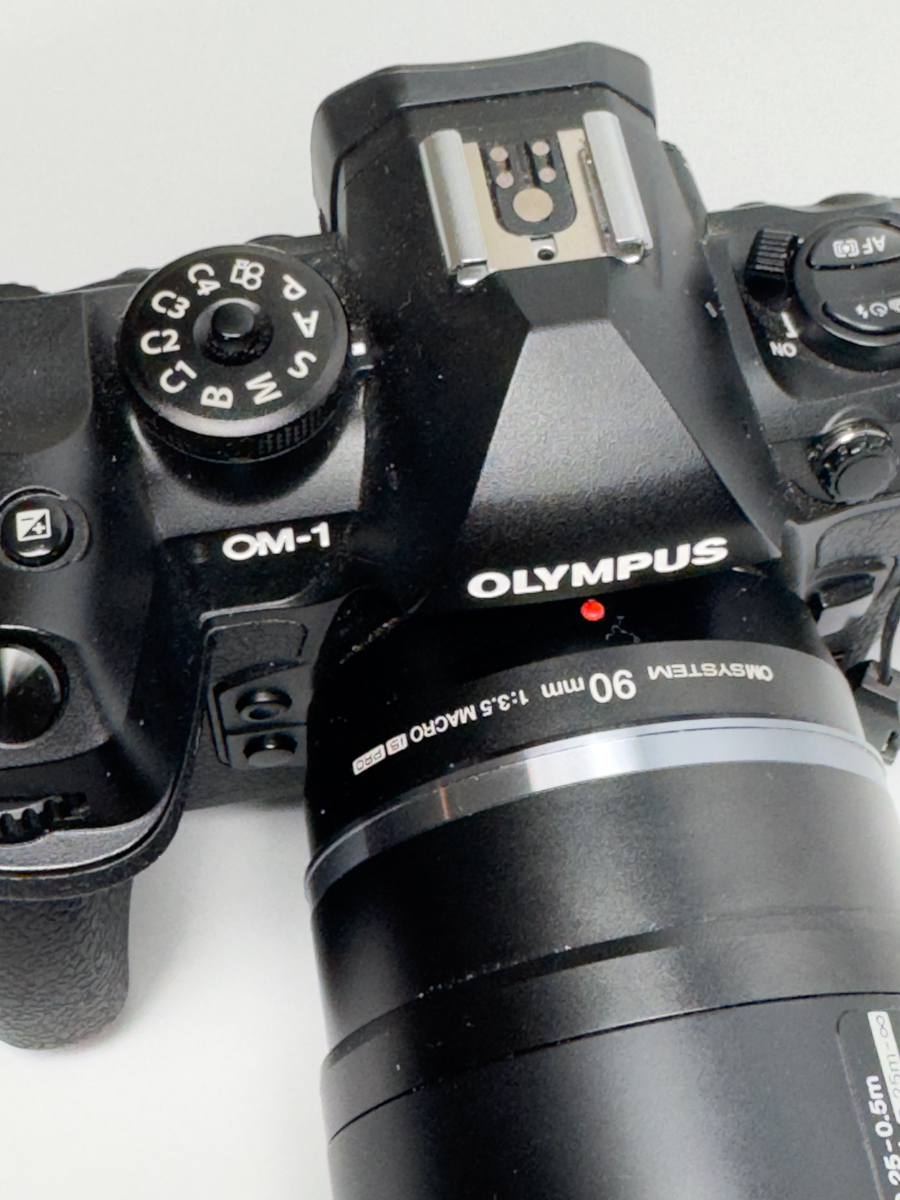
This is the equipment and technique that I use for most of my macro work. It works for me and is obviously only one of many setups that can do excellent macro work. The OM-1 and the 90 mm. macro from OM Systems is a micro 4-3rds. system. The 90 mm. can go up to 2X and focuses to 0.224m (8.8 in.) from the sensor or about 2" from the front of the lens. It is compatible with the 1.4x and 2.0x converters but that creates such large magnification I don't find it useful in the field with moving insects and wind. OM Systems also has one of the best image stabilization systems both in camera and in the lens so much of my work is hand held. This gives much more flexibility in chasing moving subjects.
The real game changer for me was to add a flash and a diffuser to get stop motion, high f-stop and low ISO. I chose the Cygnustech diffuser made by Brendan James in Australia. It folds flat for travel, and assembles easily. You tell Brendan what camera and lens you use and he makes a diffuser for that setup.
Along with all the tech I still need to be very patient waiting for the right composition, finding a cooperative subject, and being prepared for a low hit rate on useable images.
Post processing includes Lightroom and Topas Sharpen AI.
Camera, lens, flash and diffuser
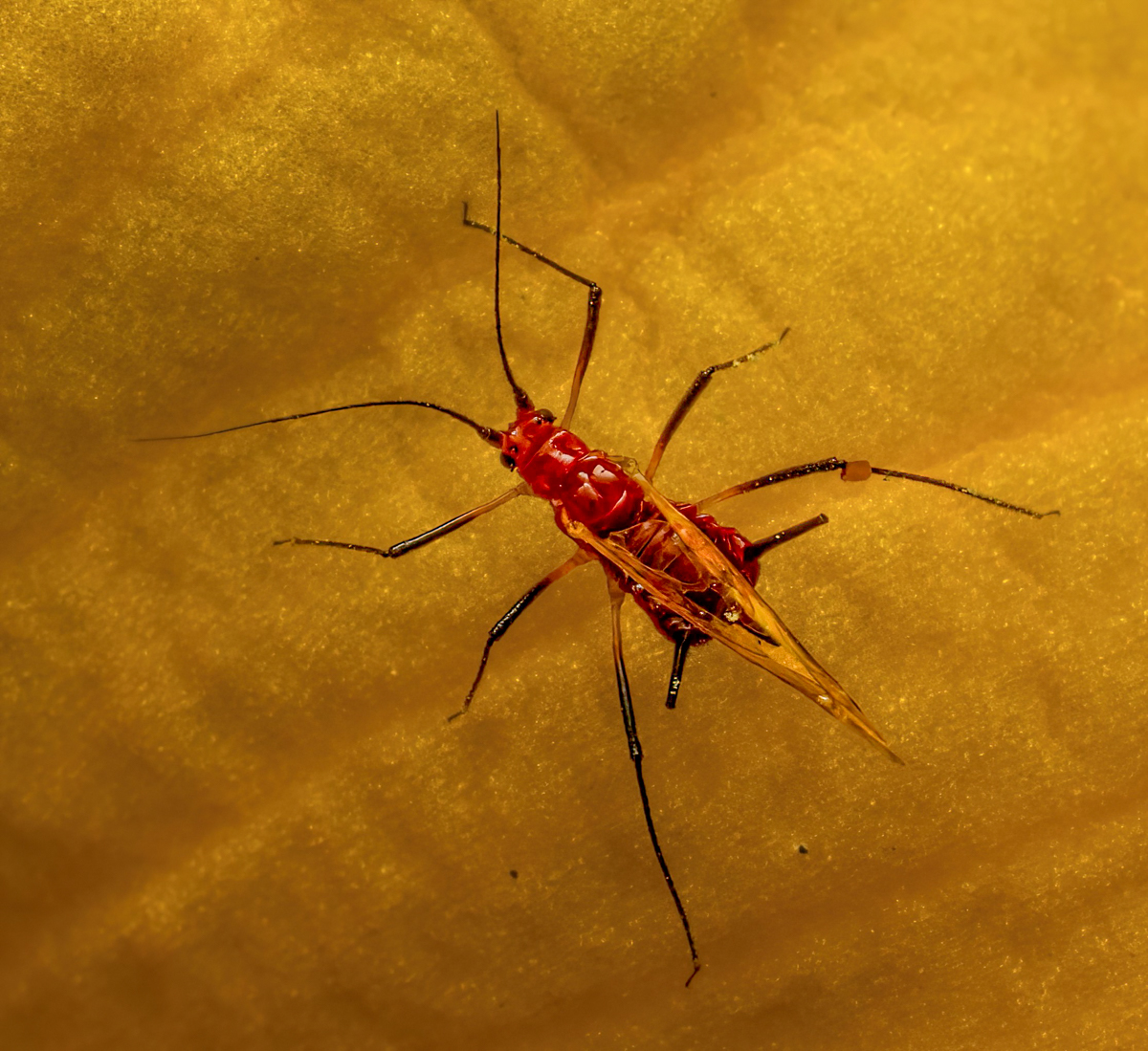
An example image. This bug (an Aphid according to BugGuide) was cooperatively sitting on a Daylilly flower and allowed me to approach quite close. I will take images constantly as I move closer to the bug as I never know how close I can get before it flies or crawls away. This is unprocessed from the camera.
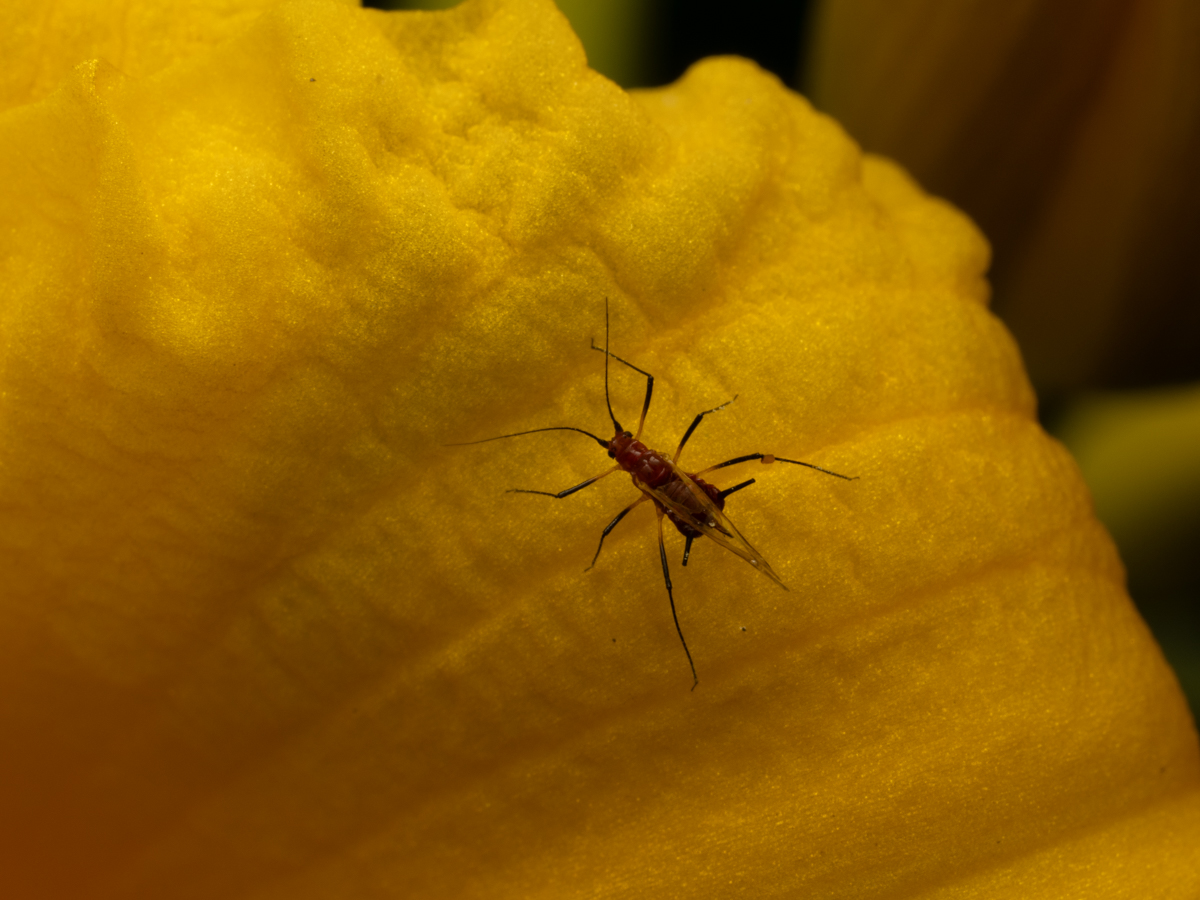
After cropping and Topas Sharpen Ai and selective changes with LR.
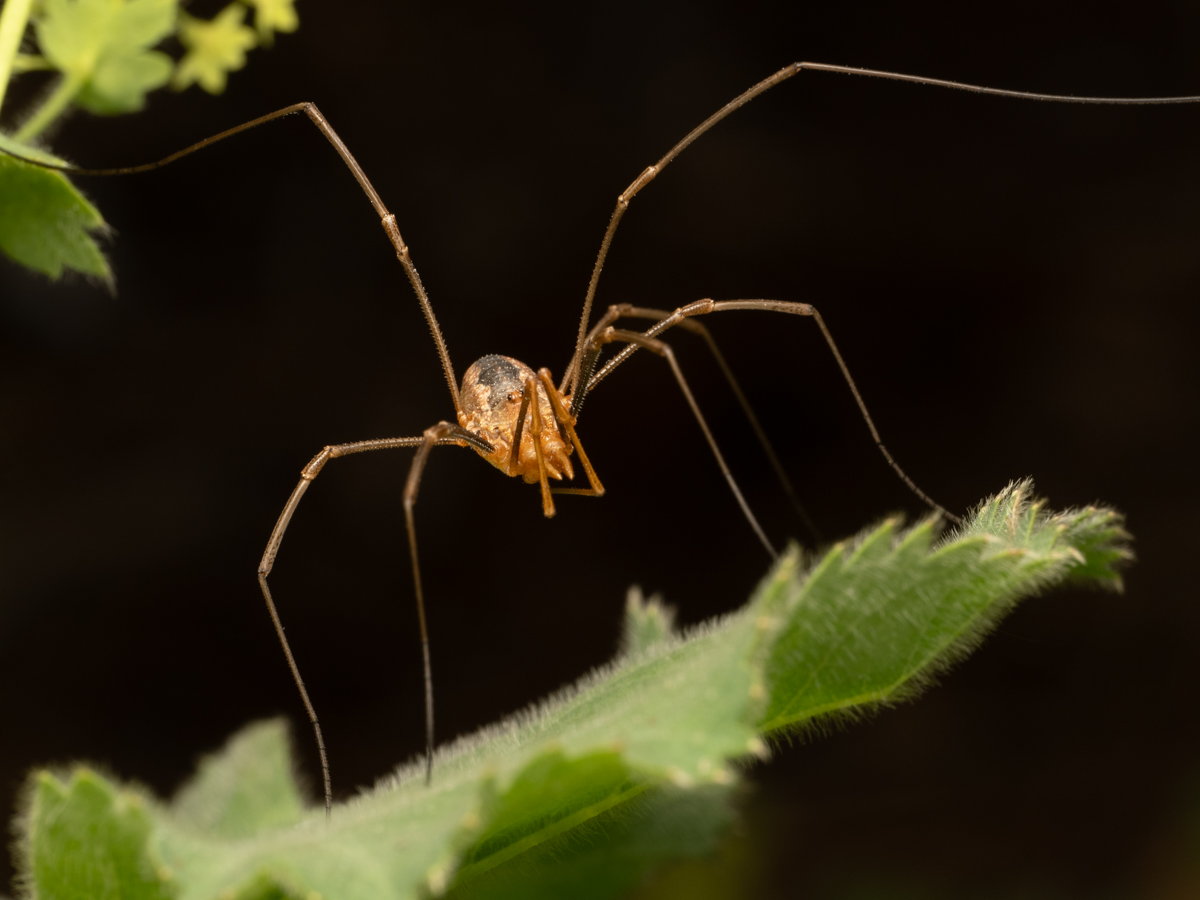
Another example with a Harvestman spider. I like the black background that is possible with f18 and the flash.
This is out of the camera.
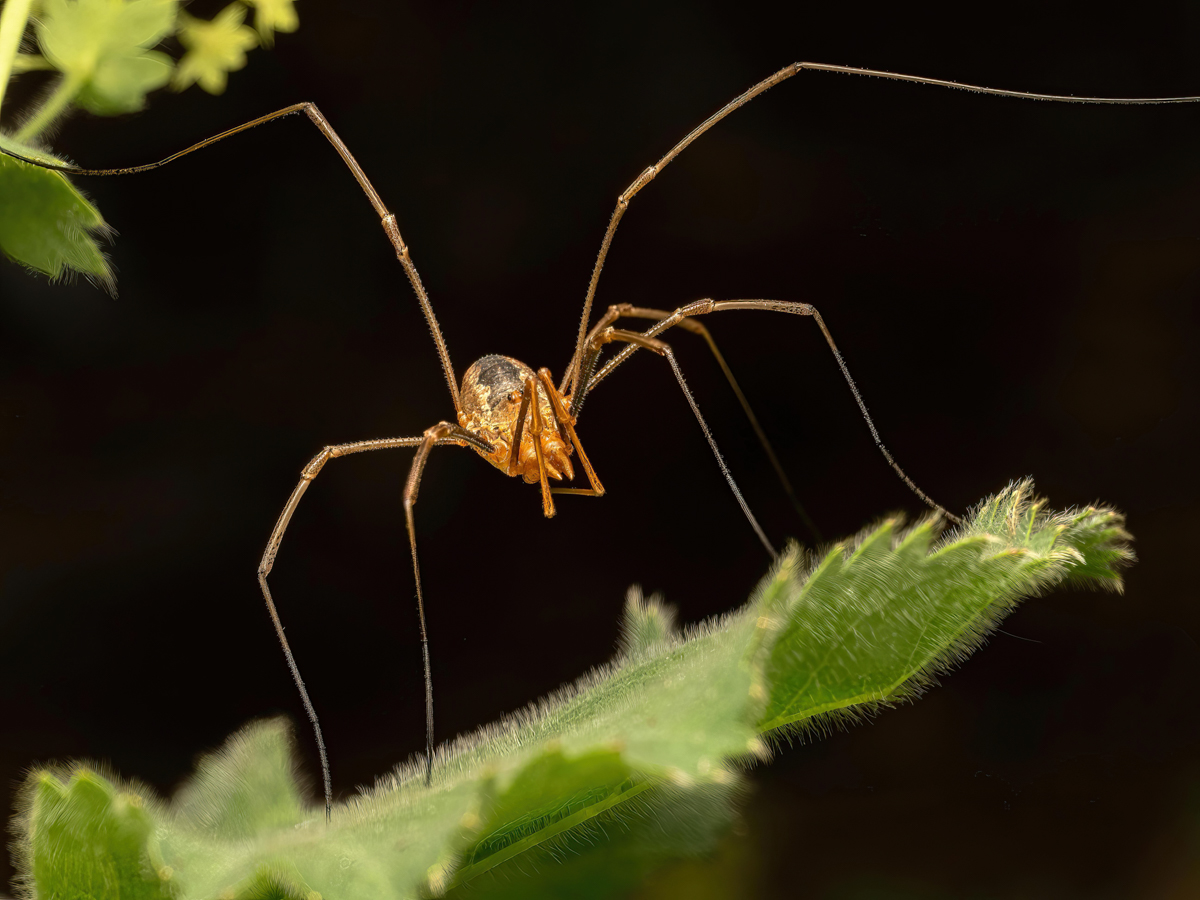
This image is after LR and Topas Sharpen AI. Not a lot of difference but some improvement in details.
This is the equipment and technique that I use for most of my macro work. It works for me and is obviously only one of many setups that can do excellent macro work. The OM-1 and the 90 mm. macro from OM Systems is a micro 4-3rds. system. The 90 mm. can go up to 2X and focuses to 0.224m (8.8 in.) from the sensor or about 2" from the front of the lens. It is compatible with the 1.4x and 2.0x converters but that creates such large magnification I don't find it useful in the field with moving insects and wind. OM Systems also has one of the best image stabilization systems both in camera and in the lens so much of my work is hand held. This gives much more flexibility in chasing moving subjects.
The real game changer for me was to add a flash and a diffuser to get stop motion, high f-stop and low ISO. I chose the Cygnustech diffuser made by Brendan James in Australia. It folds flat for travel, and assembles easily. You tell Brendan what camera and lens you use and he makes a diffuser for that setup.
Along with all the tech I still need to be very patient waiting for the right composition, finding a cooperative subject, and being prepared for a low hit rate on useable images.
Post processing includes Lightroom and Topas Sharpen AI.
Camera, lens, flash and diffuser
An example image. This bug (an Aphid according to BugGuide) was cooperatively sitting on a Daylilly flower and allowed me to approach quite close. I will take images constantly as I move closer to the bug as I never know how close I can get before it flies or crawls away. This is unprocessed from the camera.
After cropping and Topas Sharpen Ai and selective changes with LR.
Another example with a Harvestman spider. I like the black background that is possible with f18 and the flash.
This is out of the camera.
This image is after LR and Topas Sharpen AI. Not a lot of difference but some improvement in details.


