

Comet Hunter
Supporting Member
The Temple of Edfu, located in Upper Egypt, is the best-preserved ancient Egyptian temple, dedicated to the falcon god Horus of Behdet. Built between 237 BCE and 57 BCE during the Ptolemaic Kingdom, it took roughly 180 years to complete. It features a 37-meter-high pylon, a large courtyard, a hypostyle hall, and a sanctuary where the "Sacred Drama" of Horus and Seth is inscribed on the walls.
PS, (upper and lower) Eygpt is just backwards to the areas being north or south. To me a minuite to get that straight in my head as it has to do the the areas elevation verses n/s location.
Key Facts About Edfu Temple:
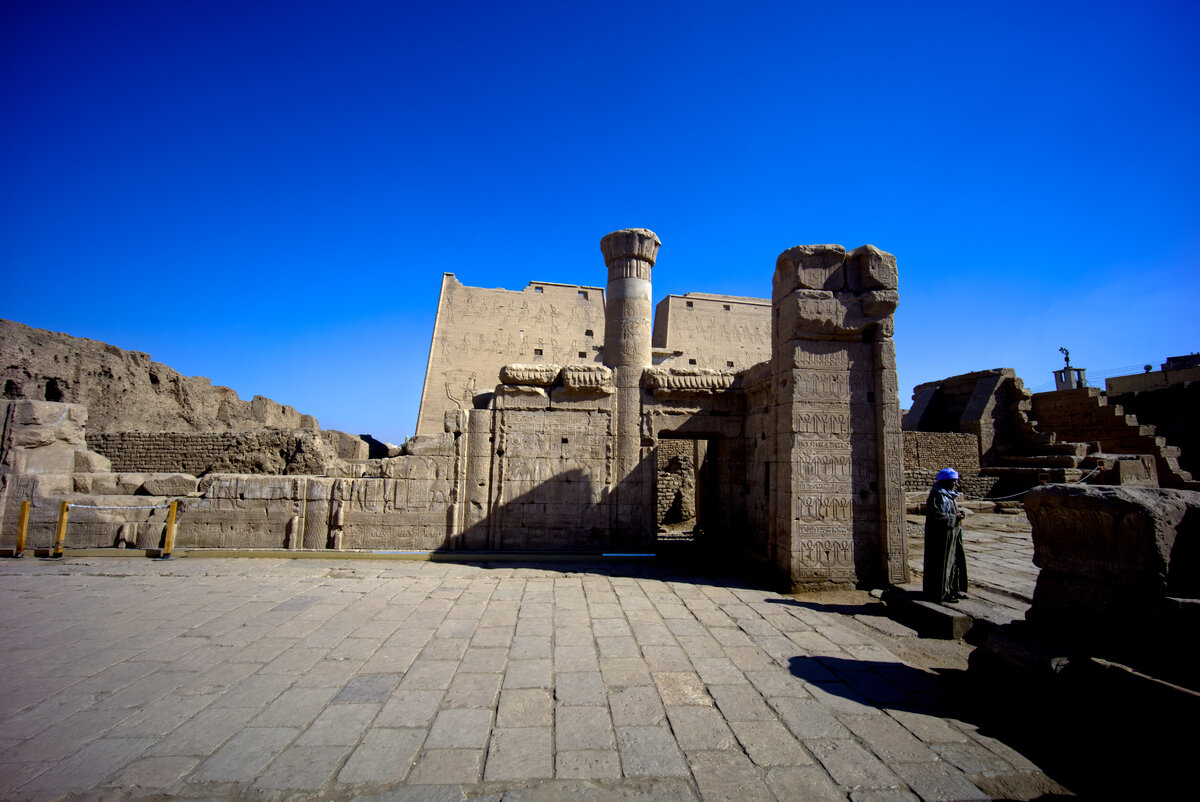
# 1 No CPR was used, the sky was soooo blue it almost looks fake
Coming up to the entrance Pylon
# 2.
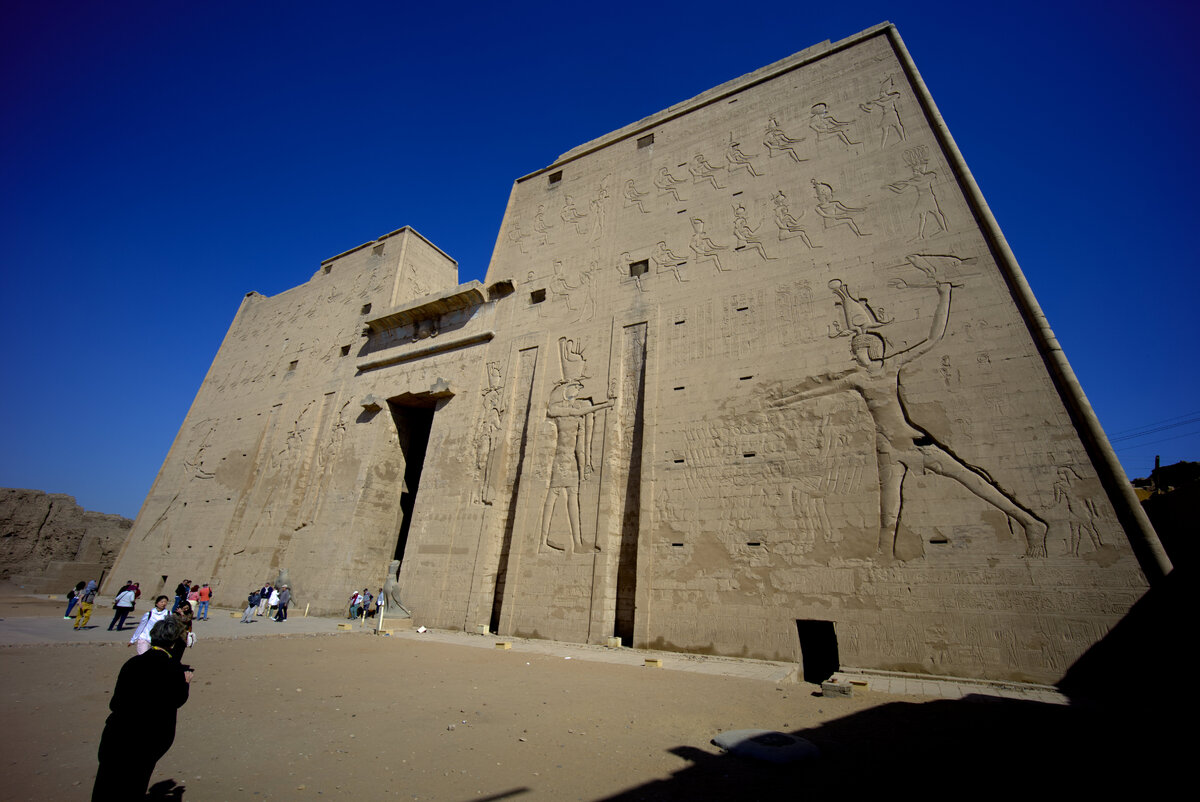
The Pylon: The massive, 37-meter-high entrance pylon is decorated with scenes of Ptolemy XII smiting enemies in front of Horus.
# 3
Inscriptions & Treasures: The walls contain invaluable, highly legible, and detailed texts detailing its construction, as well as myths of the "Sacred Drama" or battle between Horus and Set.
Take note to the lower right-middle and see the vertical gouges across the structure, especially on the corner stone. these were made by visiting pilgrims who gouged these grooves to remove a portion of the Temple to be able to bring home which was thought to bring good luck. The gouges can bee seen all over Eygpt.
# 4
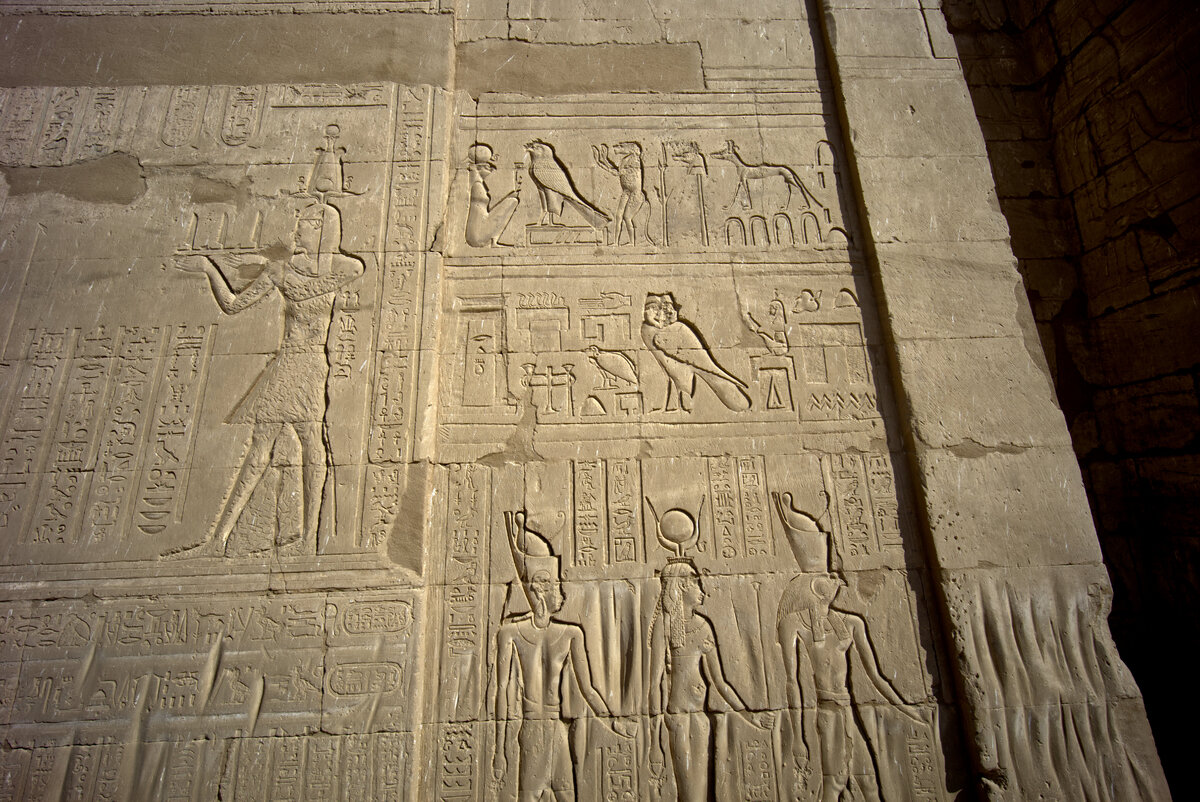
The temple is dedicated to the falcon-headed god Horus of Behdet, though it also honors Hathor and their son, Harsomtus.
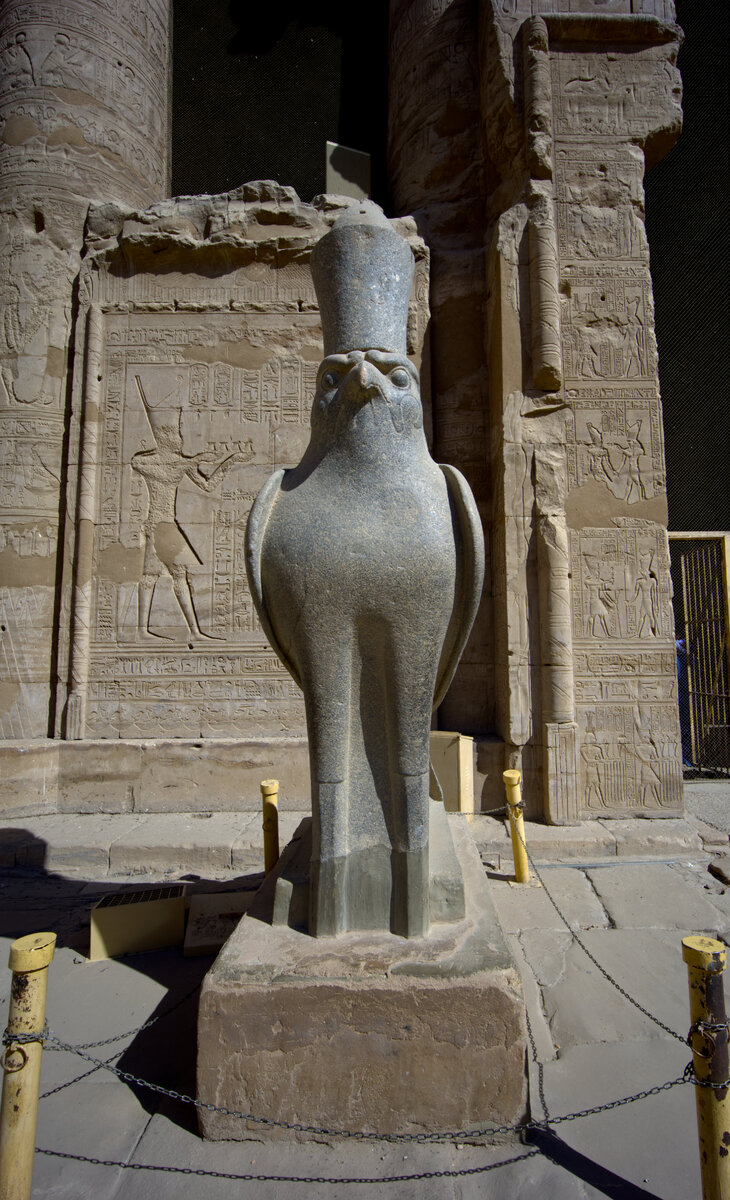
# 5 Massive entrance to the Temple
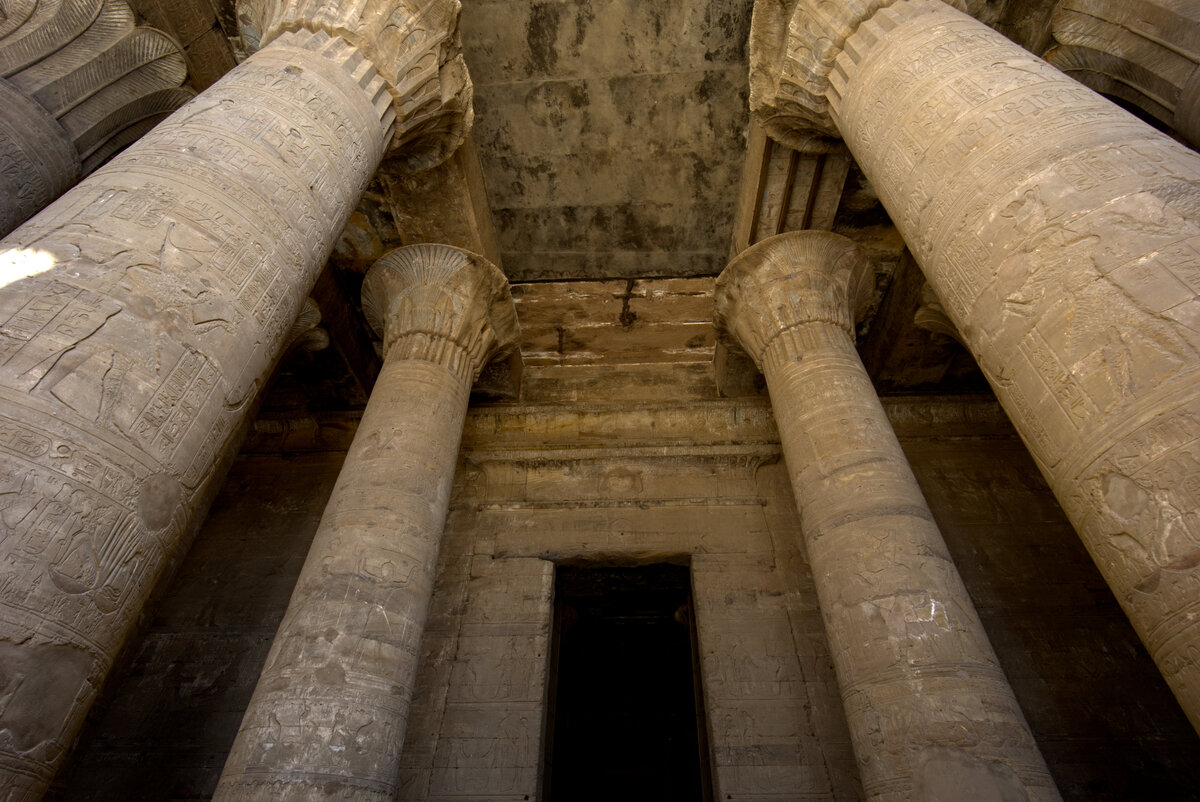
# 6
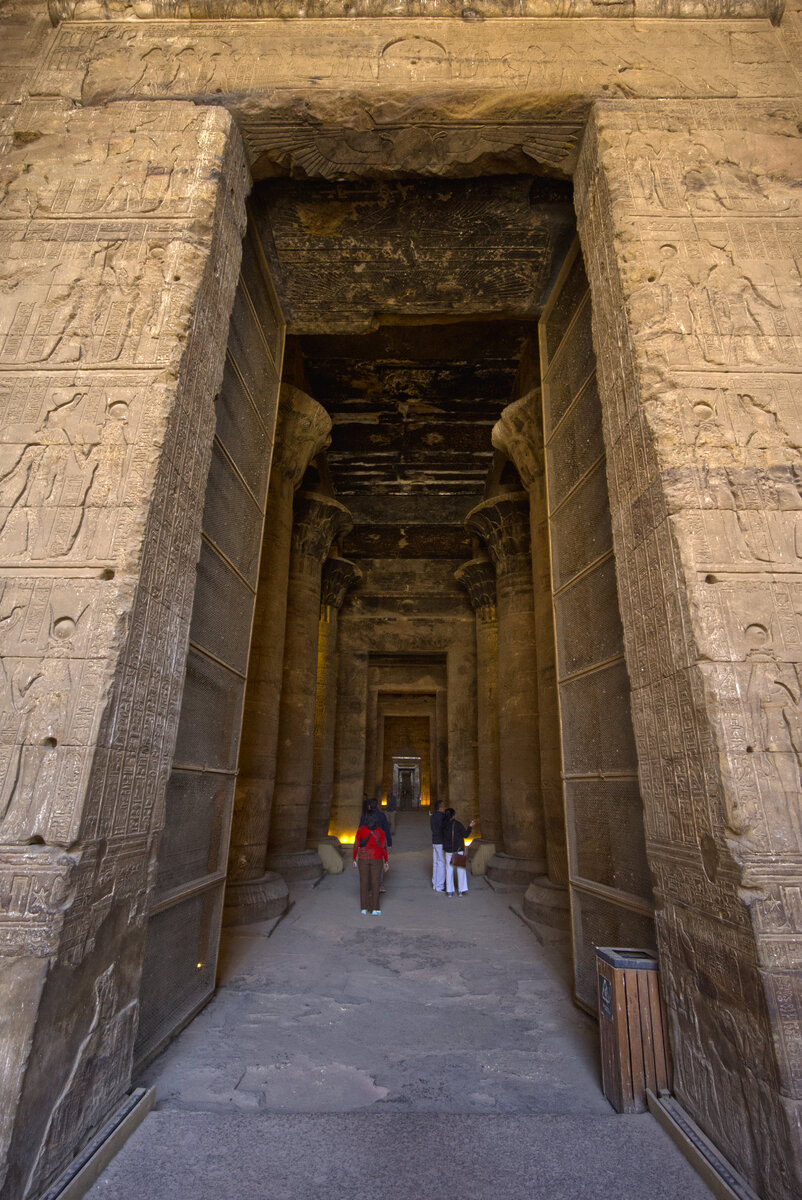
Another view of the entrance. Note the "blackend ceilings"
Christians lived in and utilized the Edfu Temple primarily from the late 4th celtury onwards, following the Roman Empire's ban on non-Christian worship in 391 AD. During this period, they occupied the structure building campfires inside blacking the ceilings.
They also establishing it as a site of worship while defacing pagan imagery and carving crosses into the structure
If you look close at all the pictures, you can see the damage to many of the figures x-ing them out. Saw this here and across Eygpt.
# 7
Another passageway kings (and in this case) queens have passed
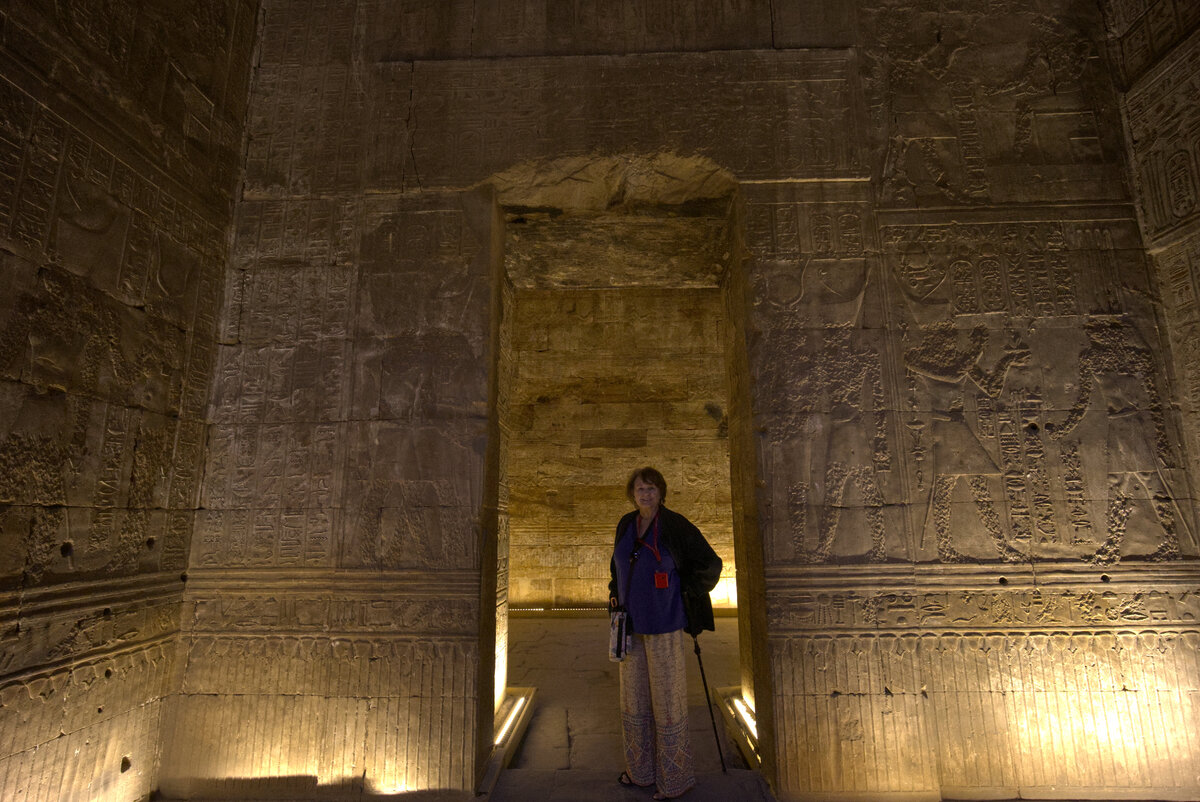
# 8
Great example of the defacing of the imagies
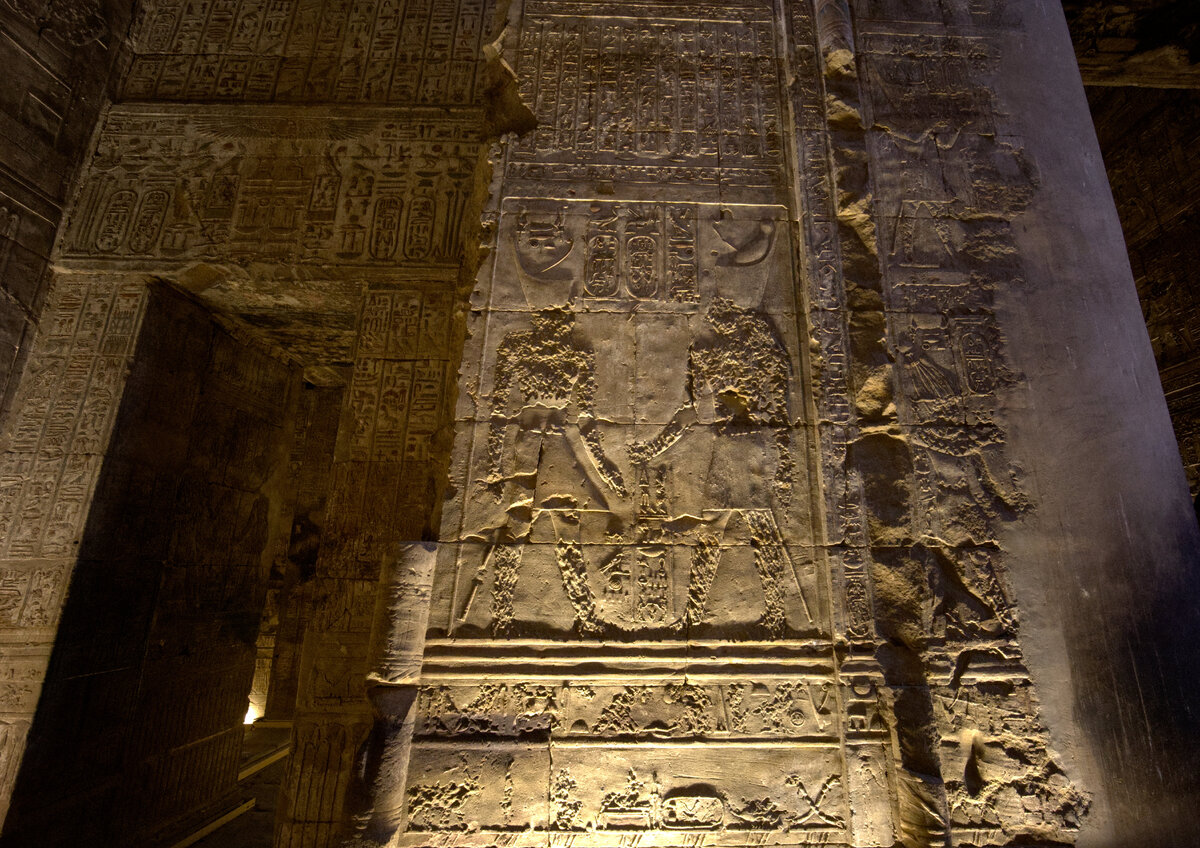
# 9
Carvings left unharmed. Someone is clearly paying or offereing some something
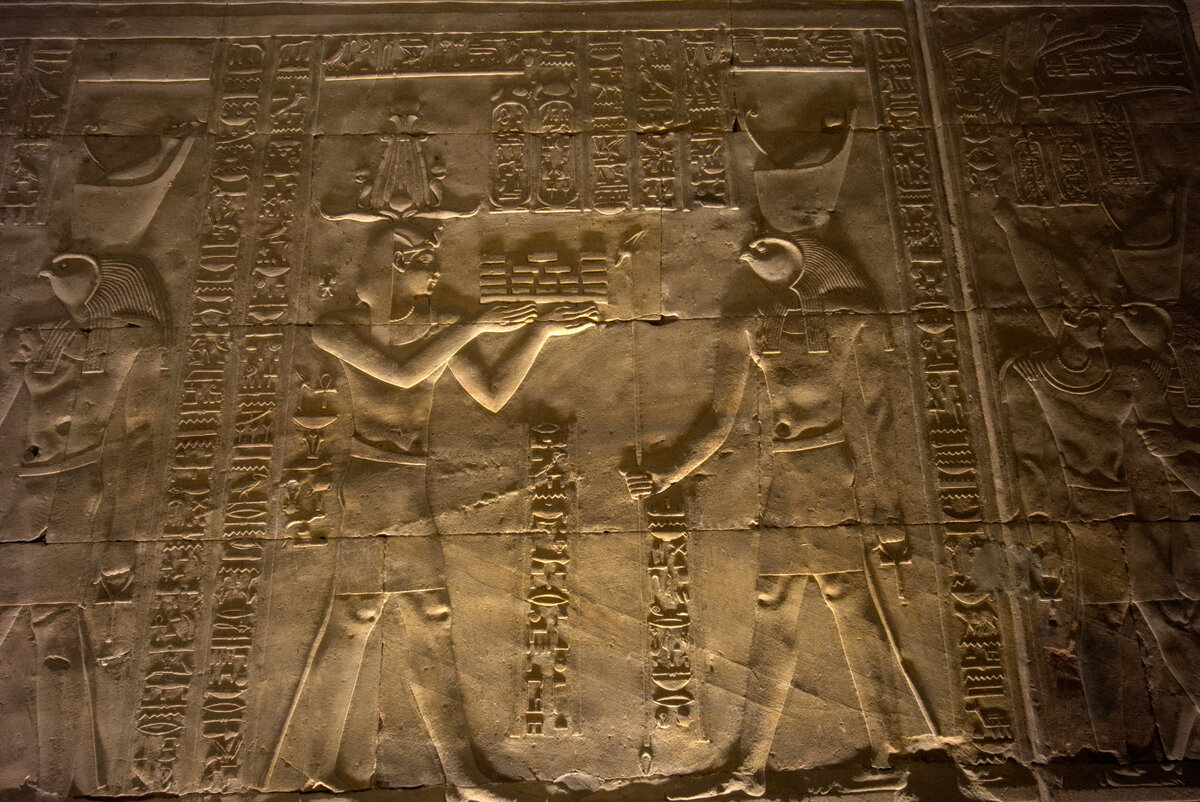
# 10 last one for this site
Exit or backside of the Temple where every square inch has inscribings
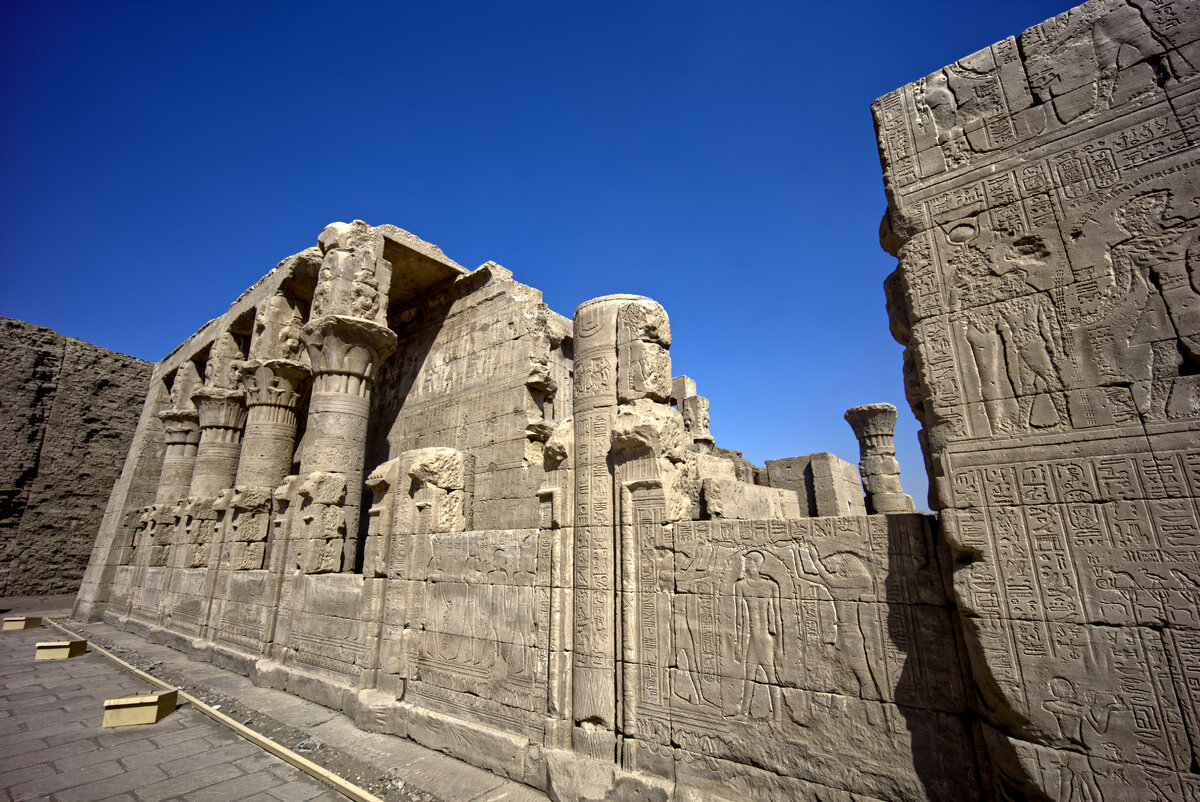
PS, (upper and lower) Eygpt is just backwards to the areas being north or south. To me a minuite to get that straight in my head as it has to do the the areas elevation verses n/s location.
Key Facts About Edfu Temple:
- Best-Preserved Monument: Because it was buried under sand and silt for centuries, Edfu is the most completely preserved ancient temple in Egypt.
- Construction Period: Built by Ptolemaic pharaohs, construction began under Ptolemy III Euergetes I (237 BCE) and was finished under Ptolemy XII Neos Dionysos in 57 BCE.
- Size and Location: Situated between Luxor and Aswan on the west bank of the Nile, it is over 140 meters long and covers roughly 7,000
- Dedication: The temple is dedicated to the falcon-headed god Horus of Behdet, though it also honors Hathor and their son, Harsomtus.
- The Pylon: The massive, 37-meter-high entrance pylon is decorated with scenes of Ptolemy XII smiting enemies in front of Horus.
- Inscriptions & Treasures: The walls contain invaluable, highly legible, and detailed texts detailing its construction, as well as myths of the "Sacred Drama" or battle between Horus and Set.
- Rediscovery: After being deserted for centuries following the banning of paganism in 391 AD, it was cleared of sand in 1860 by French Egyptologist Auguste Mariette.
- Key Features: It houses a "Nilometer" (for measuring the Nile's water levels) and a "Laboratory" (a room with recipes for perfumes/unguents inscribed on the walls).
- The Mythic Site: The temple is built on the site believed to be the spot where the battle for the throne of Egypt took place between Horus and Set
# 1 No CPR was used, the sky was soooo blue it almost looks fake
Coming up to the entrance Pylon
# 2.
The Pylon: The massive, 37-meter-high entrance pylon is decorated with scenes of Ptolemy XII smiting enemies in front of Horus.
# 3
Inscriptions & Treasures: The walls contain invaluable, highly legible, and detailed texts detailing its construction, as well as myths of the "Sacred Drama" or battle between Horus and Set.
Take note to the lower right-middle and see the vertical gouges across the structure, especially on the corner stone. these were made by visiting pilgrims who gouged these grooves to remove a portion of the Temple to be able to bring home which was thought to bring good luck. The gouges can bee seen all over Eygpt.
# 4
The temple is dedicated to the falcon-headed god Horus of Behdet, though it also honors Hathor and their son, Harsomtus.
# 5 Massive entrance to the Temple
# 6
Another view of the entrance. Note the "blackend ceilings"
Christians lived in and utilized the Edfu Temple primarily from the late 4th celtury onwards, following the Roman Empire's ban on non-Christian worship in 391 AD. During this period, they occupied the structure building campfires inside blacking the ceilings.
They also establishing it as a site of worship while defacing pagan imagery and carving crosses into the structure
If you look close at all the pictures, you can see the damage to many of the figures x-ing them out. Saw this here and across Eygpt.
# 7
Another passageway kings (and in this case) queens have passed
# 8
Great example of the defacing of the imagies
# 9
Carvings left unharmed. Someone is clearly paying or offereing some something
# 10 last one for this site
Exit or backside of the Temple where every square inch has inscribings

