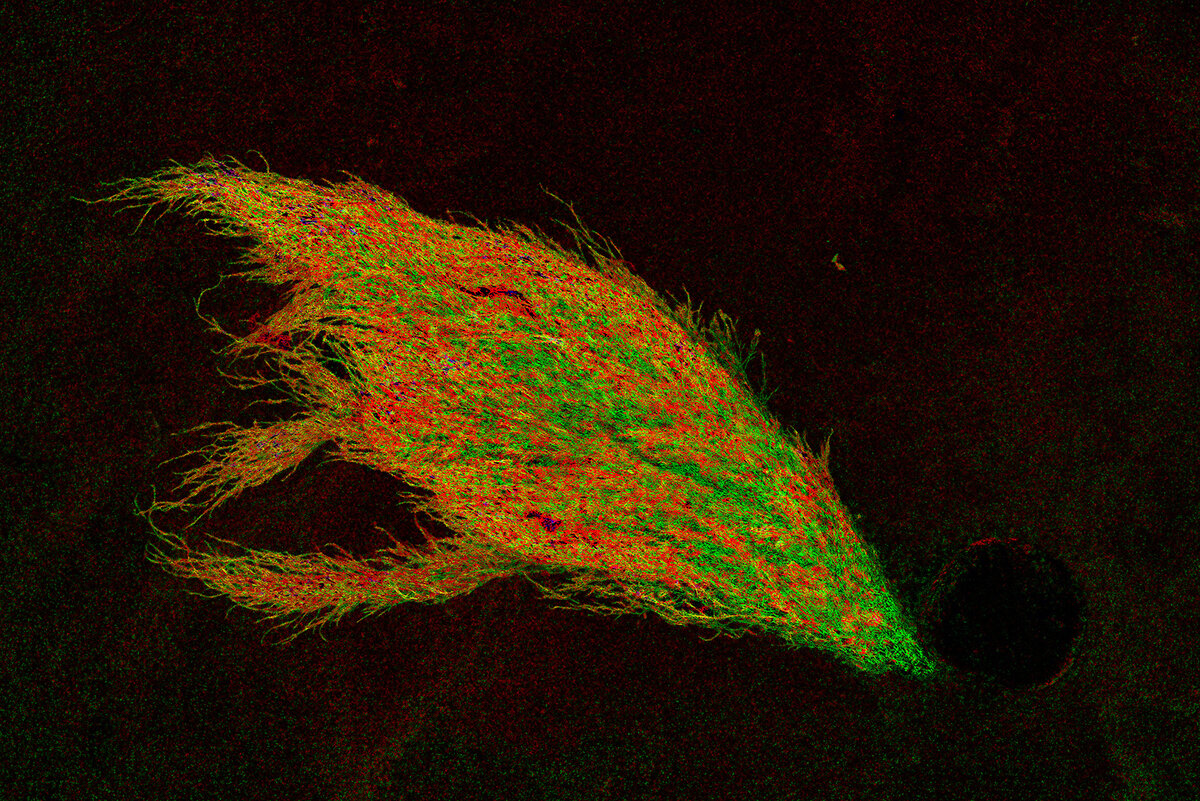
Hidden Color

DavidWright2010

Well-Known Member
Hi, all-

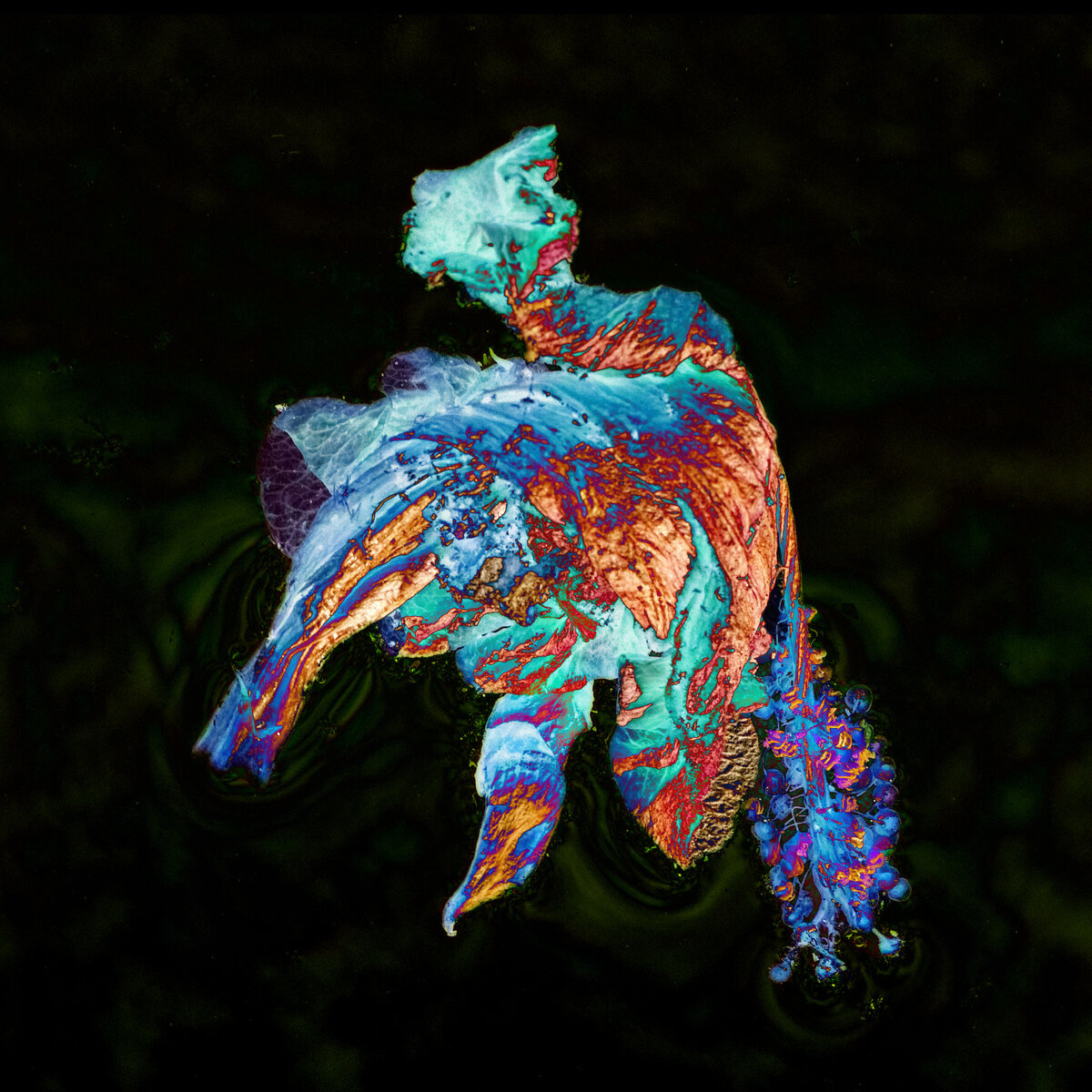
I'd like to get some feedback on my 'Hidden Color' series. These are all single images of a natural scene (no man-made objects) where I make global adjustments to color, etc to get a result that is pleasing to me. I've developed a process somewhat akin to taking the mathematical derivative of the color function, which I apply to the image, and repeat as desired. Each pass, like each mathematical derivative, increases the detail but lessens the greater structure, so beyond about 5 applications, the resultant image is pretty much just random noise - don't want that!

The detail is astonishing in these images, and I can make a crisp 24" x 36" (or larger) print.

I've stopped giving these images names; any 'name' I give is from what I see in the image. Better to let you see without prejudice.

137.jpg
2131.jpg
SDIM0334.jpg
SDIM1675.jpg
 

AlanLichty

Moderator
Wow - these make some amazing abstracts. A wonderful way to introduce your work - welcome to FocalWorld David.

Almost hard to believe these started out as images of natural things in our world. Highly complex results.
 

Ben Egbert

Forum Helper
Staff member
Welcome to the forum David and what an explosive intro to your work. Applying math to your proccessing is a new thing here but really interesting. These look like crystals via a microscope with certain filters
 

DavidWright2010

Well-Known Member
Thanks guys. I've been pretty obsessed with this technique for more than a year. Of the hundreds of such images I've taken, I have more than 30 printed at 24x36 inch and pressed onto foam board. Far more than I have room to hang on the wall.

Every walk out into the natural world produces new photo opps...

I'm not going to give away my process, but some images work, and some don't. I can pretty much tell at the time of capture, but I'm always looking for others types of objects that would also 'work'.

David
 

JimFox

Moderator
Staff member
Welcome to FocalWorld David!

And wow!!!! This is a technique that I am not aware of. It certainly is an abstract, but to think it's all a natural scene is totally mind blowing.

One of the things I enjoyed in looking these over was to spot images in these abstracts. Like #3 reminds me of a fish. #2 reminds me kind of a prehistoric turtle or dinosaur.

You certainly have honed down a really great technique with these.

Is abstract your main focus as a photographer?
 

DavidWright2010

Well-Known Member
Not really. Although I am currently obsessed with it. I started out with landscape photography, and like to make big panos (big like in 72" x 36"). I also like to take pix of flowers, often with focus-stacking. A couple of years ago I put up bird feeders and spent a lot of (covid lockdown) time shooting the birds that visited. And, to be fully occupied day and night, I do a lot of astrophotography.

All of these genre are shown on my pBase galleries
 

JimFox

Moderator
Staff member
Not really. Although I am currently obsessed with it. I started out with landscape photography, and like to make big panos (big like in 72" x 36"). I also like to take pix of flowers, often with focus-stacking. A couple of years ago I put up bird feeders and spent a lot of (covid lockdown) time shooting the birds that visited. And, to be fully occupied day and night, I do a lot of astrophotography.

All of these genre are shown on my pBase galleries
Hey David, You are very well rounded! I like that!

I will check out your Pbase galleries. That's awesome you are doing astrophotography too! I started doing it about 2.5 years ago, and am having a blast with it. I plan on being up in the mountains in Colorado this weekend doing some Astro. So please post some of yours here, it would be great to have yours too.
 

Ha Pham

Well-Known Member
I really enjoy your image and the emotion giving off from your image. Like you, I am now enjoying the process of developing creativity from the images I took. Quite a journey.
Ha
 

DavidWright2010

Well-Known Member
I really enjoy your image and the emotion giving off from your image. Like you, I am now enjoying the process of developing creativity from the images I took. Quite a journey.
Ha
Hi there, Ha=

I recognize you as another DPR Sigma forum refugee. I've been pleased to get some reaction here to my images. (More than just 'nice image'.)

David
 

DavidWright2010

Well-Known Member
Hey David, You are very well rounded! I like that!

I will check out your Pbase galleries. That's awesome you are doing astrophotography too! I started doing it about 2.5 years ago, and am having a blast with it. I plan on being up in the mountains in Colorado this weekend doing some Astro. So please post some of yours here, it would be great to have yours too.
{'ll post a work-in-progress in the AP forum and we can take it from there.

David
 

DavidWright2010

Well-Known Member
Hidden Colors - new worlds to discover

This is a composite - background hidden color processing, foreground something recognizable:

6819.jpg


This is an entirely new type of target:

3499.jpg


David
 
Last edited:

Alex Vasile

Well-Known Member
These are fascinating! 1 & 2 remind me of cross-polarizer microscopy images. 2 looks like fluorescence microscopy. And 3, as strange as this sounds, looks like a grungy "HDR"-look applied to a cell-shaded image of broccoli...

The only one I personally am not a fan of is the composite. I think what I dislike about it is the smooth radial fade of the yellow background from the flower. It seems out of place among the abrupt and clearly delineated shapes and colours of the rest of the frame.
 

DavidWright2010

Well-Known Member
I said that I was no longer going to give each of these hidden color shots a name reflecting what I saw in it. For this one, it should be pretty obvious, but I'm sticking with a number anyway.
No photons were harmed in creating this image.

1708.jpg
 

DavidWright2010

Well-Known Member
The 'mitochrome' process.

My abstracts are almost always created from a single image, using my (top-secret) processing method. (I have identified some few images as composites.) However, my process sometimes result in non-negligible black patches, which IMO suck the energy out of the resultant image.

So I have created a process (which I call 'mitochrome'), wherein I replace any black patches - which meet a certain criterium - with the corresponding regions (and colors) from another processed image.

LHS is the original 'hidden colors' image; RHS has the same image with the mitochrome process applied. (Notice that the LHS image has a few naturally occurring mitochromes.) What do you think?

the mitochrome process.JPG


David
 
Top Bottom