

Kyle Jones
Moderator
I'm not sure what forum to share this one, so I picked the post-processing forum since it kind of fits and needs some more traffic anyway. @JimFox made a recent post where he captured a night-sky image with a 14mm lens and cropped to a 24mm equivalent. My first thought, and I commented this way, was that if you intend to crop a point-star image, you should base the shutter speed on the cropped focal length rather than the actual one. As an example following the "400 rule", 400/14 = 28.6s (I round down to 25s) would be my exposure for a 14mm lens and 15 seconds would be my exposure for a 24mm lens. If I planned to crop my 14mm image to a 24mm equivalent, then I'd probably restrict my exposure time to 15s to ensure I keep sharp stars. But then I thought about it and realized I may have been thinking about it incorrectly.
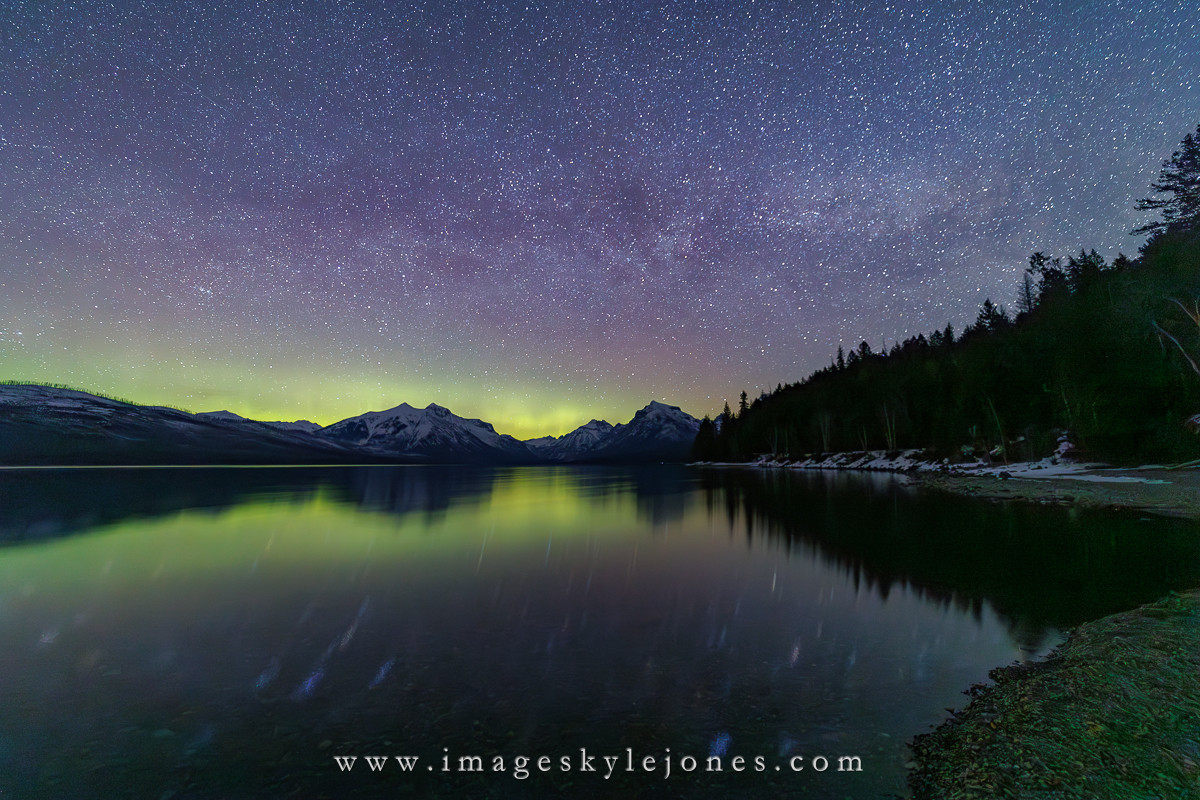
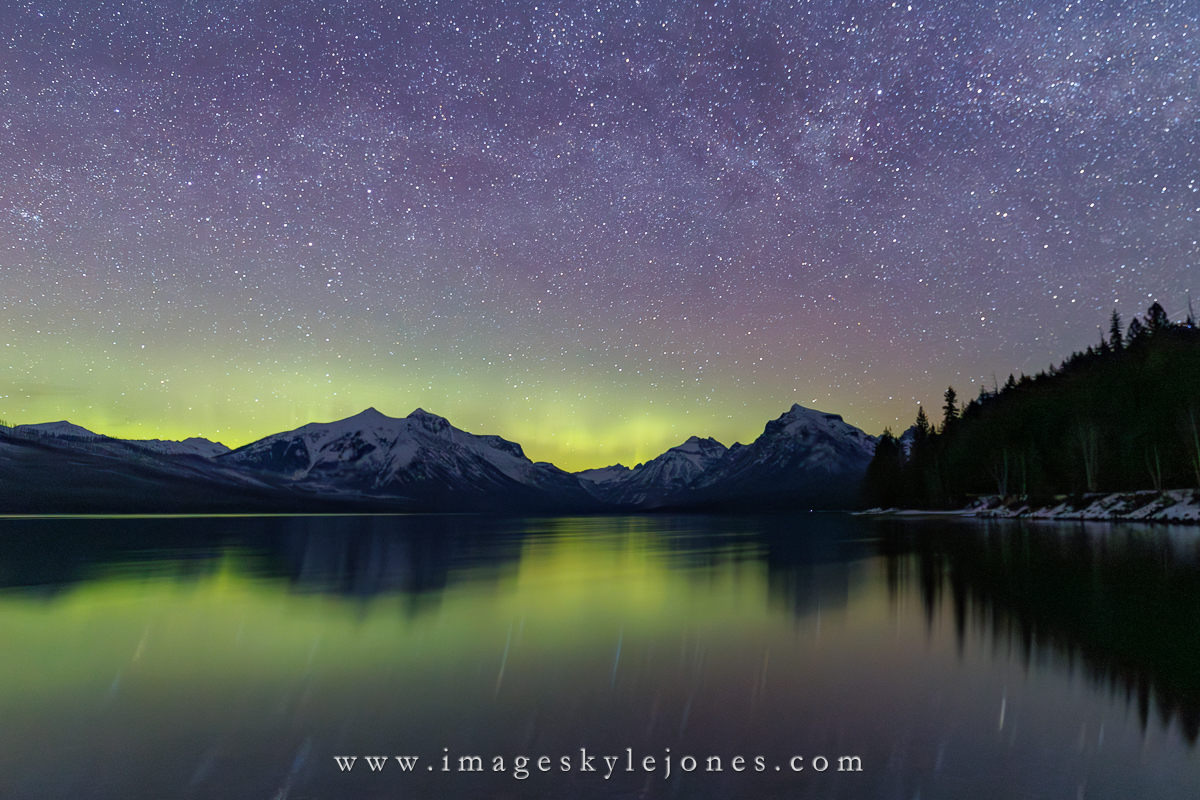
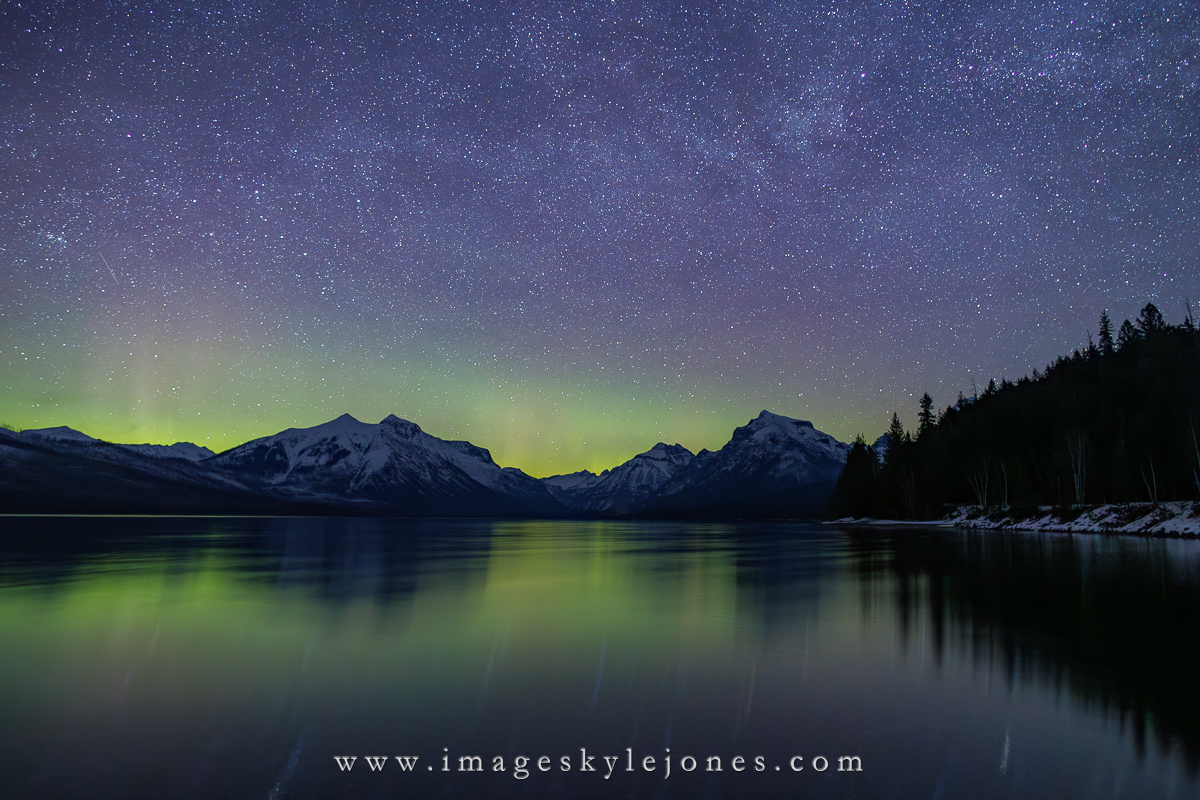
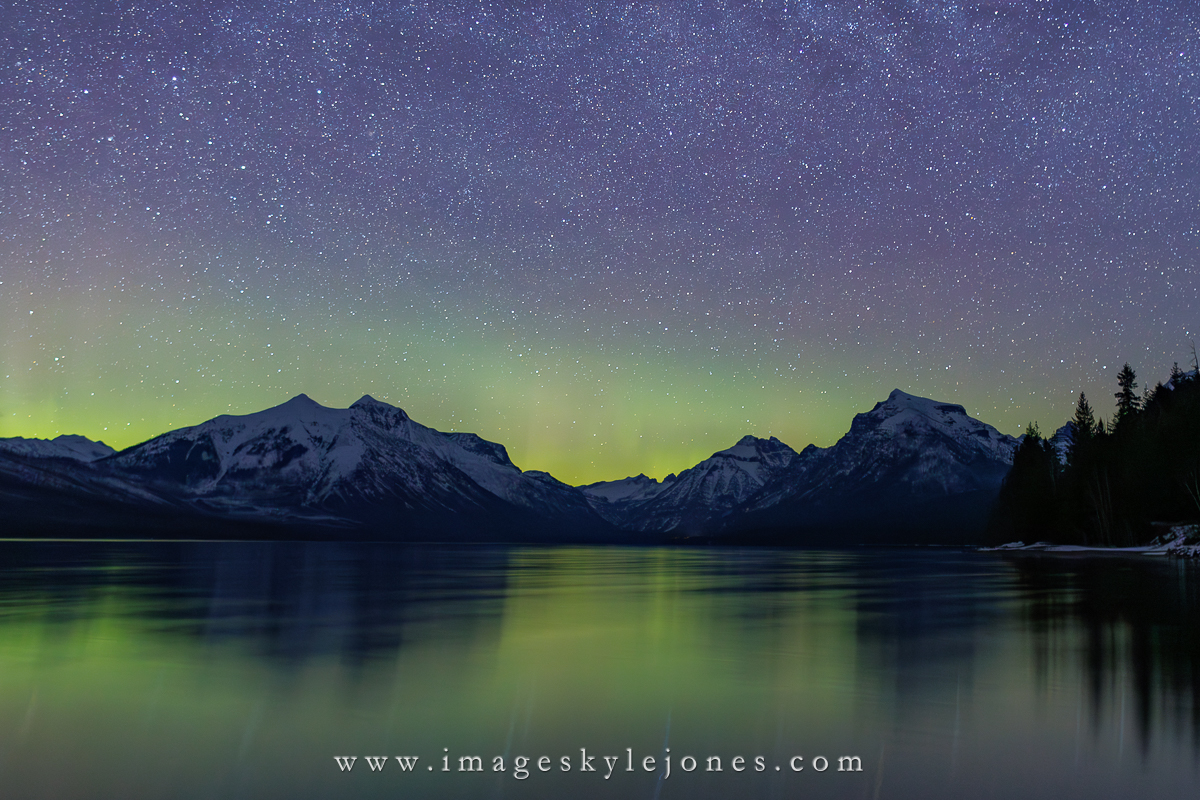
If an image looks good at 100% by following the 400 rule, then a cropped image will also look good at 100% - since you are looking at exactly the same image. You definitely lose a lot of resolution by cropping (my R5 goes from 8192x5464 to 4794x3198 cropping from 14mm to 24mm), but maybe the image you are left with will still have point stars. I happen to have RAW files from a shoot I did a couple of years ago at McDonald Lake in Glacier National Park where I shot the same scene in the same light at 14mm, 24mm, and 35mm, adjusting the exposure time for each to maintain point stars. I figured I could use these to test the theory. Here are 5 images at my usual web resolution, 1200 pixels wide. Settings for each are included int he descriptions. All images were processed with the same settings in Lightroom, including lens distortion corrections and Adobe's new noise reduction at default settings.
1) 14mm full image (14mm, 25s, ISO 3200, f/2.8)
2) That same 14mm image cropped to 24mm equivalent
3) 24mm full image (24mm, 15s, ISO 3200, f/2.0)
4) The same 24mm image cropped to 35mm equivalent
5) 35mm full image (35mm, 10s, ISO 3200, f/1.4)
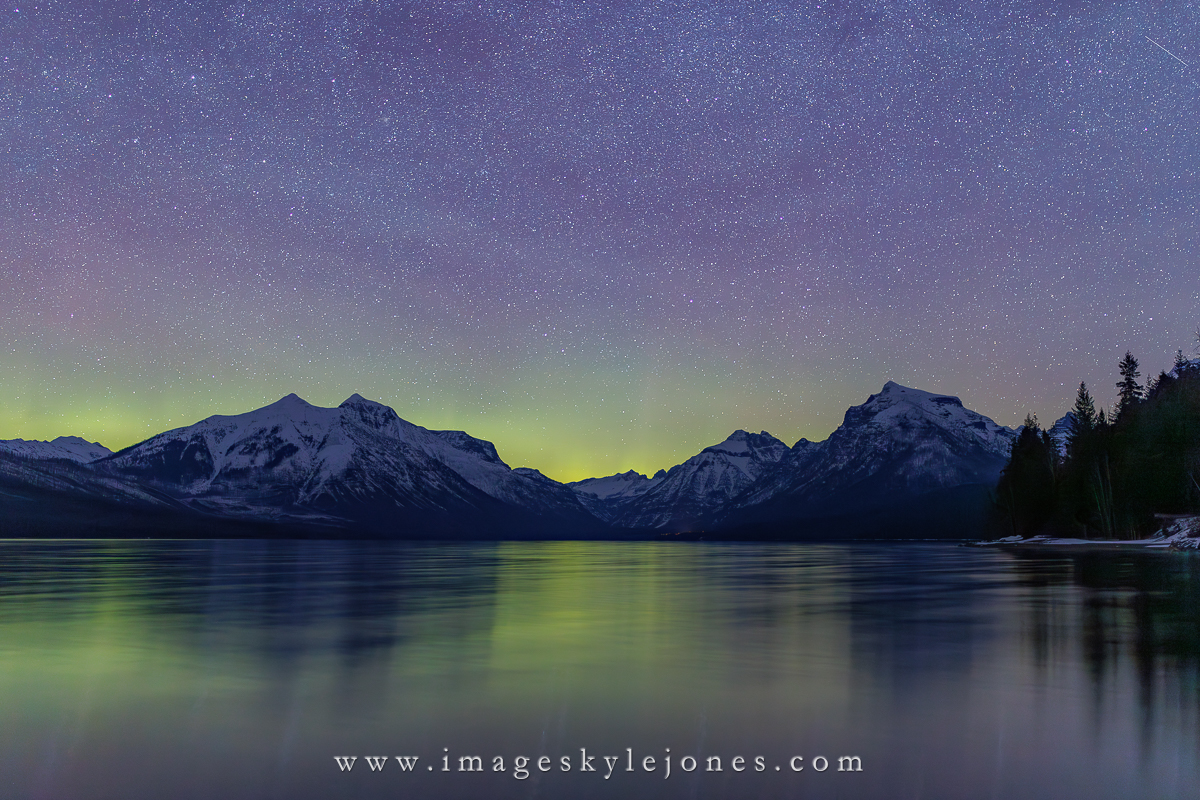
At web sizes, I would argue they all look good and that if I showed you just one image you wouldn't be able to tell if I had cropped it that severely. Looking at them side by side, the biggest difference I see is more stars and finer detail in the images that have not been cropped. This makes sense, as they are of a significantly higher resolution. The other thing that I can tell is that the lens quality matters more than the other things that I varied. The Tamron SP 35 f/1.4 is a REALLY nice astro lens and that shows when comparing it to the Samyang 24mm f/1.4 (that I always shoot at f/2 to improve the image quality). For the record, I used the Rokinon SP 14mm f/2.4 for the 14mm images.
Here are some comparisons at 100%...
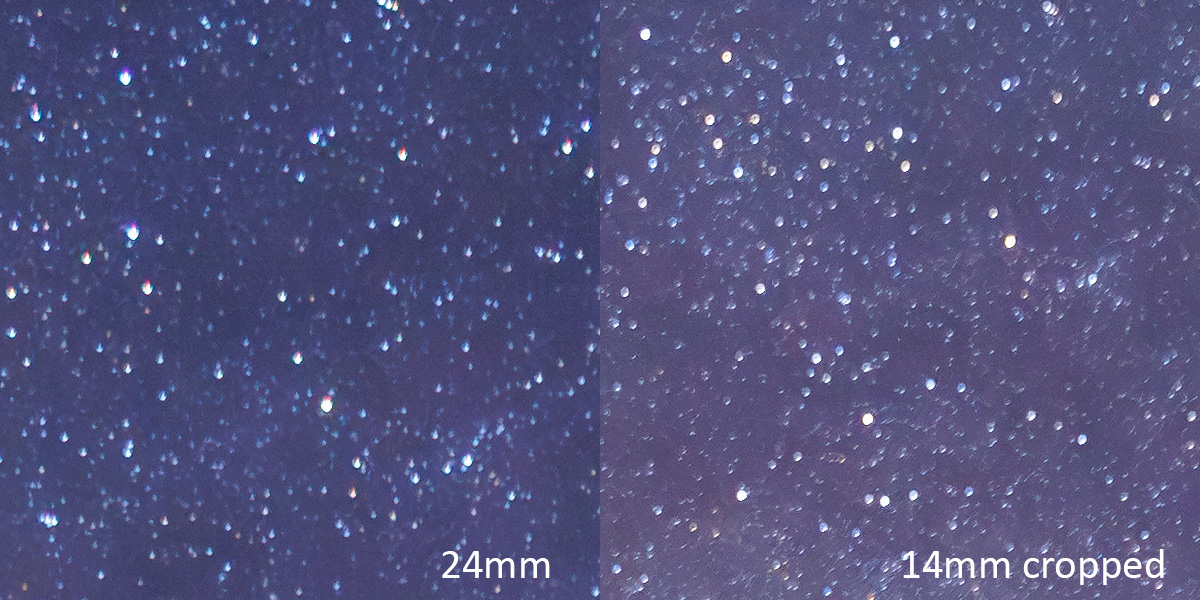
6) 24mm Comparison (note that the stars look less dense in the uncropped image since shows a smaller FOV)
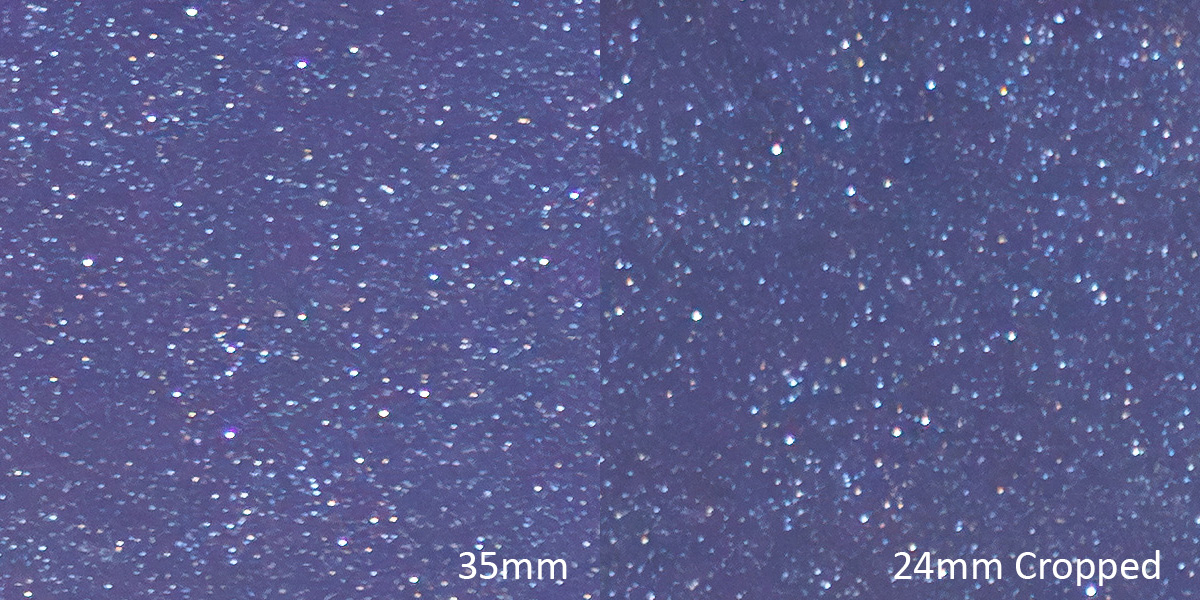
7) 35mm Comparison (here you see a lot more stars in the uncropped image, likely due to the f/1.4 aperture)
Any thoughts?
If an image looks good at 100% by following the 400 rule, then a cropped image will also look good at 100% - since you are looking at exactly the same image. You definitely lose a lot of resolution by cropping (my R5 goes from 8192x5464 to 4794x3198 cropping from 14mm to 24mm), but maybe the image you are left with will still have point stars. I happen to have RAW files from a shoot I did a couple of years ago at McDonald Lake in Glacier National Park where I shot the same scene in the same light at 14mm, 24mm, and 35mm, adjusting the exposure time for each to maintain point stars. I figured I could use these to test the theory. Here are 5 images at my usual web resolution, 1200 pixels wide. Settings for each are included int he descriptions. All images were processed with the same settings in Lightroom, including lens distortion corrections and Adobe's new noise reduction at default settings.
1) 14mm full image (14mm, 25s, ISO 3200, f/2.8)
2) That same 14mm image cropped to 24mm equivalent
3) 24mm full image (24mm, 15s, ISO 3200, f/2.0)
4) The same 24mm image cropped to 35mm equivalent
5) 35mm full image (35mm, 10s, ISO 3200, f/1.4)
At web sizes, I would argue they all look good and that if I showed you just one image you wouldn't be able to tell if I had cropped it that severely. Looking at them side by side, the biggest difference I see is more stars and finer detail in the images that have not been cropped. This makes sense, as they are of a significantly higher resolution. The other thing that I can tell is that the lens quality matters more than the other things that I varied. The Tamron SP 35 f/1.4 is a REALLY nice astro lens and that shows when comparing it to the Samyang 24mm f/1.4 (that I always shoot at f/2 to improve the image quality). For the record, I used the Rokinon SP 14mm f/2.4 for the 14mm images.
Here are some comparisons at 100%...
6) 24mm Comparison (note that the stars look less dense in the uncropped image since shows a smaller FOV)
7) 35mm Comparison (here you see a lot more stars in the uncropped image, likely due to the f/1.4 aperture)
Any thoughts?

