Critique wanted.

Ben Egbert

Forum Helper
Staff member
As with most photographers, only a few images I come back with are worth a print or other forms of exhibition. Generally this is because of situations we have no control over, such as poor light, poor weather, haze, or damage to the scene itself. I would like to post some of my shots that are not ready for prime time and use them to hone our skills at critique. I find that critique can help me in making a shot and determining when I have a shot that is presentation ready. If this works, and others join me by presenting their 2nd and 3rd tier images, we may kick start this forum.


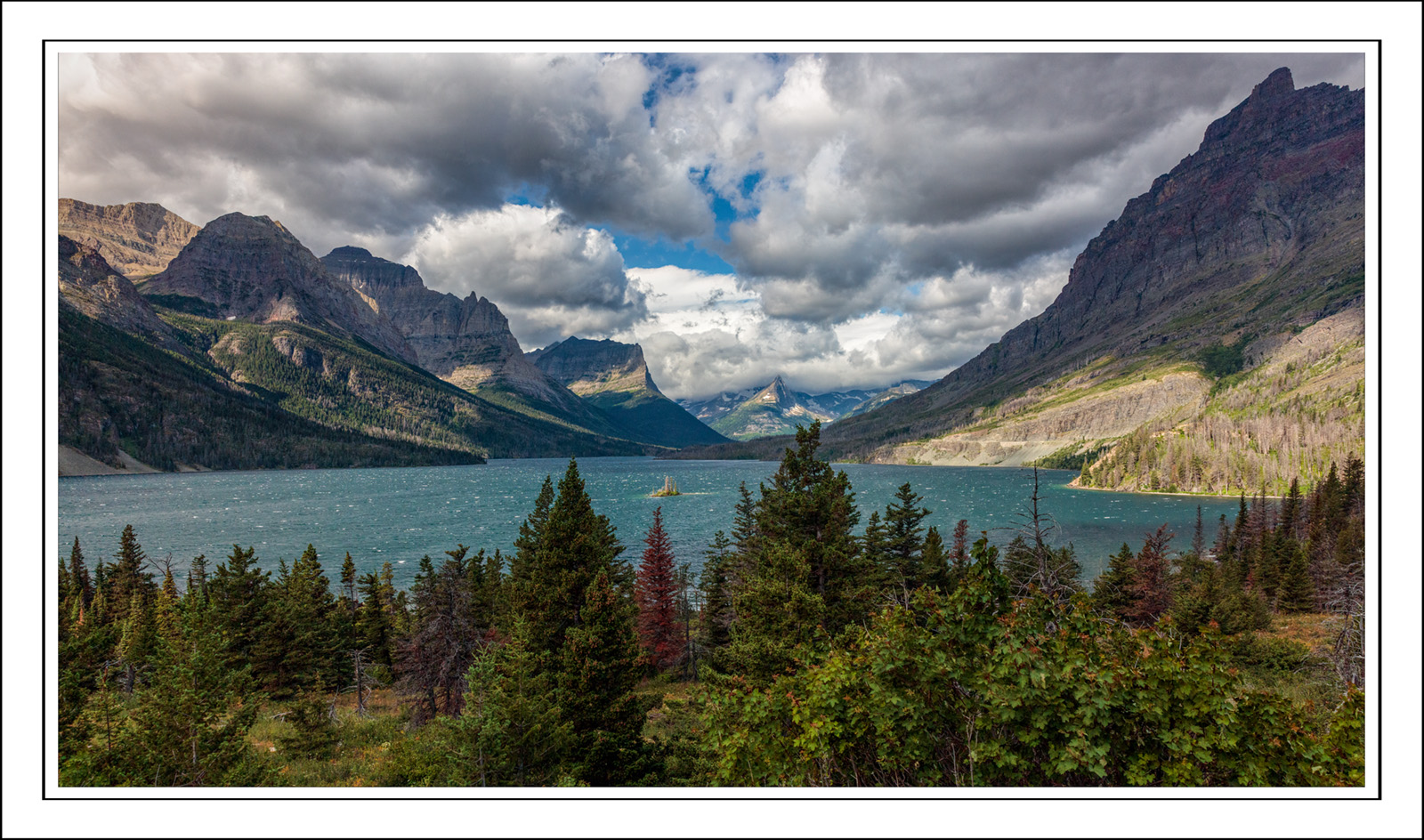
This is from a famous icon in Glacier NP. Wild Goose Island on St Mary's lake in Glacier has become like the Snake River overlook in the Tetons, that is trees have changed the classic view. They both block the view but also many of the trees are dead.

I worked the area pretty hard, shooting from the waters edge which makes the island blend with the far shore to shooting from a high position near the road as I have done here.

This image was late afternoon on a windy day. It was taken mostly as a scouting expedition, but turned out to be a maybe 2nd level image in spite of that.
 
Last edited:

Ben Egbert

Forum Helper
Staff member
I will start with my own critique.

This viewpoint, while allowing the island to be seen makes it seem small and insignificant.

The dead tree with reddish needles still in place hurt the shot. Snags, are better in my opinion, but recently dead trees hurt the scene.

This would be nicer with sunrise or sunset color.

This would be improved with the lake still enough to provide reflections.

The road cut along the right bank ruin the sense of wilderness.
 

AlanLichty

Moderator
When I am getting ready to take a shot like this the first thing I do is ask myself the question "why am I taking this shot?" so I can evaluate whether what I see in the viewfinder actually makes that work. Your own critique says this falls short of that.

That dead tree directly under the island feature makes the tree almost jump out in the image. Closer to the water would help with the dead tree(s). Sadly there are a lot of those dead trees all over the west right now and Murphy says that there will be one right in the middle of whatever you wanted to shoot.

Did you intend for the island to be more prominent in the scene? If so I would be inclined to see if I could get down past some of those foreground trees for a better view angle where I could use some longer glass to make it stand out more in the scene. Closer to the water might help with the road cut a bit since you would be closer to its elevation and not shooting directly at it like you are here.

All that said I often take shot like this one more as a snapshot of someplace I visited than as something I wanted to hang on my wall. There are lots of places I visit where it isn't possible or practical to be there during sunrise/sunset so whatever it looks like when I stop is what I end up shooting. In the fall its not easy to get calm water on the lakes in the park as the early storms of winter start to encroach. I can't remember the last time I saw calm water in St. Mary's Lake when I was in a position to shoot.
 

Ken Rennie

Well-Known Member
Ben I use a multi stage critique with my own images and I will apply it to this one. Please remember that this may be a famous image for you and I may have seen a few images from here but for me this is not a "tripod holes here, everyone has taken it before image"
  1. Are there any technical flaws in the image that take the viewers attention away from the message that the artist is trying to portray? As far as I can tell there are no flaws.
  2. Composition a) are the elements in the image arranged in the most advantageeous way to lead the viewer's eye through the image and hold their attention? b)Has the artist solved the complex conundrum of including everything that is necessay and excluding everything that is not, to produce a pleasing image? c)Is it simple? a) this is where I come across a problem, the foreground trees just seem to block me and the central tree cutting through the far bank of the lake becomes the most prominent feature of the image. b) the foreground vegetation on the right is just a jumble of complex shapes and is not aesthetically pleasing. The mountains are lovely and they, in themselves, impart depth aided by the sunlit triangle at the end of the lake. The island is too small to be thought of as an important element and may even be a distraction. c) is it simple? no but I don't think it ever could be.
  3. Composition (Well known locations) Honeypot locations have extra criteria. Is this the best photograph of this location that the judge has ever seen? Is the image different enough from the thousands of other shots of this location? I can't really judge this as I stated earlier I don't know the location.
  4. Timing is the image taken at the best time of day. No doubt early morning/ late evening would produce a different image but the light ere has produced plenty of texture in the image.
  5. Timing- Is the image taken at the best time of year? This may not be a sensible question here it usually is about Autumn colours or snow or bare trees producing a different feeling. Snow may produce a totally different image and for me who rarely gets the chance to photograph lakes and mountains in the snow this would be an improvement but most of the trees look like conifers so will not change much with the seasons.
  6. Timing- Has the artist captured the best ephemeral moment? Especially important in street and nature photography but catching the wave just as it breaks and the flash of sunlight on an overcast day can make an image. Again a bit of a redundant question but I have included it as it is a valid thing to think about when people get it wrong.
  7. Light- Is the light at its best in terms of direction, quality and light and shade? This is a very complex subject and is dependent on the conditions, timing, the subject matter and the message that the taker is trying to portray. What is good/ Best light is dependent upon the scene and the mood that the photographer is trying to portray it is not one size fits all. The light is excellent in this image, it is fairly harsh but this fits in with the type of image and you are not bothered with fine detail in bark that would probably be reduced if not totally lost in this light.
  8. Light- Colour contrasts that aid composition. Looks good to me
  9. Weather- Clouds, mist, sunrise/ sunset colours, crepuscular rays. The clouds are excellent.
  10. Weather- Has the weather detracted from the image e.g. moving foliage in a strong wind, rain spots causing flare. No distractions that I can see but you may be able to spot moving foliage with your hi-res image. I frequently shoot fast images to sharpen foliage as well as long exposures to get water effects and merge them together.
  11. Camera Controls- Has the photographer used the best focus point, depth of field and shutter speed? Looks perfect.
  12. Post Processing- Is the processing sympathetic to the image? Has any effect used added to the image? Yes sympathetic processing.
  13. Does the image tell you anything about what is happening outside of the image? Does it tell a story? Not really apart from telling me that it is a windy day of sun and shade.
  14. Does the image convey mood or emotion and if so is it the emotion that the photographer intended, if we know it? Although I don't know what mood you were trying to convey but it doesn't give me strong feelings.
  15. Is the image believable? Some genres never set out to portray reality with montages that are completely unbelievable and no worse for it. Yes believable.
My own personal checkpoint, out in the field, is a little simpler .
  1. What has grabbed my attention?
  2. What am I trying to take?
  3. What needs to be included/ excluded?
  4. Where do I stand?
  5. Do I go high/ low?
  6. Aperture/ focus point?
  7. What shutter speed will render moving elements as I would like them?
  8. Do I need to use any filters?
  9. What exposure will get the histogram as far to the right as possible without clipping?
  10. Will waiting move clouds, shadows, angle of sun into better positions?
  11. Good sky or will I reduce or remove it from the scene?
  12. Is the time of day, year or weather conducive the producing the best image or do I need to come back another day and / or at another time when the weather is different or light has a different quality? Or do I need to come back in another season when the vegetation has changed or when it is snowing or misty? This can lead to taking the best image that one can under the circumstances but with a note to self about the best season and climatic conditions for the envisaged scene?
I realise that this is a little wordy but some of it may help you with this image and out in the field. Ken
 

Ben Egbert

Forum Helper
Staff member
Thanks Alan, this is a very good example of critique and the steps you take for improvement are exactly what I did over the week I was there. Your comments take us through the very things we as photographers need to do on site
 

Ben Egbert

Forum Helper
Staff member
Ben I use a multi stage critique with my own images and I will apply it to this one. Please remember that this may be a famous image for you and I may have seen a few images from here but for me this is not a "tripod holes here, everyone has taken it before image"
  1. Are there any technical flaws in the image that take the viewers attention away from the message that the artist is trying to portray? As far as I can tell there are no flaws.
  2. Composition a) are the elements in the image arranged in the most advantageeous way to lead the viewer's eye through the image and hold their attention? b)Has the artist solved the complex conundrum of including everything that is necessay and excluding everything that is not, to produce a pleasing image? c)Is it simple? a) this is where I come across a problem, the foreground trees just seem to block me and the central tree cutting through the far bank of the lake becomes the most prominent feature of the image. b) the foreground vegetation on the right is just a jumble of complex shapes and is not aesthetically pleasing. The mountains are lovely and they, in themselves, impart depth aided by the sunlit triangle at the end of the lake. The island is too small to be thought of as an important element and may even be a distraction. c) is it simple? no but I don't think it ever could be.
  3. Composition (Well known locations) Honeypot locations have extra criteria. Is this the best photograph of this location that the judge has ever seen? Is the image different enough from the thousands of other shots of this location? I can't really judge this as I stated earlier I don't know the location.
  4. Timing is the image taken at the best time of day. No doubt early morning/ late evening would produce a different image but the light ere has produced plenty of texture in the image.
  5. Timing- Is the image taken at the best time of year? This may not be a sensible question here it usually is about Autumn colours or snow or bare trees producing a different feeling. Snow may produce a totally different image and for me who rarely gets the chance to photograph lakes and mountains in the snow this would be an improvement but most of the trees look like conifers so will not change much with the seasons.
  6. Timing- Has the artist captured the best ephemeral moment? Especially important in street and nature photography but catching the wave just as it breaks and the flash of sunlight on an overcast day can make an image. Again a bit of a redundant question but I have included it as it is a valid thing to think about when people get it wrong.
  7. Light- Is the light at its best in terms of direction, quality and light and shade? This is a very complex subject and is dependent on the conditions, timing, the subject matter and the message that the taker is trying to portray. What is good/ Best light is dependent upon the scene and the mood that the photographer is trying to portray it is not one size fits all. The light is excellent in this image, it is fairly harsh but this fits in with the type of image and you are not bothered with fine detail in bark that would probably be reduced if not totally lost in this light.
  8. Light- Colour contrasts that aid composition. Looks good to me
  9. Weather- Clouds, mist, sunrise/ sunset colours, crepuscular rays. The clouds are excellent.
  10. Weather- Has the weather detracted from the image e.g. moving foliage in a strong wind, rain spots causing flare. No distractions that I can see but you may be able to spot moving foliage with your hi-res image. I frequently shoot fast images to sharpen foliage as well as long exposures to get water effects and merge them together.
  11. Camera Controls- Has the photographer used the best focus point, depth of field and shutter speed? Looks perfect.
  12. Post Processing- Is the processing sympathetic to the image? Has any effect used added to the image? Yes sympathetic processing.
  13. Does the image tell you anything about what is happening outside of the image? Does it tell a story? Not really apart from telling me that it is a windy day of sun and shade.
  14. Does the image convey mood or emotion and if so is it the emotion that the photographer intended, if we know it? Although I don't know what mood you were trying to convey but it doesn't give me strong feelings.
  15. Is the image believable? Some genres never set out to portray reality with montages that are completely unbelievable and no worse for it. Yes believable.
My own personal checkpoint, out in the field, is a little simpler .
  1. What has grabbed my attention?
  2. What am I trying to take?
  3. What needs to be included/ excluded?
  4. Where do I stand?
  5. Do I go high/ low?
  6. Aperture/ focus point?
  7. What shutter speed will render moving elements as I would like them?
  8. Do I need to use any filters?
  9. What exposure will get the histogram as far to the right as possible without clipping?
  10. Will waiting move clouds, shadows, angle of sun into better positions?
  11. Good sky or will I reduce or remove it from the scene?
  12. Is the time of day, year or weather conducive the producing the best image or do I need to come back another day and / or at another time when the weather is different or light has a different quality? Or do I need to come back in another season when the vegetation has changed or when it is snowing or misty? This can lead to taking the best image that one can under the circumstances but with a note to self about the best season and climatic conditions for the envisaged scene?
I realise that this is a little wordy but some of it may help you with this image and out in the field. Ken
Ken this is not only an excellent critique but an even more valuable discussion of how to see and think about a scene. I plan to print it out and study it to help build a conscious model that is portable.

Of course I know much of this already but not all of it and not as presented here.

As I said I am willing to post my 2nds here for just this sort of analysis

Thanks again ken
 

Kyle Jones

Moderator
Good timing for me as I plan to be there in 2 weeks! This discussion will help me think about how to approach this area (which I've never been to before). I think the clouds and light are actually really nice for an afternoon image. I might try opening up the shadows a touch more but I'd want to be careful with that. The red tree doesn't bother me much - but you could use a selective color layer to turn it green...
190724-11048-5DS R.jpg
 

Jeffrey

Well-Known Member
Critiques are the opinion of one person, but if that person is truly qualified to make critiques of fine art landscape images (another entire discussion) they they should be similar to what other 'experts' might say about it. Sort of a 'standard' of what is good by generally accepted guidelines (I don't use the R word). After so many years of being critiqued by my own mentors, at the time, and loving and anticipating every minute of it, I feel good about being qualified to do the same myself.

Sure, there are a lot of questions that can be asked, as demonstrated by Ken. Perhaps a bit too many for me, as it emphasizes the technical element too much. But, I think he is on to what I feel is more important in his comment #14. My first question is 'Does the image evoke an emotional response from the viewer?'. I think you've heard me say that before, but the power of of it is always my number one driving force and goal. We've seen a lot of images that do this profoundly, but still have technical issues or compositional elements that are not perfect or even close. If you've achieved that then you can let some other 'flaws' slide by. Another important concept, as Alan stated, is 'Why am I making this image?' (reworded to match how I think). And to further learn about ourselves, I always ask myself 'Why am I NOT making this image?', as I put the camera down without pressing the shutter. That's when you truly learn about your vision and the importance that some things have for you. It's like having a third party next to you saying, Whoa, not that. It's your inner speaking to your outer.

Back to your image, Ben. You stated that it is a picture of Goose Island. Is that what you wanted to make when you got to this location? If so, I don't think it worked. The island is so tiny that I first didn't know what you were talking about until I spotted that little thing in the water. This IS a beautiful image of a lake, a forest, a mountain range, and a sky. Maybe it just needs a title change to correlate with what I see here. I remember facing a very similar situation years ago when Richard Garrod, who published his book of large format BW images in 2001 and assisted in many workshops I attended, looked at one of my pieces and said 'What are you trying to show here? What is the most important element? When I indicated that to him he said, 'Then get rid of all this other crap!'. I was startled by his immediate and concise reply, but he was right. I've since adopted some of his visionary approach and his to-the-point critique style, whether the receiver likes it or not. I think you know what I would say now.
 

JimFox

Moderator
Staff member
Ben I use a multi stage critique with my own images and I will apply it to this one. Please remember that this may be a famous image for you and I may have seen a few images from here but for me this is not a "tripod holes here, everyone has taken it before image"
  1. Are there any technical flaws in the image that take the viewers attention away from the message that the artist is trying to portray? As far as I can tell there are no flaws.
  2. Composition a) are the elements in the image arranged in the most advantageeous way to lead the viewer's eye through the image and hold their attention? b)Has the artist solved the complex conundrum of including everything that is necessay and excluding everything that is not, to produce a pleasing image? c)Is it simple? a) this is where I come across a problem, the foreground trees just seem to block me and the central tree cutting through the far bank of the lake becomes the most prominent feature of the image. b) the foreground vegetation on the right is just a jumble of complex shapes and is not aesthetically pleasing. The mountains are lovely and they, in themselves, impart depth aided by the sunlit triangle at the end of the lake. The island is too small to be thought of as an important element and may even be a distraction. c) is it simple? no but I don't think it ever could be.
  3. Composition (Well known locations) Honeypot locations have extra criteria. Is this the best photograph of this location that the judge has ever seen? Is the image different enough from the thousands of other shots of this location? I can't really judge this as I stated earlier I don't know the location.
  4. Timing is the image taken at the best time of day. No doubt early morning/ late evening would produce a different image but the light ere has produced plenty of texture in the image.
  5. Timing- Is the image taken at the best time of year? This may not be a sensible question here it usually is about Autumn colours or snow or bare trees producing a different feeling. Snow may produce a totally different image and for me who rarely gets the chance to photograph lakes and mountains in the snow this would be an improvement but most of the trees look like conifers so will not change much with the seasons.
  6. Timing- Has the artist captured the best ephemeral moment? Especially important in street and nature photography but catching the wave just as it breaks and the flash of sunlight on an overcast day can make an image. Again a bit of a redundant question but I have included it as it is a valid thing to think about when people get it wrong.
  7. Light- Is the light at its best in terms of direction, quality and light and shade? This is a very complex subject and is dependent on the conditions, timing, the subject matter and the message that the taker is trying to portray. What is good/ Best light is dependent upon the scene and the mood that the photographer is trying to portray it is not one size fits all. The light is excellent in this image, it is fairly harsh but this fits in with the type of image and you are not bothered with fine detail in bark that would probably be reduced if not totally lost in this light.
  8. Light- Colour contrasts that aid composition. Looks good to me
  9. Weather- Clouds, mist, sunrise/ sunset colours, crepuscular rays. The clouds are excellent.
  10. Weather- Has the weather detracted from the image e.g. moving foliage in a strong wind, rain spots causing flare. No distractions that I can see but you may be able to spot moving foliage with your hi-res image. I frequently shoot fast images to sharpen foliage as well as long exposures to get water effects and merge them together.
  11. Camera Controls- Has the photographer used the best focus point, depth of field and shutter speed? Looks perfect.
  12. Post Processing- Is the processing sympathetic to the image? Has any effect used added to the image? Yes sympathetic processing.
  13. Does the image tell you anything about what is happening outside of the image? Does it tell a story? Not really apart from telling me that it is a windy day of sun and shade.
  14. Does the image convey mood or emotion and if so is it the emotion that the photographer intended, if we know it? Although I don't know what mood you were trying to convey but it doesn't give me strong feelings.
  15. Is the image believable? Some genres never set out to portray reality with montages that are completely unbelievable and no worse for it. Yes believable.
My own personal checkpoint, out in the field, is a little simpler .
  1. What has grabbed my attention?
  2. What am I trying to take?
  3. What needs to be included/ excluded?
  4. Where do I stand?
  5. Do I go high/ low?
  6. Aperture/ focus point?
  7. What shutter speed will render moving elements as I would like them?
  8. Do I need to use any filters?
  9. What exposure will get the histogram as far to the right as possible without clipping?
  10. Will waiting move clouds, shadows, angle of sun into better positions?
  11. Good sky or will I reduce or remove it from the scene?
  12. Is the time of day, year or weather conducive the producing the best image or do I need to come back another day and / or at another time when the weather is different or light has a different quality? Or do I need to come back in another season when the vegetation has changed or when it is snowing or misty? This can lead to taking the best image that one can under the circumstances but with a note to self about the best season and climatic conditions for the envisaged scene?
I realise that this is a little wordy but some of it may help you with this image and out in the field. Ken
Ken, this is a very thought provoking list. Like Ben, much of this is just 2nd nature at this point. But it's interesting to see it listed out in this form. Thanks for adding that to this.
 

Ken Rennie

Well-Known Member
Critiques are the opinion of one person, but if that person is truly qualified to make critiques of fine art landscape images (another entire discussion) they they should be similar to what other 'experts' might say about it. Sort of a 'standard' of what is good by generally accepted guidelines (I don't use the R word). After so many years of being critiqued by my own mentors, at the time, and loving and anticipating every minute of it, I feel good about being qualified to do the same myself.

Sure, there are a lot of questions that can be asked, as demonstrated by Ken. Perhaps a bit too many for me, as it emphasizes the technical element too much. But, I think he is on to what I feel is more important in his comment #14. My first question is 'Does the image evoke an emotional response from the viewer?'. I think you've heard me say that before, but the power of of it is always my number one driving force and goal. We've seen a lot of images that do this profoundly, but still have technical issues or compositional elements that are not perfect or even close. If you've achieved that then you can let some other 'flaws' slide by. Another important concept, as Alan stated, is 'Why am I making this image?' (reworded to match how I think). And to further learn about ourselves, I always ask myself 'Why am I NOT making this image?', as I put the camera down without pressing the shutter. That's when you truly learn about your vision and the importance that some things have for you. It's like having a third party next to you saying, Whoa, not that. It's your inner speaking to your outer.

Back to your image, Ben. You stated that it is a picture of Goose Island. Is that what you wanted to make when you got to this location? If so, I don't think it worked. The island is so tiny that I first didn't know what you were talking about until I spotted that little thing in the water. This IS a beautiful image of a lake, a forest, a mountain range, and a sky. Maybe it just needs a title change to correlate with what I see here. I remember facing a very similar situation years ago when Richard Garrod, who published his book of large format BW images in 2001 and assisted in many workshops I attended, looked at one of my pieces and said 'What are you trying to show here? What is the most important element? When I indicated that to him he said, 'Then get rid of all this other crap!'. I was startled by his immediate and concise reply, but he was right. I've since adopted some of his visionary approach and his to-the-point critique style, whether the receiver likes it or not. I think you know what I would say now.
Jeffrey I agree that emotional response is the most important thing and the technical things and timing are elements that may not add to the emotional response but can certainly detract from it, they, in many instances, are negatives that the artist tries to diminish. However without knowing what emotions the artist was trying to convey it is impossible to tell if s/he has been successful. For me the elements in the image are merely the elements to be manipulated by technical means of shutter speed, aperture and focal length along with knowing where to stand to evoke a mood. Light weather, time of day and year can also make the mood evoking harder or easier and if one always goes out thinking tranquility then hash light or a thunderstorm and high winds would make this impossible and I hope that I would allow the circumstances to change what I was aiming for. Personally I have been trying to produce tranquil images for the last couple of years and that would be the criterium that I would wish to be judged on and would only be interested in the technical aspects if they got in the way. In the end it is all opinion and everybodies is valid. Ken
 

Ben Egbert

Forum Helper
Staff member
Good timing for me as I plan to be there in 2 weeks! This discussion will help me think about how to approach this area (which I've never been to before). I think the clouds and light are actually really nice for an afternoon image. I might try opening up the shadows a touch more but I'd want to be careful with that. The red tree doesn't bother me much - but you could use a selective color layer to turn it green...
View attachment 20996
Thanks for the comments Kyle. Stay tuned to this forum. I have several othe shots from here that were intended to solve some of the problems noted. I will start new threads to show my progression and get fresh insights into how well I succeeded
 

Ben Egbert

Forum Helper
Staff member
Critiques are the opinion of one person, but if that person is truly qualified to make critiques of fine art landscape images (another entire discussion) they they should be similar to what other 'experts' might say about it. Sort of a 'standard' of what is good by generally accepted guidelines (I don't use the R word). After so many years of being critiqued by my own mentors, at the time, and loving and anticipating every minute of it, I feel good about being qualified to do the same myself.

Sure, there are a lot of questions that can be asked, as demonstrated by Ken. Perhaps a bit too many for me, as it emphasizes the technical element too much. But, I think he is on to what I feel is more important in his comment #14. My first question is 'Does the image evoke an emotional response from the viewer?'. I think you've heard me say that before, but the power of of it is always my number one driving force and goal. We've seen a lot of images that do this profoundly, but still have technical issues or compositional elements that are not perfect or even close. If you've achieved that then you can let some other 'flaws' slide by. Another important concept, as Alan stated, is 'Why am I making this image?' (reworded to match how I think). And to further learn about ourselves, I always ask myself 'Why am I NOT making this image?', as I put the camera down without pressing the shutter. That's when you truly learn about your vision and the importance that some things have for you. It's like having a third party next to you saying, Whoa, not that. It's your inner speaking to your outer.

Back to your image, Ben. You stated that it is a picture of Goose Island. Is that what you wanted to make when you got to this location? If so, I don't think it worked. The island is so tiny that I first didn't know what you were talking about until I spotted that little thing in the water. This IS a beautiful image of a lake, a forest, a mountain range, and a sky. Maybe it just needs a title change to correlate with what I see here. I remember facing a very similar situation years ago when Richard Garrod, who published his book of large format BW images in 2001 and assisted in many workshops I attended, looked at one of my pieces and said 'What are you trying to show here? What is the most important element? When I indicated that to him he said, 'Then get rid of all this other crap!'. I was startled by his immediate and concise reply, but he was right. I've since adopted some of his visionary approach and his to-the-point critique style, whether the receiver likes it or not. I think you know what I would say now.
Thanks Jeffrey your style was very much on my mind as I worked the scene especiallylly to eliminate un wanted elements, which by the way is not real intuitive. But I tend to take the shot no matter even if I will be moving or changing lenses. I almost never know what might work until I see it on a real monitor and some of my set up shot s have turned out good.

But this brings out another thing in that I have limited photo trips and I need stuff for the forum (I can just see you blanch at That one).

If I get back from a trip with two printable images, it was a good trip. But where do I get forum images?

So my plan is to only show stuff I like at the presentation forum and show the 2nd string here. No ego here, so it’s easy to do
 

Jeffrey

Well-Known Member
Thanks for your replies. There is no one correct line of thinking. I enjoy how others approach photography differently from myself. Since digital photography has such important aspects in the capture, and then the processing, the emotional impact often does not come to light until the processing is done. But I do like the thrill of an excellent capture that stays on my mind often for days before I get to the card download part of it and the exciting finale.
 
Last edited:

Ben Egbert

Forum Helper
Staff member
Jeffrey, after my above reply, it occurred to me that a dedication to excellence requires a bit of pride, probably more than I am bringing to the table. When I watch you work, I feel like I am watching a master. I will incorporate that into my work for sure to the level I am comfortable with. It occurred to me that photography has become at least in part a social activity. That includes the meet ups and the forum activities.
 
Top Bottom