

Kyle Jones
Moderator
I'm not ready to review the camera, but I figured I'd create a thread to start sharing information as I gather it. This first installment is based on some high-ISO night shooting on the Northern California coast. This was a somewhat demanding shoot with some light pollution and moisture in the air.
My first impression was that the camera served me well. I purchased the control-ring adapter and took my first cut at setting up the controls. I assigned aperture to the control ring, left shutter speed on the top dial, and assigned ISO to the touch bar. I used the Rokinon SP 14mm f/2.4 for all photos, manually focused on a star that was easily visible in the viewfinder. I'll still play around with the controls over time, but this worked fine.
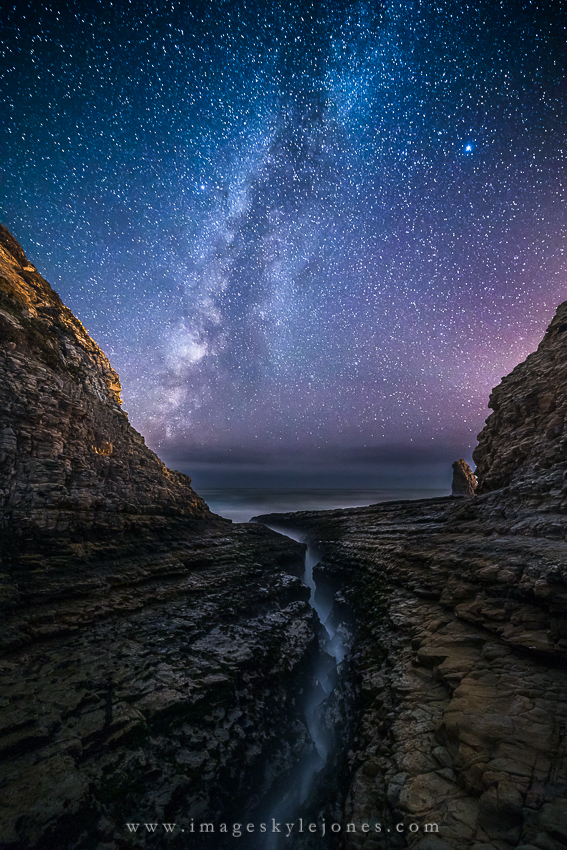
Before diving into details, here is the final processed image from the evening. The sky was shot at ISO 6400 f/2.8 for 30s. The ground was 5 minutes at ISO 1600 and f/4. Both images were processed in Lightroom and then blended in Photoshop. I did apply some extra noise reduction in Photoshop, particularly in the sky. I just received a 30 inch print from my lab which came out really nice. So from that standpoint, the camera did its job.
So lets take a look at ISO... Below are 3 images taken with the same effective exposure at ISOs 1600, 6400 and 12800. Each image was processed in exactly the same manner using Lightroom only. At web sizes they all look pretty good!

Here are 100% crops at the center. To my eye ISO 1600 is pretty darn clean, ISO 6400 is acceptable for my work, and ISO 12800 is noisy but may be manageable with some careful noise reduction.
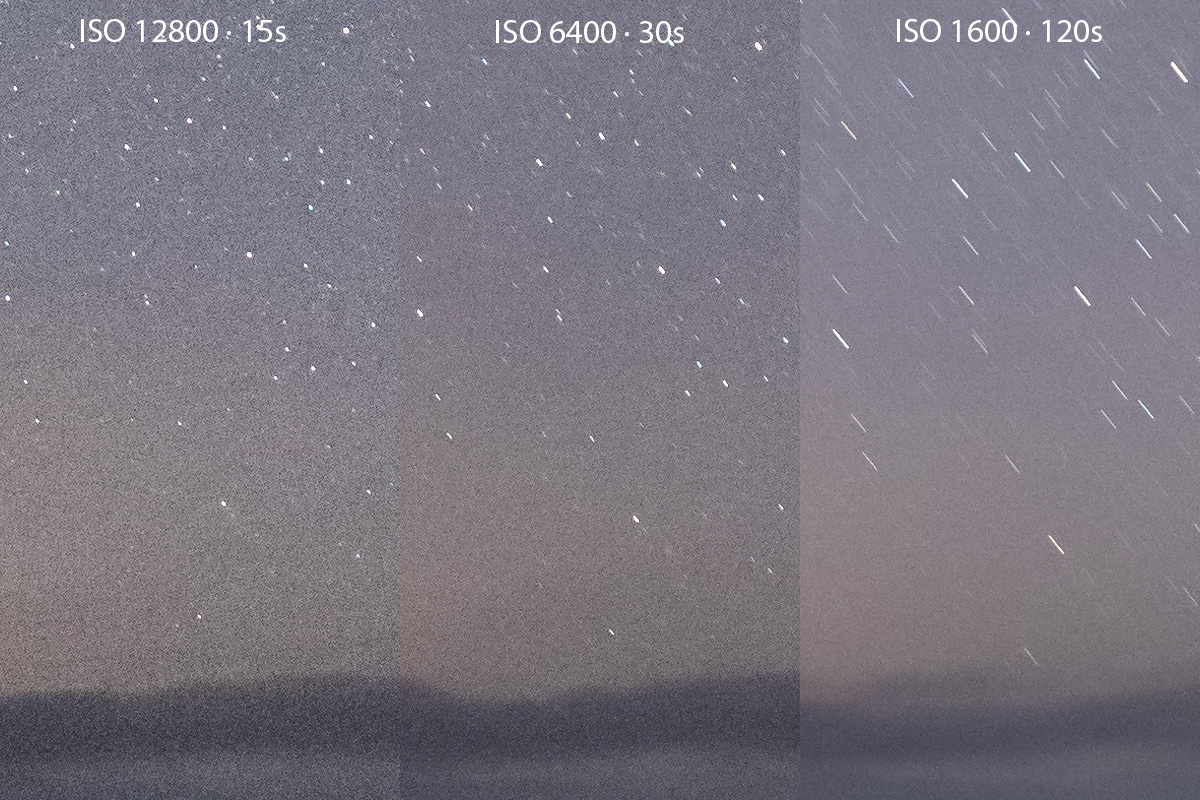
Here are 100% crops at the top of the image. The shorter shutter speed of the ISO 12800 shot does a lot for reducing movement of the stars.

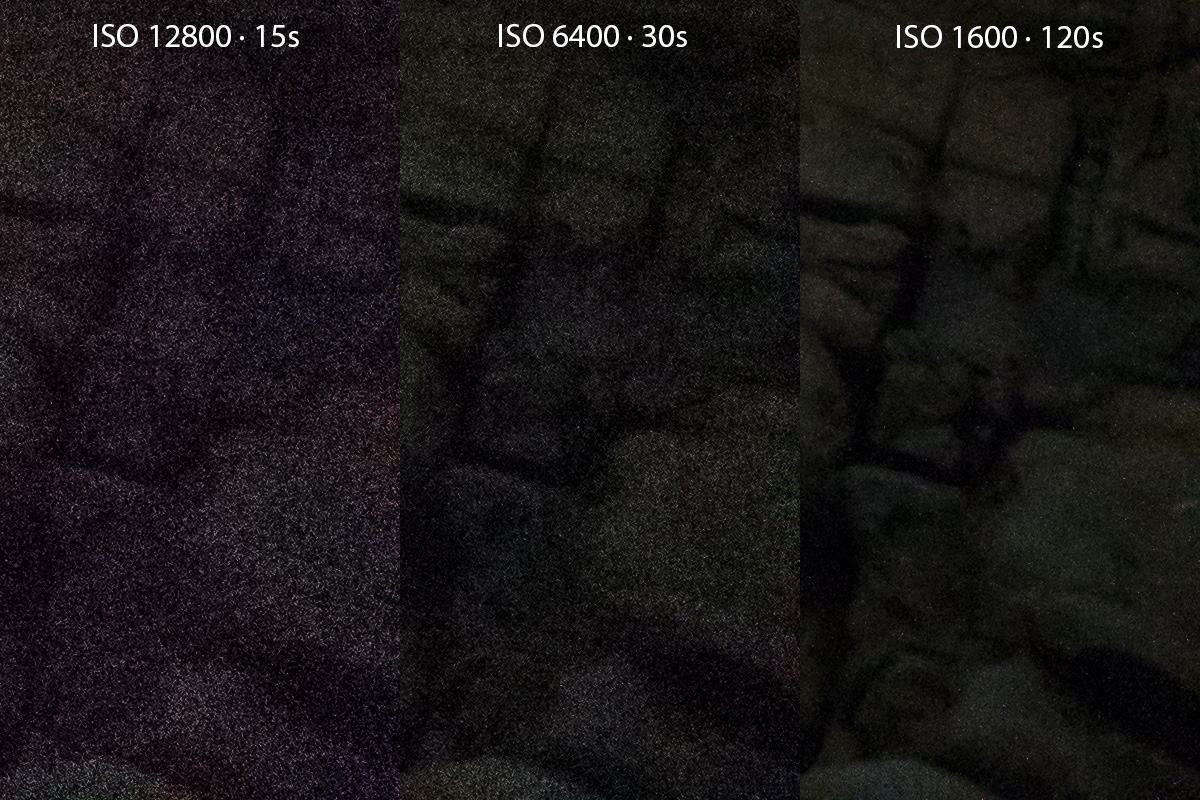
And here are 100% crops in the bottom right corner. The noise is noticeably worse, which is to be expected with less light in this part of the image. The ISO 12800 image has taken on an ugly magenta cast as well.
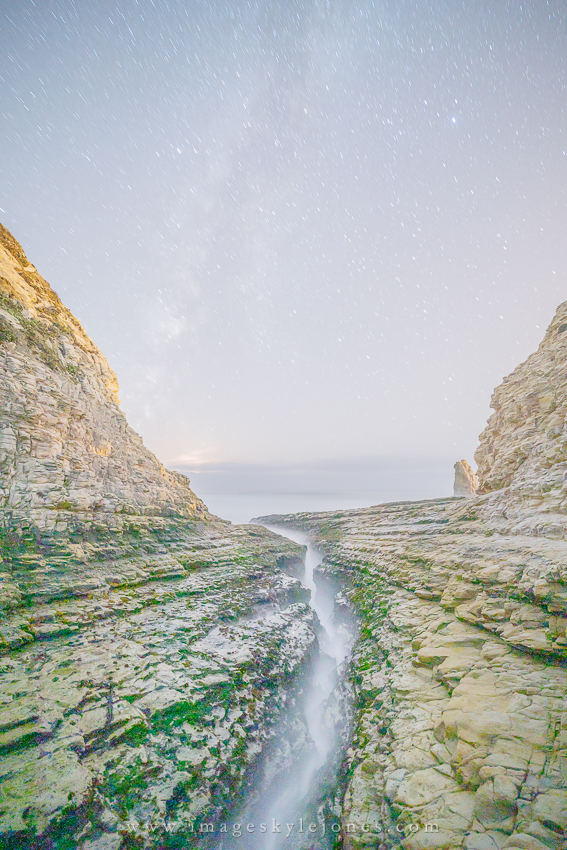
There have been reports of banding when shadows are pushed from the EOS R, so here is an image that I pushed hard. This is the 120s ISO 1600 shot shown above. The exposure is +3 and the shadow and black sliders are both pushed to 100%. It does look like there is a magenta vertical stripe near the left edge at the bottom, but overall the image held up better than I expected.
My next installment will likely be a comparison with the 5DSR at ISO 100 on a sunset shoot. Thoughts?
My first impression was that the camera served me well. I purchased the control-ring adapter and took my first cut at setting up the controls. I assigned aperture to the control ring, left shutter speed on the top dial, and assigned ISO to the touch bar. I used the Rokinon SP 14mm f/2.4 for all photos, manually focused on a star that was easily visible in the viewfinder. I'll still play around with the controls over time, but this worked fine.
Before diving into details, here is the final processed image from the evening. The sky was shot at ISO 6400 f/2.8 for 30s. The ground was 5 minutes at ISO 1600 and f/4. Both images were processed in Lightroom and then blended in Photoshop. I did apply some extra noise reduction in Photoshop, particularly in the sky. I just received a 30 inch print from my lab which came out really nice. So from that standpoint, the camera did its job.
So lets take a look at ISO... Below are 3 images taken with the same effective exposure at ISOs 1600, 6400 and 12800. Each image was processed in exactly the same manner using Lightroom only. At web sizes they all look pretty good!
Here are 100% crops at the center. To my eye ISO 1600 is pretty darn clean, ISO 6400 is acceptable for my work, and ISO 12800 is noisy but may be manageable with some careful noise reduction.
Here are 100% crops at the top of the image. The shorter shutter speed of the ISO 12800 shot does a lot for reducing movement of the stars.
And here are 100% crops in the bottom right corner. The noise is noticeably worse, which is to be expected with less light in this part of the image. The ISO 12800 image has taken on an ugly magenta cast as well.
There have been reports of banding when shadows are pushed from the EOS R, so here is an image that I pushed hard. This is the 120s ISO 1600 shot shown above. The exposure is +3 and the shadow and black sliders are both pushed to 100%. It does look like there is a magenta vertical stripe near the left edge at the bottom, but overall the image held up better than I expected.
My next installment will likely be a comparison with the 5DSR at ISO 100 on a sunset shoot. Thoughts?
Last edited:


