

Yosemite Travel Tips
Yosemite is a 4 season park, and one that is visually appealing at all times. Though with that said, the two most popular times for photographers are winter time when the snow lays a white blanket that contrasts very well with the darker leaves and rocks that have managed to stay free from snow. The 2nd most popular time is late spring which is May into the beginning of June. The most popular time with tourists are the summer months. Once schools are let out for summer, the number of people in the park feels like it doubles or triples.

A typical day of photography in Yosemite Valley often starts up at the Tunnel View. It gives a sweeping view of the valley, and a view that was immortalized by Ansel Adams among others. At sunrise, you want to be careful if there are no clouds as the sun will be rising directly into your camera and flaring can become a huge issue. It works best if there are clouds which can help to either block the direct sun shining into your camera or diffuse it enough so that it's not an issue. If there are no clouds, usually it's best to shoot predawn up there before the sun physically becomes visible, it's still bright enough to provide for some great scenes.
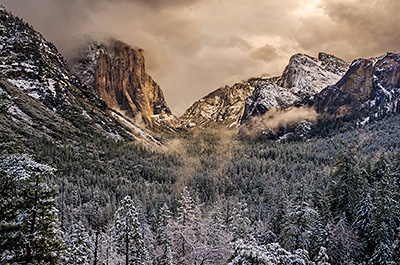
From there I would direct you to drive back down into the valley, drive down around the Cathedral Beach area and stop. Follow one of the many trails leading down to the Merced River and you can shoot El Capitan reflecting in the Merced with some golden light from the early morning sun lighting it up.

Don't spend more then an hour there and then drive on down the road to Swinging Bridge. You can get some nice shots there of Yosemite falls now with some soft light around it.
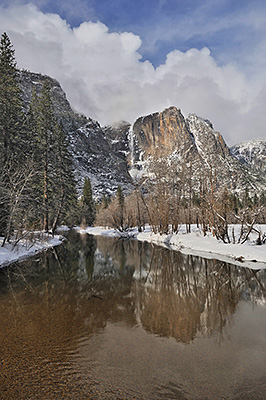
From there you can go eat lunch, explore more. There are views everywhere you look, and you can't go wrong.
Late in the afternoon head down the Northside Drive and go to Gates of Valley or Valley View as its called now. You want to get there early enough that El Capitan and Bridalveil Falls is still being lit up with the sun. There are lot's of photo ops in that area. The light will leave Bridalveil Falls first, and then it will climb up the side of El Capitan.
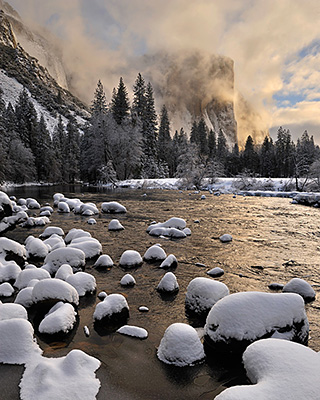
Before the light completely leaves El Capitan, pack up fast. Your next goal is to shoot Half Dome with the sunset climbing up the face of it. You will have 2 options here either go up to Tunnel View and shoot or go back down into the valley to get some tighter shots of the sunset climbing up the face of Half Dome.
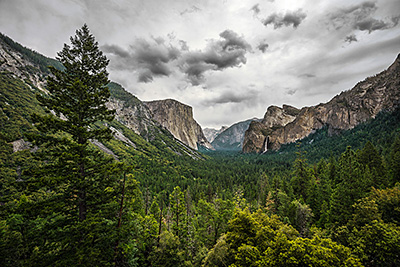
Tunnel View

Stoneman Bridge

Cooks Meadow area towards Lower Yosemite Falls trail.
And these just touch the surface, there really are thousands of awesome compositions and angles for photos available in Yosemite Valley. And of course they all look different at different seasons leading to even more possibilities. And then there are night shots with stars and Milky Ways and even Lunar Rainbows at the waterfalls!

Open your eyes, breath deep and enjoy!
Yosemite is a 4 season park, and one that is visually appealing at all times. Though with that said, the two most popular times for photographers are winter time when the snow lays a white blanket that contrasts very well with the darker leaves and rocks that have managed to stay free from snow. The 2nd most popular time is late spring which is May into the beginning of June. The most popular time with tourists are the summer months. Once schools are let out for summer, the number of people in the park feels like it doubles or triples.
A typical day of photography in Yosemite Valley often starts up at the Tunnel View. It gives a sweeping view of the valley, and a view that was immortalized by Ansel Adams among others. At sunrise, you want to be careful if there are no clouds as the sun will be rising directly into your camera and flaring can become a huge issue. It works best if there are clouds which can help to either block the direct sun shining into your camera or diffuse it enough so that it's not an issue. If there are no clouds, usually it's best to shoot predawn up there before the sun physically becomes visible, it's still bright enough to provide for some great scenes.
From there I would direct you to drive back down into the valley, drive down around the Cathedral Beach area and stop. Follow one of the many trails leading down to the Merced River and you can shoot El Capitan reflecting in the Merced with some golden light from the early morning sun lighting it up.
Don't spend more then an hour there and then drive on down the road to Swinging Bridge. You can get some nice shots there of Yosemite falls now with some soft light around it.
From there you can go eat lunch, explore more. There are views everywhere you look, and you can't go wrong.
Late in the afternoon head down the Northside Drive and go to Gates of Valley or Valley View as its called now. You want to get there early enough that El Capitan and Bridalveil Falls is still being lit up with the sun. There are lot's of photo ops in that area. The light will leave Bridalveil Falls first, and then it will climb up the side of El Capitan.
Before the light completely leaves El Capitan, pack up fast. Your next goal is to shoot Half Dome with the sunset climbing up the face of it. You will have 2 options here either go up to Tunnel View and shoot or go back down into the valley to get some tighter shots of the sunset climbing up the face of Half Dome.
Tunnel View
Stoneman Bridge
Cooks Meadow area towards Lower Yosemite Falls trail.
And these just touch the surface, there really are thousands of awesome compositions and angles for photos available in Yosemite Valley. And of course they all look different at different seasons leading to even more possibilities. And then there are night shots with stars and Milky Ways and even Lunar Rainbows at the waterfalls!
Open your eyes, breath deep and enjoy!


