Thursday’s Task

John Holbrook

Well-Known Member
Thursday's Task 5-30-24-3-Enhanced-SR-Edit.jpg


Thursday’s Task: Visualizing the composition—your interpretation. I’ve seldom created a framing rectangle with my hands, but many years ago (Kodachrome days) I often used an empty 35mm slide mount to visualize possible compositions when afield. I will be gone tomorrow morning so I’m posting this Wednesday evening.

My examples below:

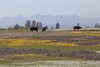
Custer State Park, SD Needing more reach, I switched to a longer lens (200-500 mm @ 210 mm) to gain a tighter composition from my vantage point—keeping a safe distance from the bison.

_DSC5482-NEF_DxO_DeepPRIMEXD-Edit.jpg


Badlands National Park, SD With a 24-70 f2.8 I shot a series of images to create a panorama that I would later crop in post processing. I did shoot several possible “keepers” as one shot compositions, but I liked the possibilities gained by the panoramic images.

_DSC3058-Pano-Edit.jpg


Needles Highway Scenic Overlook, SD Another image shot with the same methods as above but resulting as a panoramic image.

_DSC3587-NEF_DxO_DeepPRIMEXD-Pano-Edit.jpg
 

DES

Well-Known Member
I'm always impressed with the graphics you create to introduce Thursday's Task. I suspect they take quite a bit of time.
 

Trent Watts

Well-Known Member
Here is my contribution to Thursday's Task.
I took this picture back in 2003 with an early digital camera. (Nikon E5700)
When I was looking for pictures of the iconic University Bridge in Saskatoon I came across it and decided it was worth trying some of today's technology to clean it up and re-imagine the scene. I don't remember if this camera had a RAW feature and I just didn't know about that or if jpg was all that was available. In any event the original was a jpg.

Original image.
DSCN1333.jpg


After some straightening, Topas DeNoise, removing a small branch, and colour adjustments I came up with this version.
DSCN1333-Edit.jpg
 

AlanLichty

Moderator
I use a lot of different techniques to frame my shots and here are examples of a few of them.

First up is Zabriskie Point in Death Valley. I was fascinated by the footpaths that have been worn into the tops of all the little ridges below the chocolate colored cap so I set up with a zoom lens and used the most prominent trail as a diagonal line coming out of the lower right of the frame which let me place the chocolate cap in the upper third of the scene.

C5D2_Zabriskie020612.jpg


Setting the Wayback Machine for a shot in Giza back in 1977. We were allowed to wander a bit more freely than I am guessing is the case these days and I found a spot where I could shoot the Sphinx with two of the Pyramids as a backdrop. I have always tried to avoid placing the horizon dead center in the scene so I included more foreground. This also makes the Pyramids feel taller than they looked while standing there. I did remove a small fence from in front of the Sphinx in processing the scanned slide.

SphinxKhafreMenkaure.jpg


For sunrise shots I am usually looking for some anchors on the ground that will help guide your view up into the sunrise color show. In this case I use the foreground rocks down in the lower left and the distant sea stack in the upper right as the anchors with the larger stacks along the cliffs as supporting elements. In this case I probably took a dozen different shots looking for the right combination of incoming waves and the reflections on the sand from the previous wave to fill in the composition. Harris Beach State Park, Oregon.

BrookingsSunrise.jpg


Drones add some new features to play with since it's so easy to move your camera over to get exactly the angle/view you want. This shot is looking downstream at the Columbia River Gorge from just west of the Hood River Bridge on the Washington side of the river. In this case I allowed the river to be almost dead center since there were bends and twists along its path similar to a winding road and the mountains flanking the river are the real subjects.

DJI_M3P_24_GorgeEView030824.jpg


Another aspect to shooting from the air comes into play when you have multiple cameras on the drone to choose from and can choose how to capture your subject. The default 24mm lens on most drones means the typical view is wide and distant subjects are quite small. The Mavic 3 Pro gives me 3 focal lengths so I can pick out which one best suits the subject. Through trial and error I discovered that I could get some really interesting views of Mt. Hood that were more interesting if I kept the drone at a lower altitude so I could use the tree tops to hide all the roof tops in the 50+ miles between my house and the volcano. I also found a spot at roughly 140' above the ground and out over my street where I could use a couple of tall trees to flank Mt. Hood for additional foreground interest. In this case I used 3 shots with a 166mm lens to set up a panorama for the image I wanted.

DJI_M3P_166P_MtHoodSilhouette103123.jpg
 

Trent Watts

Well-Known Member
Superb work Alan. You are a master of creating these compelling images. Your descriptions help me to realize how much thought goes into each image.
 

AlanLichty

Moderator
Superb work Alan. You are a master of creating these compelling images. Your descriptions help me to realize how much thought goes into each image.
Thanks Trent - I like making images that are fun to look at rather than simple snapshots of places I have been.
 

Kyle Jones

Moderator
Here a couple of different methods I've used for composing:

1) I found this composition using my phone the evening before the shoot. I walked around with it to see if I could come up with something that had flowers in the foreground along with a good reflection. The moose wasn't there at the time...
8594 Schwabacher Critters_1200.jpg


2) I composed this one on Photopills, trying to find a time when the stars would line up with the arch at moonset.
8943 Mobius Milky Way_1200.jpg
 

John Holbrook

Well-Known Member
Here is my contribution to Thursday's Task.
I took this picture back in 2003 with an early digital camera. (Nikon E5700)
When I was looking for pictures of the iconic University Bridge in Saskatoon I came across it and decided it was worth trying some of today's technology to clean it up and re-imagine the scene. I don't remember if this camera had a RAW feature and I just didn't know about that or if jpg was all that was available. In any event the original was a jpg.

Original image.
View attachment 72865

After some straightening, Topas DeNoise, removing a small branch, and colour adjustments I came up with this version.
View attachment 72864
Here is my contribution to Thursday's Task.
I took this picture back in 2003 with an early digital camera. (Nikon E5700)
When I was looking for pictures of the iconic University Bridge in Saskatoon I came across it and decided it was worth trying some of today's technology to clean it up and re-imagine the scene. I don't remember if this camera had a RAW feature and I just didn't know about that or if jpg was all that was available. In any event the original was a jpg.

Original image.
View attachment 72865

After some straightening, Topas DeNoise, removing a small branch, and colour adjustments I came up with this version.
View attachment 72864
Beautiful image you’ve shared and great composition!
 

John Holbrook

Well-Known Member
I use a lot of different techniques to frame my shots and here are examples of a few of them.

First up is Zabriskie Point in Death Valley. I was fascinated by the footpaths that have been worn into the tops of all the little ridges below the chocolate colored cap so I set up with a zoom lens and used the most prominent trail as a diagonal line coming out of the lower right of the frame which let me place the chocolate cap in the upper third of the scene.

View attachment 72870

Setting the Wayback Machine for a shot in Giza back in 1977. We were allowed to wander a bit more freely than I am guessing is the case these days and I found a spot where I could shoot the Sphinx with two of the Pyramids as a backdrop. I have always tried to avoid placing the horizon dead center in the scene so I included more foreground. This also makes the Pyramids feel taller than they looked while standing there. I did remove a small fence from in front of the Sphinx in processing the scanned slide.

View attachment 72871

For sunrise shots I am usually looking for some anchors on the ground that will help guide your view up into the sunrise color show. In this case I use the foreground rocks down in the lower left and the distant sea stack in the upper right as the anchors with the larger stacks along the cliffs as supporting elements. In this case I probably took a dozen different shots looking for the right combination of incoming waves and the reflections on the sand from the previous wave to fill in the composition. Harris Beach State Park, Oregon.

View attachment 72872

Drones add some new features to play with since it's so easy to move your camera over to get exactly the angle/view you want. This shot is looking downstream at the Columbia River Gorge from just west of the Hood River Bridge on the Washington side of the river. In this case I allowed the river to be almost dead center since there were bends and twists along its path similar to a winding road and the mountains flanking the river are the real subjects.

View attachment 72873

Another aspect to shooting from the air comes into play when you have multiple cameras on the drone to choose from and can choose how to capture your subject. The default 24mm lens on most drones means the typical view is wide and distant subjects are quite small. The Mavic 3 Pro gives me 3 focal lengths so I can pick out which one best suits the subject. Through trial and error I discovered that I could get some really interesting views of Mt. Hood that were more interesting if I kept the drone at a lower altitude so I could use the tree tops to hide all the roof tops in the 50+ miles between my house and the volcano. I also found a spot at roughly 140' above the ground and out over my street where I could use a couple of tall trees to flank Mt. Hood for additional foreground interest. In this case I used 3 shots with a 166mm lens to set up a panorama for the image I wanted.

View attachment 72874
Great images Alan—thank you for sharing these images and your compositional processes. The Death Valley and Harris Beach images are perhaps my favorites but all are well seen scenes!
 

John Holbrook

Well-Known Member
Here a couple of different methods I've used for composing:

1) I found this composition using my phone the evening before the shoot. I walked around with it to see if I could come up with something that had flowers in the foreground along with a good reflection. The moose wasn't there at the time...
View attachment 72880

2) I composed this one on Photopills, trying to find a time when the stars would line up with the arch at moonset.
View attachment 72881
I couldn’t have said it better than Trent has said above. Exceptional images that reveal the planning required to achieve them—and love the opportune visit by the moose! Thank you for sharing Kyle!
 

Peter Michal

Well-Known Member
Here a couple of different methods I've used for composing:

1) I found this composition using my phone the evening before the shoot. I walked around with it to see if I could come up with something that had flowers in the foreground along with a good reflection. The moose wasn't there at the time...


2) I composed this one on Photopills, trying to find a time when the stars would line up with the arch at moonset.
Kyle, the pictures are beautiful. I like the beautiful nature scene with the moose in the first one. The second picture is excellently done!
What lenses are both images taken with?
 

dan swiger

Well-Known Member
This from my trip to Table Mountain last year
There's a lot of "large" expanse but the detail & content get lost.

The 1st shot is OOC, no crop. The cattle and even the mountain range in the distance are lost to the wildflowers.
5D2_7022_230422w.jpg


With the crop, the flowers fill the lower half of the frame and there's more detail of the flowers .
The cattle & the distant mountains loom larger & there's a better transition in their size & distance

5D2_7022_230422_C2-S1w.jpg
 

Attachments

Last edited:

John Holbrook

Well-Known Member
This from my trip to Table Mountain last year
There's a lot of "large" expanse but the detail & content get lost.

The 1st shot is OOC, no crop. The cattle and even the mountain range in the distance are lost to the wildflowers.
View attachment 72893

With the crop, the flowers fill the lower half of the frame and there's more detail of the flowers .
The cattle & the distant mountains loom larger & there's a better transition in their size & distance

View attachment 72897
Dan, excellent compositional results you achieved with the cropping resulting in a beautiful landscape.
 
Last edited:

Kyle Jones

Moderator
Kyle, the pictures are beautiful. I like the beautiful nature scene with the moose in the first one. The second picture is excellently done!
What lenses are both images taken with?
The image from the Tetons was with the Canon RF 24-105 f/4. The night image was with the Samyang/Rokinon SP 14mm f/2.4.
 

Jameel Hyder

Moderator
Staff member
Late to the party as the past couple of days have been pretty busy. For me its the emotional response I get looking at the scene which leads to the composition. I tend to 'soak in' the place exploring before I even take the camera out. A lot of the composition happens with the camera hand held through the view finder. Only then do I get the tripod set up. It is a bit different with the drone for obvious reasons - the exploration part is lot easier to move around looking for what catches the eye. With the land based shooting, the foreground plays a lot into the composition.

A couple of examples.

Mt Shuksan, early summer. The snow near the shore of the lake provided a nice foreground as well as the reflection of Mt Shuksan.
5DSR6539.jpg


This is drone image from my backyard where the colors in the sky and Mt Rainier both took center stage.
DJI_20231213073251_0006_D.jpg
 

John Holbrook

Well-Known Member
Late to the party as the past couple of days have been pretty busy. For me its the emotional response I get looking at the scene which leads to the composition. I tend to 'soak in' the place exploring before I even take the camera out. A lot of the composition happens with the camera hand held through the view finder. Only then do I get the tripod set up. It is a bit different with the drone for obvious reasons - the exploration part is lot easier to move around looking for what catches the eye. With the land based shooting, the foreground plays a lot into the composition.

A couple of examples.

Mt Shuksan, early summer. The snow near the shore of the lake provided a nice foreground as well as the reflection of Mt Shuksan.
View attachment 72909

This is drone image from my backyard where the colors in the sky and Mt Rainier both took center stage.
View attachment 72910
Jameel, thank your for your composition commentary and the two gorgeous images—Mt. Shuskan is perfect for this Task…and any other occasion! And about your second image—you have a beautiful backyard view! It’s nice you and other members have shared these compositional thoughts.
 
Top Bottom