

AlanLichty
Moderator
The Palace and the Corinthian Tombs along the east side of Petra are two of the more prominent facades you can see from the Petra basin. I could see them every day from the excavations where I worked. This first image was taken with a telephoto lens from near my site. The sandstones of Petra are relatively soft and for folks familiar with the Canyonlands area the texture is quite similar to the Navajo sandstone formation and relatively easy to carve. Also easy to erode.
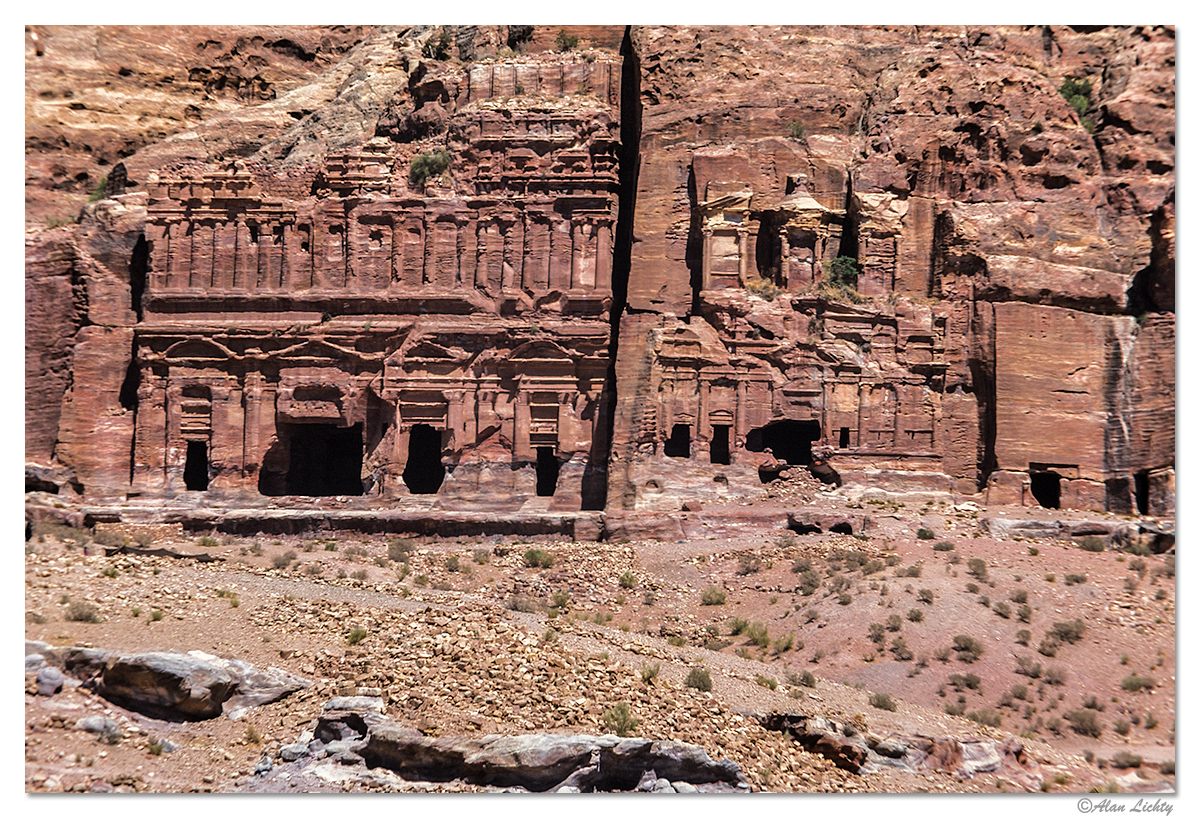
The Corinthian Tomb is on the right and bears some semblance to the Khasneh in the Siq. The Palace Tomb on the left is more elaborate and better preserved although both have taken a beating between the weather and earthquakes with the latter being the dominant force.
Petra sits snuggled up to the eastern escarpment of the Rift Valley which is also known as the Wadi Araba this far north. The area has had at least 4 major earthquakes within the past 2000 years with 3 of them occurring while the city was still occupied. Each of them was also major enough to create fractures in the sandstone in the facades so the weather had a head start. Each was also major enough to flatten buildings in the area. In my own work I had to deal with the destruction of 3 of those quakes in the deposits covering the temple structure (Temple of the Winged Lions).
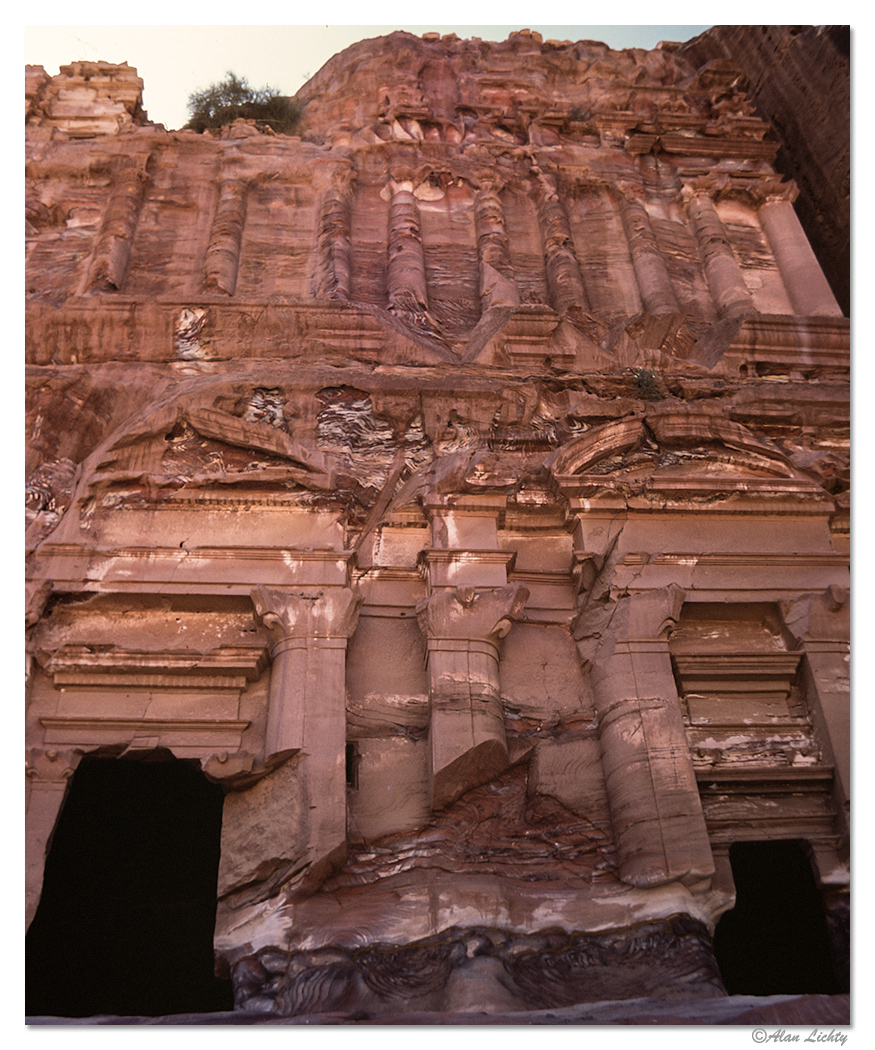
In spite of the beauty of the sandstone in Petra the Nabataeans were quite fond of plaster and paint to cover just about everything so as you look at anything left standing in the place you have a mix of plastered/painted surfaces that remained along with the raw sandstone and some level of desert varnish. This becomes more clear with a closer look at the Palace Tomb facade. This is from directly below the facade.
An even closer view reveals the painted surfaces where the weather hasn't eliminated the evidence.
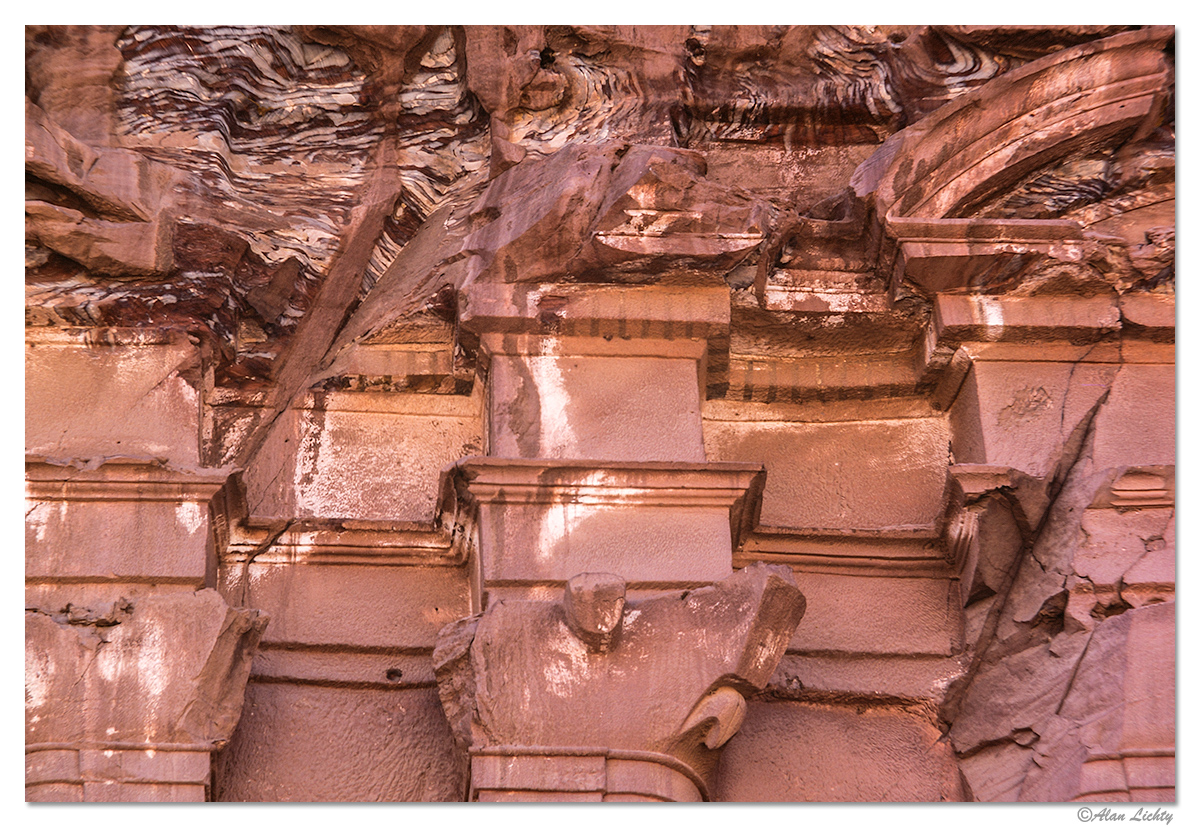
This also shows the discontinuities in the sandstone itself since this facade consists entirely of the sculpted stone on the face of this cliff.
Just because something is carved in stone doesn't make it permanent a couple of thousand years later....
C&C always welcome.
The Corinthian Tomb is on the right and bears some semblance to the Khasneh in the Siq. The Palace Tomb on the left is more elaborate and better preserved although both have taken a beating between the weather and earthquakes with the latter being the dominant force.
Petra sits snuggled up to the eastern escarpment of the Rift Valley which is also known as the Wadi Araba this far north. The area has had at least 4 major earthquakes within the past 2000 years with 3 of them occurring while the city was still occupied. Each of them was also major enough to create fractures in the sandstone in the facades so the weather had a head start. Each was also major enough to flatten buildings in the area. In my own work I had to deal with the destruction of 3 of those quakes in the deposits covering the temple structure (Temple of the Winged Lions).
In spite of the beauty of the sandstone in Petra the Nabataeans were quite fond of plaster and paint to cover just about everything so as you look at anything left standing in the place you have a mix of plastered/painted surfaces that remained along with the raw sandstone and some level of desert varnish. This becomes more clear with a closer look at the Palace Tomb facade. This is from directly below the facade.
An even closer view reveals the painted surfaces where the weather hasn't eliminated the evidence.
This also shows the discontinuities in the sandstone itself since this facade consists entirely of the sculpted stone on the face of this cliff.
Just because something is carved in stone doesn't make it permanent a couple of thousand years later....
C&C always welcome.

