

AlanLichty
Moderator
Petra was a pretty quiet place after the city was abandoned after a large earthquake in 551 AD leveled what was left of the place. Mostly a place for goat herders.
Until 1115 AD when Baldwin I marched in with crusaders from Europe and built a small fort on top of Jebel Habis at the west end of the city ruins. Not very impressive but we did find pottery from this settlement. It was easily recognizable since it was pretty crude as ceramics go and looked nothing like the local products. The occupation was rather brief in Petra itself but a much larger fort was built at the same time farther north in the city of Kerak. That was a much more impressive edifice I will show in another thread. The stone fort in Petra (often described as the Wadi Musa castle) was abandoned sometime around 1276 AD and Petra once again became a realm for the bedouin tribes.
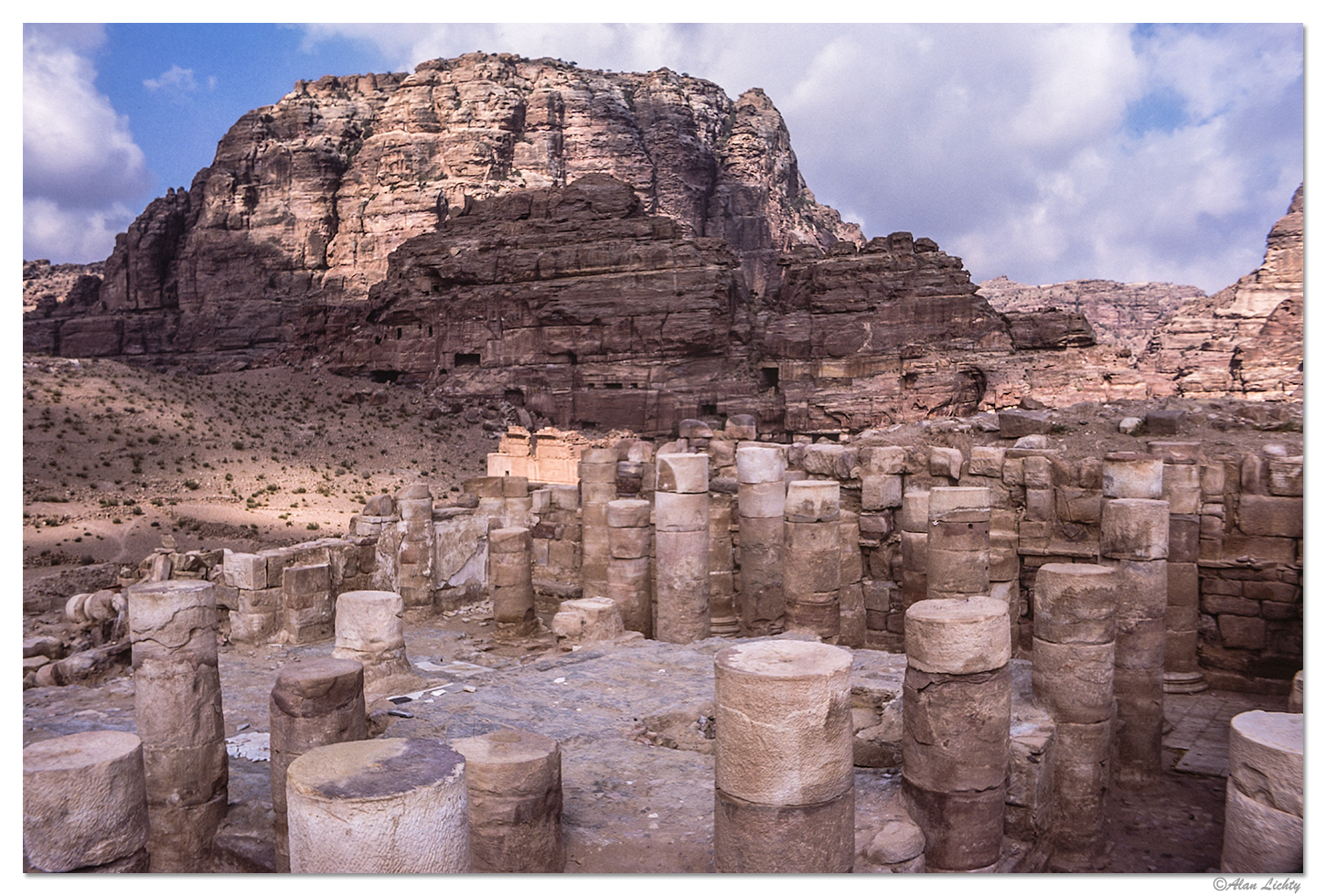
This is a view of Jebel Habis as seen from the Temple of the Winged Lions where I was working. The rare summertime clouds did a nice job of shading Jebel Habis so it can be distinguished from the much larger Umm al-Biyara (Mother of Cisterns) behind Habis.
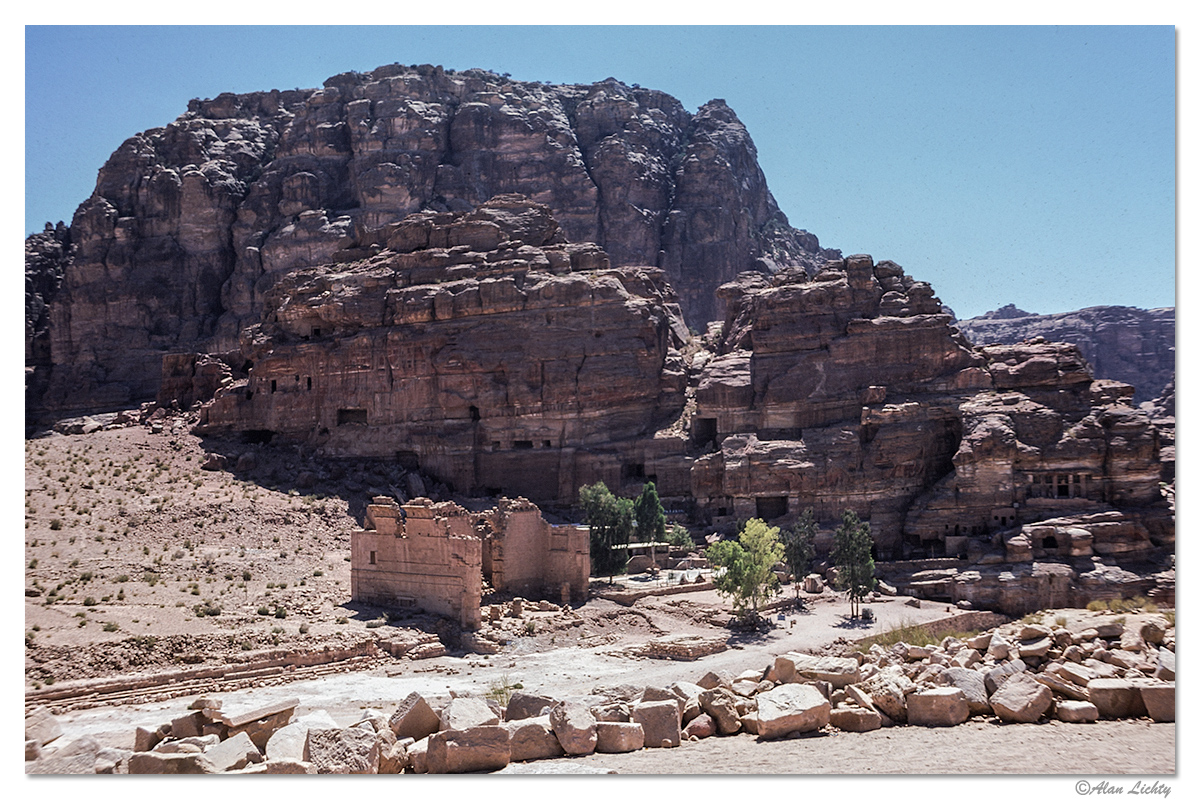
A shot from below the temple gives a better view of the mountains with Qasr al-bint in front below and Nazzal's Camp where we were staying behind it.
If you climb up on Umm al-Biyara looking back at Jebel Habis you can see the remains of the crusader fort walls on the top of the ridge as well as just along a ridge below.
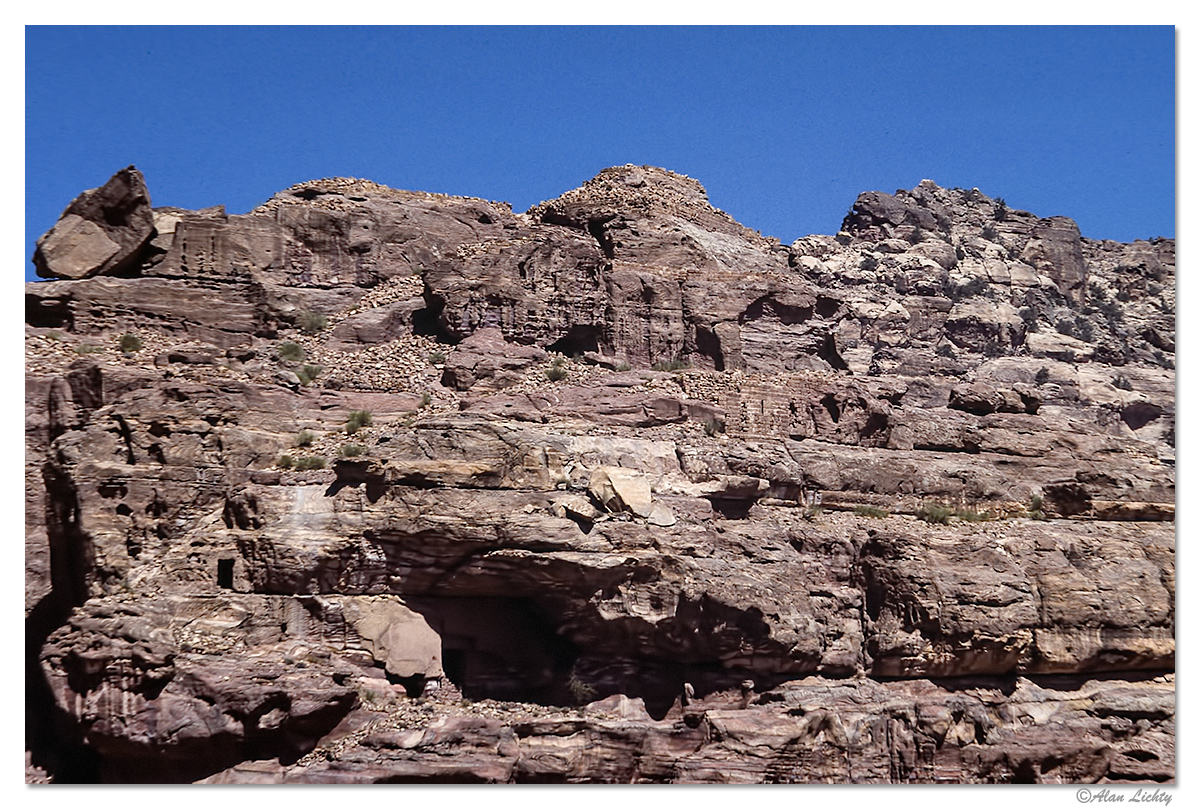
The piles of building stone scattered across the ledges below the summit attest to perils of unreinforced masonry construction in serious earthquake country.
C&C always welcome.
Until 1115 AD when Baldwin I marched in with crusaders from Europe and built a small fort on top of Jebel Habis at the west end of the city ruins. Not very impressive but we did find pottery from this settlement. It was easily recognizable since it was pretty crude as ceramics go and looked nothing like the local products. The occupation was rather brief in Petra itself but a much larger fort was built at the same time farther north in the city of Kerak. That was a much more impressive edifice I will show in another thread. The stone fort in Petra (often described as the Wadi Musa castle) was abandoned sometime around 1276 AD and Petra once again became a realm for the bedouin tribes.
This is a view of Jebel Habis as seen from the Temple of the Winged Lions where I was working. The rare summertime clouds did a nice job of shading Jebel Habis so it can be distinguished from the much larger Umm al-Biyara (Mother of Cisterns) behind Habis.
Umm al-Biyara
A view of Umm al-Biyara (mother of cisterns) from the Winged Lion Temple site. Petra, Jordan.
A shot from below the temple gives a better view of the mountains with Qasr al-bint in front below and Nazzal's Camp where we were staying behind it.
If you climb up on Umm al-Biyara looking back at Jebel Habis you can see the remains of the crusader fort walls on the top of the ridge as well as just along a ridge below.
The piles of building stone scattered across the ledges below the summit attest to perils of unreinforced masonry construction in serious earthquake country.
C&C always welcome.


