

Comet Hunter
Supporting Member
So I am getting close to the end of my Travelog for the Middle East. After this post, I have only one stop left
When the State Dpt said all americans need to leave the Middle East, we had 2 days left before our flights were schedualed.
This tour stop was on day 1 of those 2 last days
Abu-Simbel
Built 1264 – 1244 BCE
Built on the west bank of the Nile River, between the first and second cataracts of the Nile, the site of Abu Simbel is one of the most recognizable ancient sites in Egypt. It contains two temples, carved into a mountainside, that were built by Pharaoh Ramses II (1303-1213 BCE), also known as Ramses the Great.
The larger of the two temples contains four colossal statues of a seated Ramses II at its entrance, each about 69 feet (21 meters) tall. The entranceway to the temple was built in such a way that on two days of the year, October 22 and February 22, the light would shine into the inner sanctuary and light up three statues seated on a bench, including one of the pharaoh. It’s been hypothesized that the sun shining inside on these dates may commemorate his coronation and birth.
In addition to the main temple, Abu Simbel has a second, smaller, temple that was probably built for Queen Nefertari. Its front includes two statues of the queen and four of the pharaoh, each about 33 feet (10 meters) in height. Each is set between buttresses carved with hieroglyphs.
Abu Simbel was built to be an imposing message to unwelcome visitors traveling on the Nile – Pharaoh is mighty and owns everything past this point, so respect his authority.
(This note it WILD): Abu Simbel today is no longer in the same location as it was in ancient times. The area where the temples were originally located is now flooded. The temples were moved and raised to escape the rising water caused by the construction of the Aswan High Dam, built between 1960 and 1970. Between 1964 and 1968, the temples were dismantled and relocated on an artificial hill made from a domed structure that is 200 feet (64 meters) above and 600 feet (180 meters) west of their original site. This relocation project, completed under the direction of UNESCO, is one of the most impressive engineering feats in history.
# 1
The main Temple It's crazy to think they cut all this into pieces and moved these 2 temples. Can't really see it from this perspective, but in the back, they had to build a mountain behind this thing to support its weight. Their are some videos online showing the relocation project.
* Another interesting note! The statue (2nd from the left) which is damaged, the storey goes Ramses the 2 was alive when this statue was hit by lighting. His builders asked if they should repair the statue and he said no! Its was damaged by the gods and he wasn't going to go against thier will! When they relocated the temple, the relocated the damaged statue just as it was originally

# 2
The main entrance

# 3 The primary fertility god depicted in the Great Temple of Abu Simbel is Min, the ancient Egyptian god of reproduction, fertility, and harvest. He is shown in relief carvings with an erect phallus, holding a flail, and receiving offerings from Pharaoh Ramesses II.
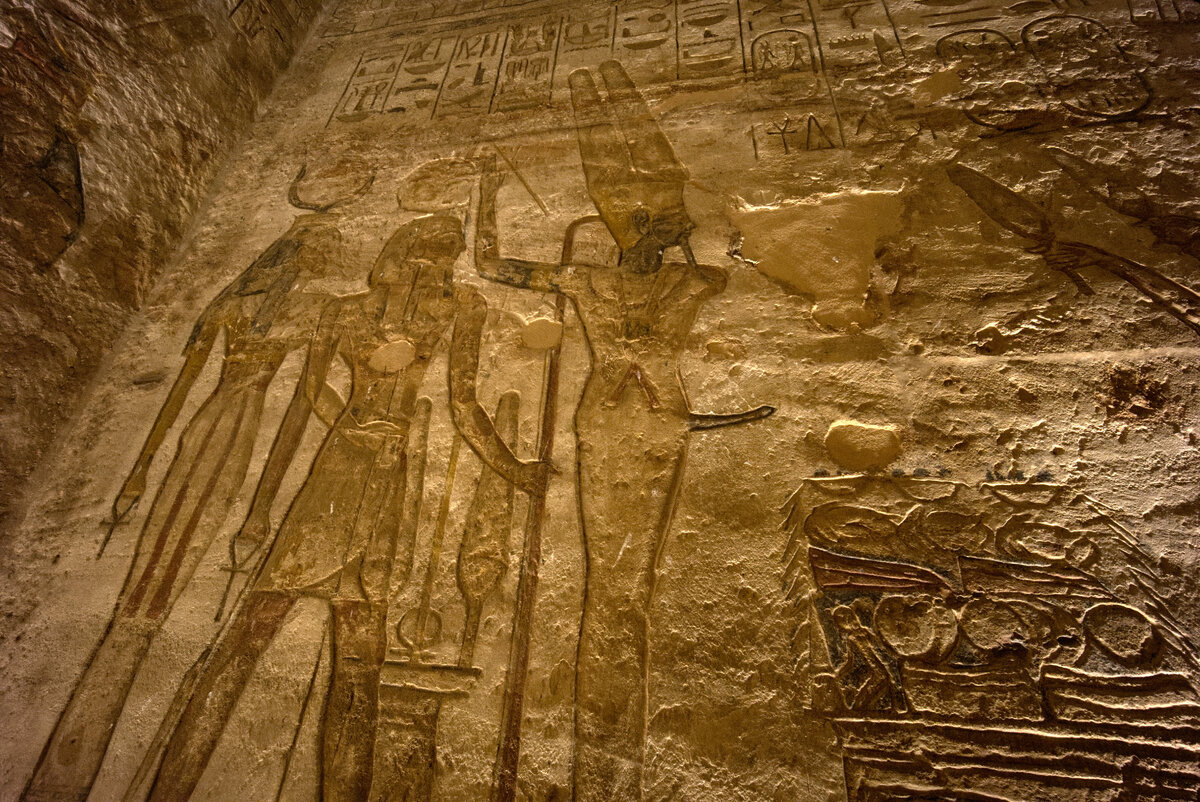
# 4 someone getting smited in battle
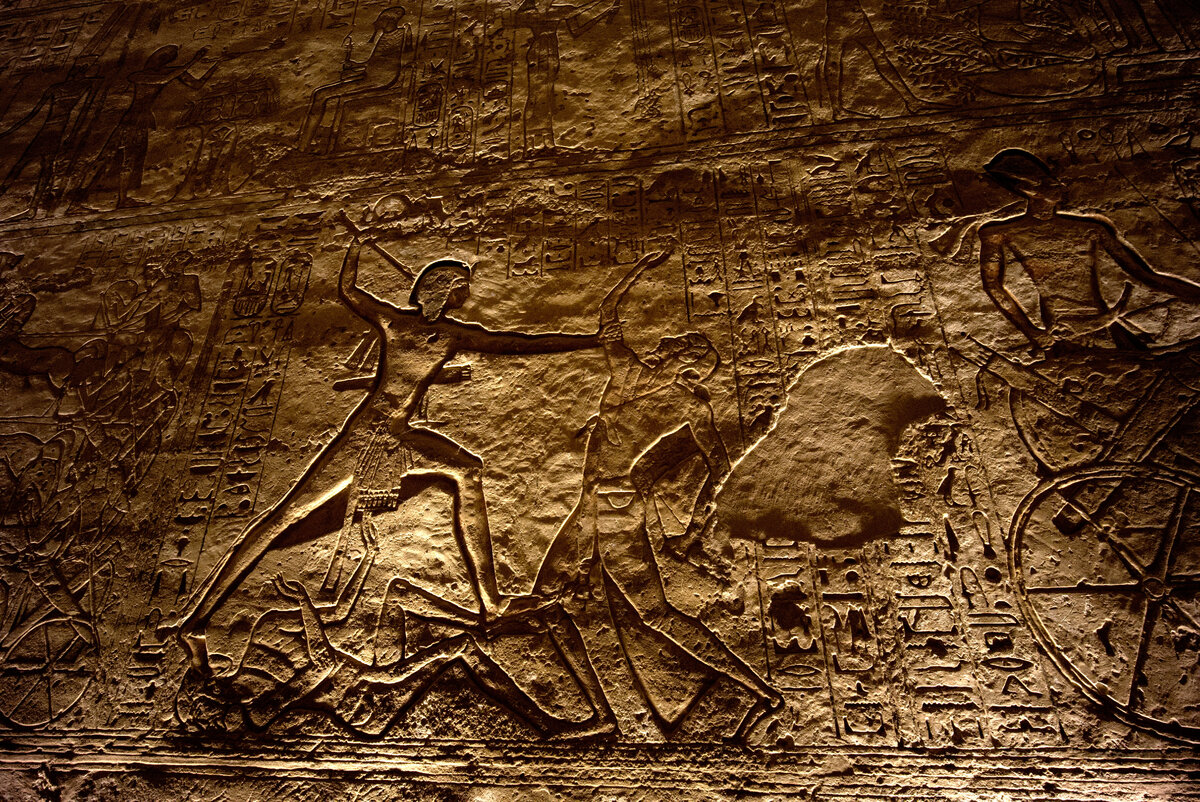
# 5 someone else getting smited. He is telling a compelling story for sure
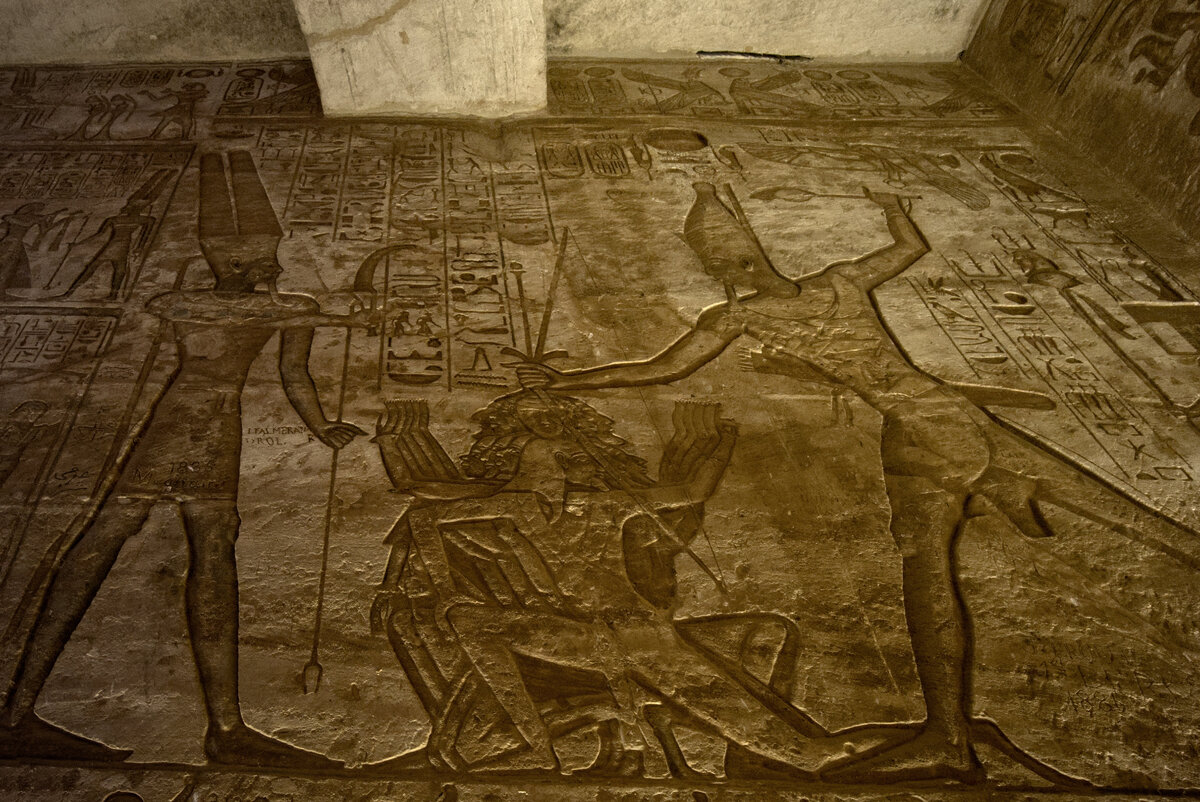
# 6
Inside the temple looking to my right

# 7 and this one is looking left at 180 deg
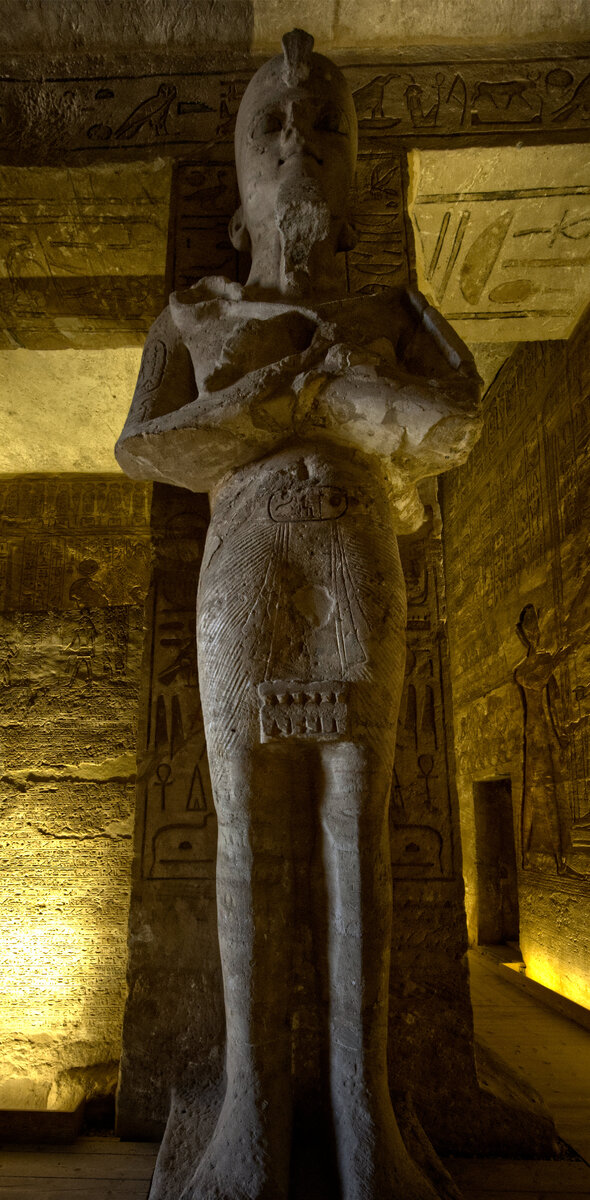
# 8
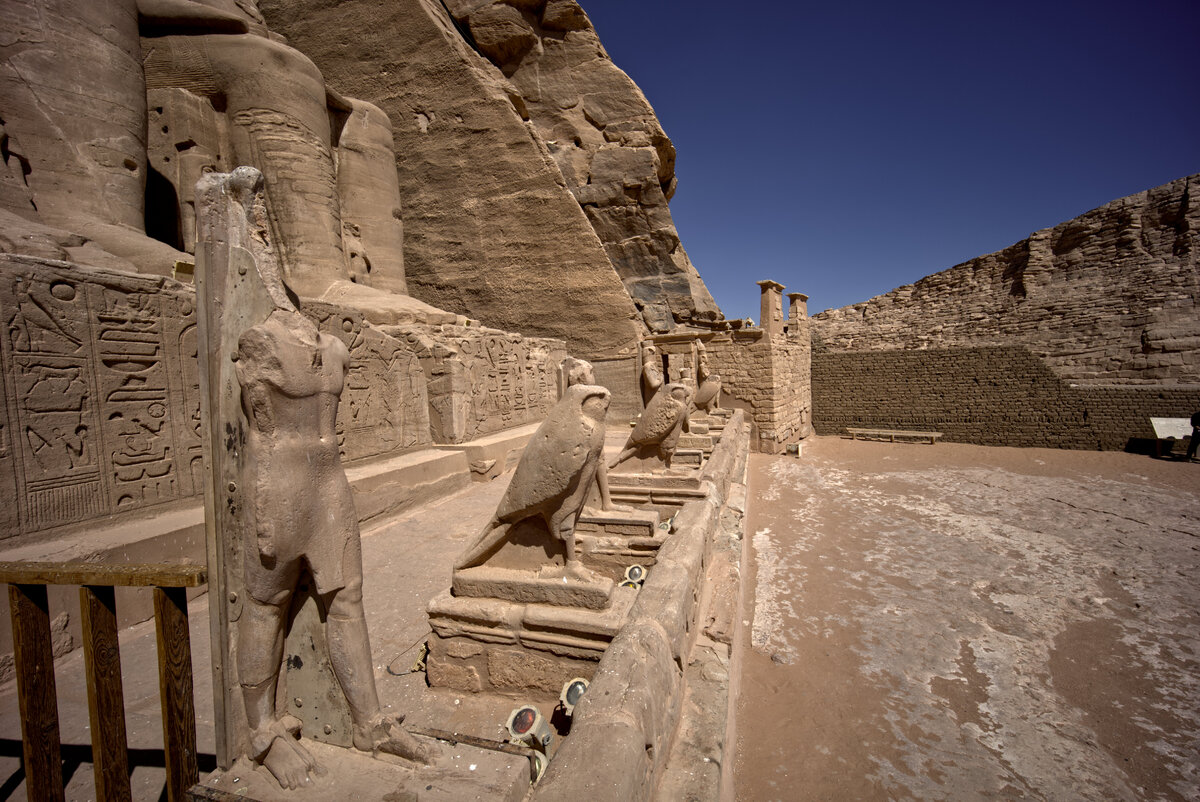
Exiting the Temple, Falcons standing guard
# 9
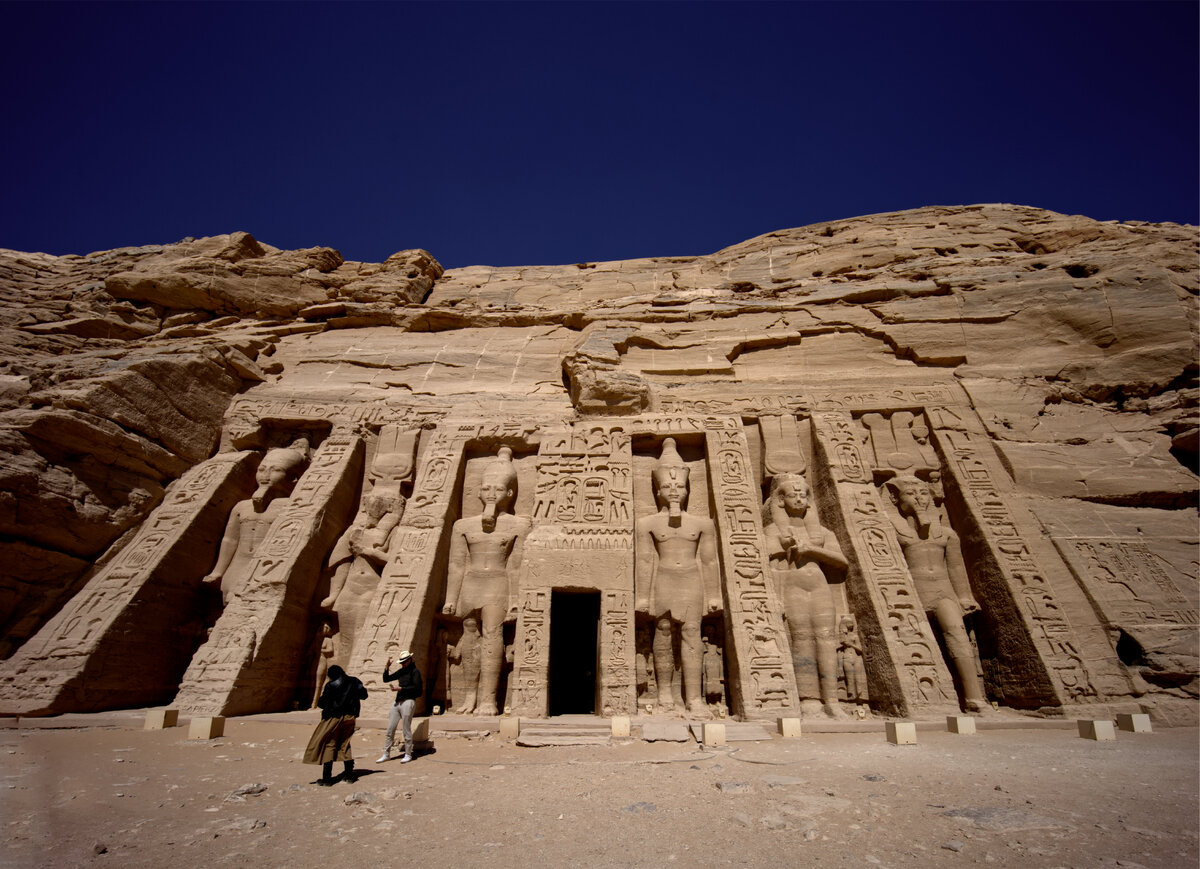
In addition to the main temple, Abu Simbel has a second, smaller, temple that was built for Queen Nefertari. Its front includes two statues of the queen and four of the pharaoh, each about 33 feet (10 meters) in height. Each is set between buttresses carved with hieroglyphs.
You can tell by the size of the people its much smaller and not much inside
# 10
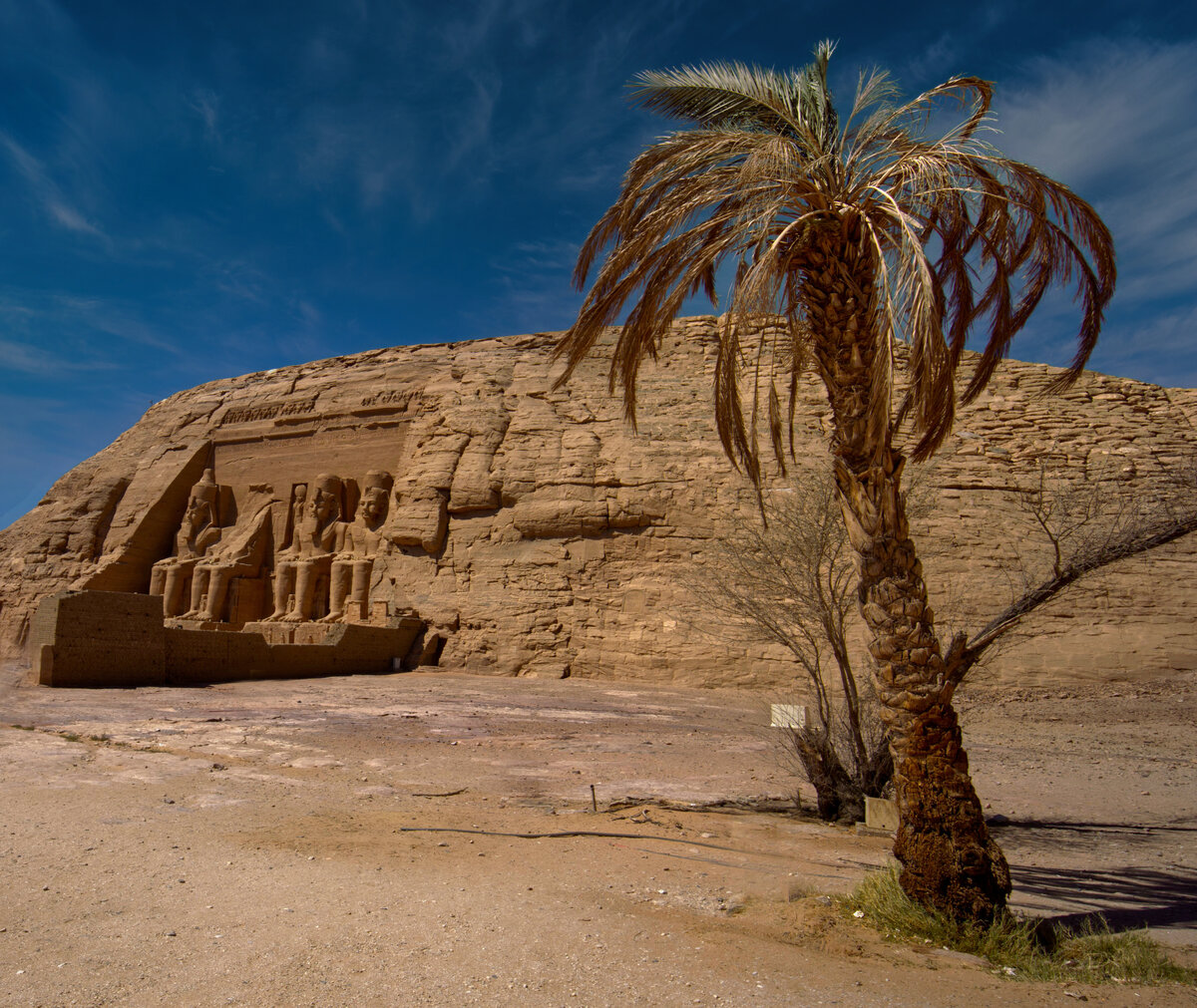
Last picture of this stop and one of my favorite images of the trip, Looking back from Queen Nefertaris monument toward Ramses the 2nd moument and I think the only palm tree on the complex
When the State Dpt said all americans need to leave the Middle East, we had 2 days left before our flights were schedualed.
This tour stop was on day 1 of those 2 last days
Abu-Simbel
Built 1264 – 1244 BCE
Built on the west bank of the Nile River, between the first and second cataracts of the Nile, the site of Abu Simbel is one of the most recognizable ancient sites in Egypt. It contains two temples, carved into a mountainside, that were built by Pharaoh Ramses II (1303-1213 BCE), also known as Ramses the Great.
The larger of the two temples contains four colossal statues of a seated Ramses II at its entrance, each about 69 feet (21 meters) tall. The entranceway to the temple was built in such a way that on two days of the year, October 22 and February 22, the light would shine into the inner sanctuary and light up three statues seated on a bench, including one of the pharaoh. It’s been hypothesized that the sun shining inside on these dates may commemorate his coronation and birth.
In addition to the main temple, Abu Simbel has a second, smaller, temple that was probably built for Queen Nefertari. Its front includes two statues of the queen and four of the pharaoh, each about 33 feet (10 meters) in height. Each is set between buttresses carved with hieroglyphs.
Abu Simbel was built to be an imposing message to unwelcome visitors traveling on the Nile – Pharaoh is mighty and owns everything past this point, so respect his authority.
(This note it WILD): Abu Simbel today is no longer in the same location as it was in ancient times. The area where the temples were originally located is now flooded. The temples were moved and raised to escape the rising water caused by the construction of the Aswan High Dam, built between 1960 and 1970. Between 1964 and 1968, the temples were dismantled and relocated on an artificial hill made from a domed structure that is 200 feet (64 meters) above and 600 feet (180 meters) west of their original site. This relocation project, completed under the direction of UNESCO, is one of the most impressive engineering feats in history.
# 1
The main Temple It's crazy to think they cut all this into pieces and moved these 2 temples. Can't really see it from this perspective, but in the back, they had to build a mountain behind this thing to support its weight. Their are some videos online showing the relocation project.
* Another interesting note! The statue (2nd from the left) which is damaged, the storey goes Ramses the 2 was alive when this statue was hit by lighting. His builders asked if they should repair the statue and he said no! Its was damaged by the gods and he wasn't going to go against thier will! When they relocated the temple, the relocated the damaged statue just as it was originally
# 2
The main entrance
# 3 The primary fertility god depicted in the Great Temple of Abu Simbel is Min, the ancient Egyptian god of reproduction, fertility, and harvest. He is shown in relief carvings with an erect phallus, holding a flail, and receiving offerings from Pharaoh Ramesses II.
# 4 someone getting smited in battle
# 5 someone else getting smited. He is telling a compelling story for sure
# 6
Inside the temple looking to my right
# 7 and this one is looking left at 180 deg
# 8
Exiting the Temple, Falcons standing guard
# 9
In addition to the main temple, Abu Simbel has a second, smaller, temple that was built for Queen Nefertari. Its front includes two statues of the queen and four of the pharaoh, each about 33 feet (10 meters) in height. Each is set between buttresses carved with hieroglyphs.
You can tell by the size of the people its much smaller and not much inside
# 10
Last picture of this stop and one of my favorite images of the trip, Looking back from Queen Nefertaris monument toward Ramses the 2nd moument and I think the only palm tree on the complex
Last edited:

