

Douglas Sherman
Staff
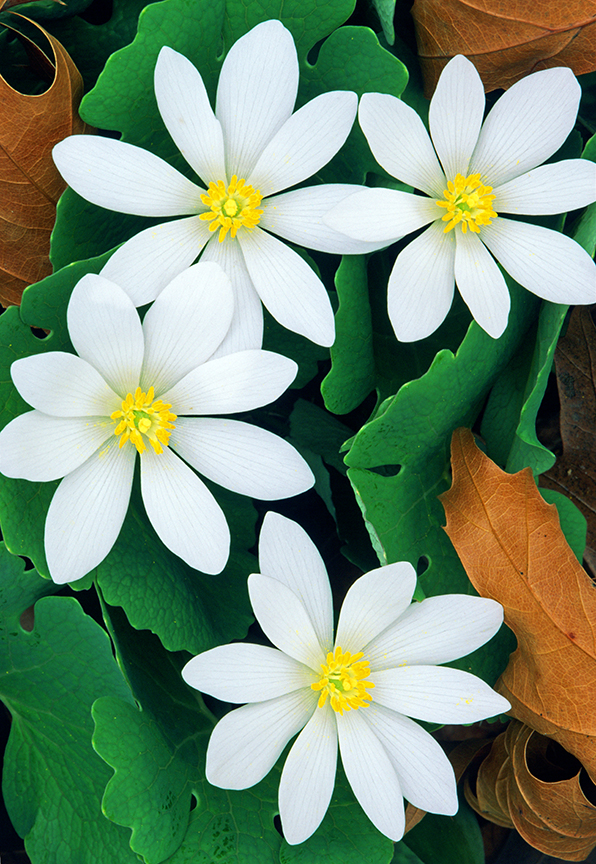
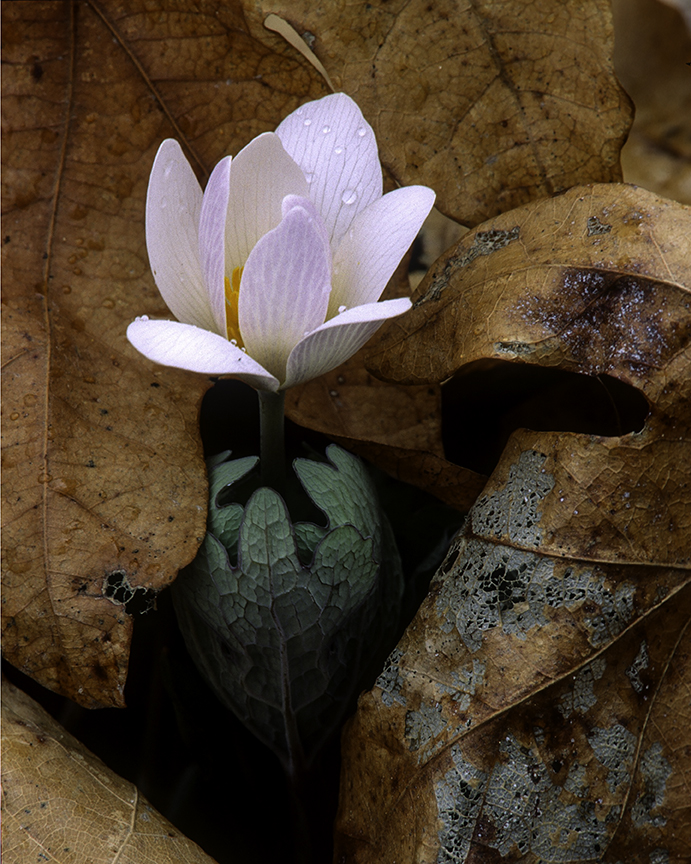
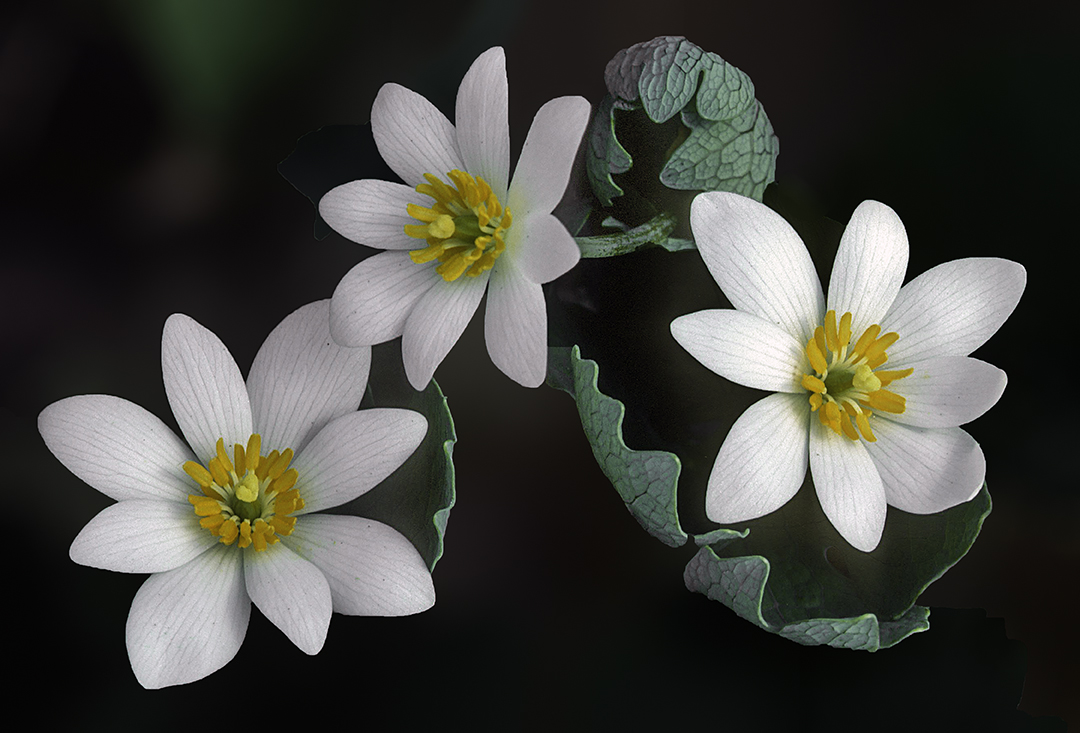
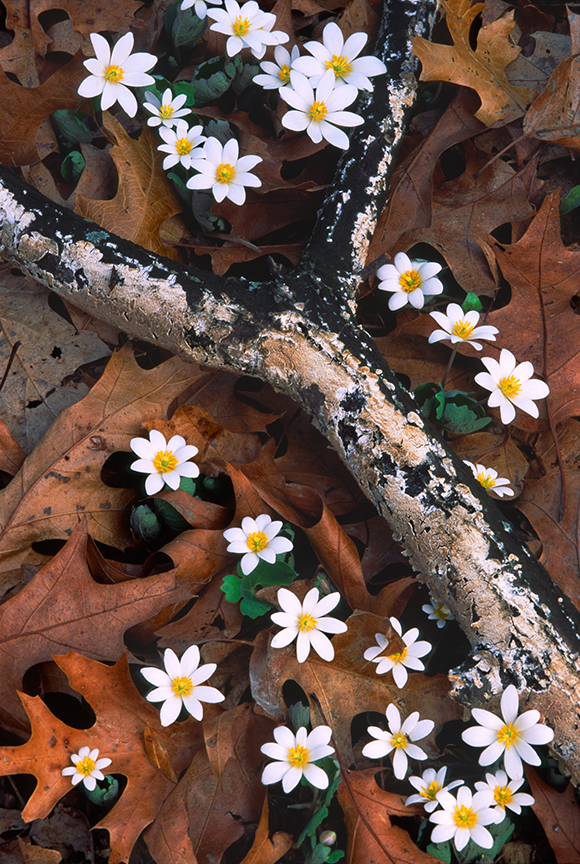
One of the first MIdwest flowers to bloom each spring is the beautiful Bloodroot. Its pristine white petals contrast nicely with its bright yellow stamens to create a simple yet exquisite bloom on the woodland floor.
Bloodroot also has beautifully textured leaves which grow up to five inches across after the plant is finished blooming. Initially, the leaves wrap around the flower bud then spread out to form a much larger surface. This allows the plant to capture enough light to conduct photosynthesis after the woodland canopy blocks most of the sun's rays from reaching the woodland floor.
Broken roots and flower stems emit a bright red fluid which looks like blood, hence the genetic name Sanguinaria.
Please pile on with your flower images
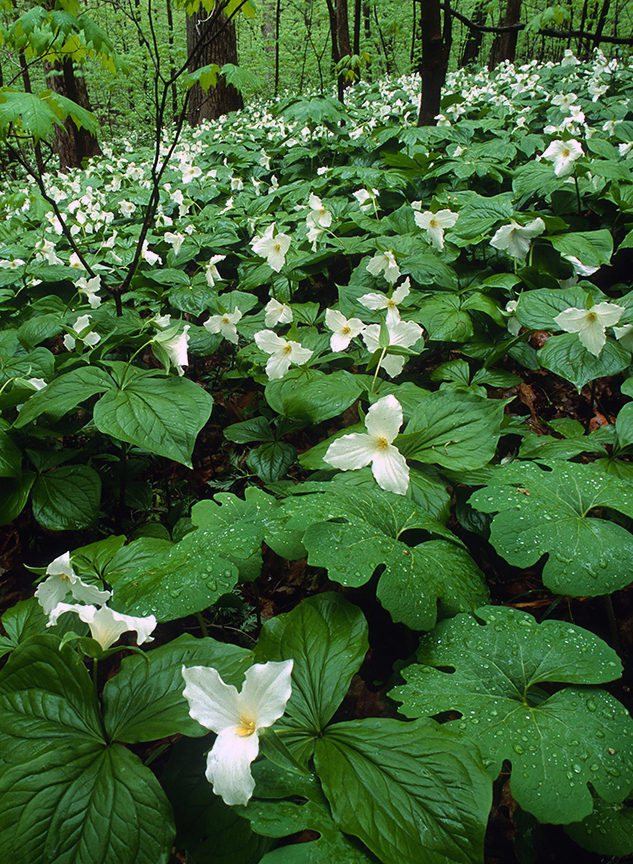
Large Bloodroot leaves can be seen amongst Large White Trillium. Notice that the trees have already leafed out.
Bloodroot also has beautifully textured leaves which grow up to five inches across after the plant is finished blooming. Initially, the leaves wrap around the flower bud then spread out to form a much larger surface. This allows the plant to capture enough light to conduct photosynthesis after the woodland canopy blocks most of the sun's rays from reaching the woodland floor.
Broken roots and flower stems emit a bright red fluid which looks like blood, hence the genetic name Sanguinaria.
Please pile on with your flower images
Large Bloodroot leaves can be seen amongst Large White Trillium. Notice that the trees have already leafed out.
Last edited:


