

This image was supposed to be impossible. 
Of course it's awesome that my Astro Lucky streak continues as I was lucky to be able to capture this one. I had gone out last Tuesday to Joshua Tree for a 2nd test on my new iOptron Gem28 Astro mount. I had a few things I needed to iron out, so that was my goal, I had figured I would wrap things up by 7:30pm or so and head back home. Of course if you have seen my timelapse, my eternal optimism had lead me to set up 2 of my cameras shooting timelapses in the night sky, also despite the 73% moon which was really washing out so many stars.
After I did my tests on the new Gem28, I decided what the heck, let me aim it at Orion and see how well it does at aiming at it and then tracking with it. When I saw Orion showing up really well after a test image, I decided that since I was already there and set up, I might as well take some more test images just to see. And anyway, I had 2 cameras doing timelapses, I might as well let me shoot a while longer...
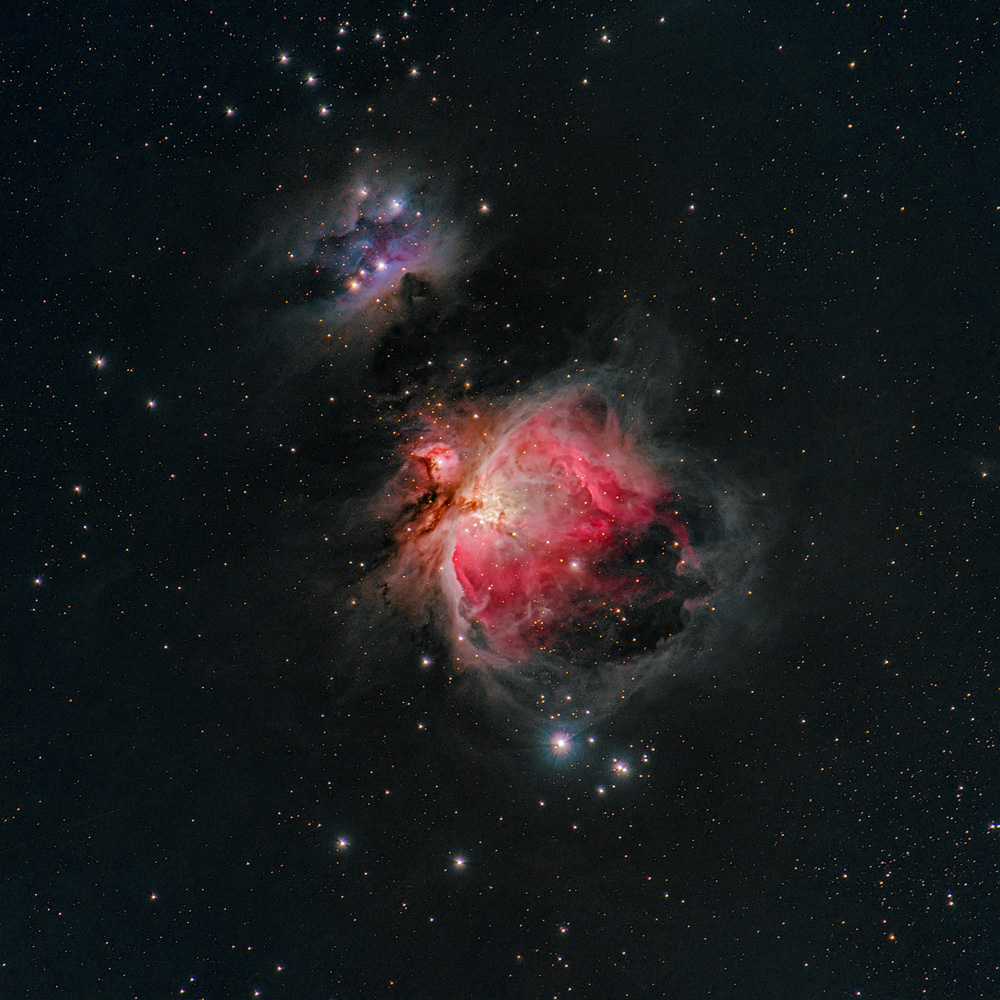
So this is the result of imaging Orion. The main thing that struck me is that the color that surrounds the Orion core (normally blue for me) was not there. I could see the shape of the nebula, but it was absent of color in that outer area. The core area was still filled with a lot of red, which was awesome. So my guess for the lack of color in the nebula area surrounding it (along with Running Man) was that the moonlight washed it out. I have seen others come up with similar images, so I actually was quite happy with the look as it's again different. Not intentionally, but non the less, it is different and a bit cool to my thinking. Thankfully I was once again lucky!
iOptron Gem28 - Tracking
Nikon D850 - Not Modified
Tamron 150-600mm @ 600mm
30 - Light Frames @ ISO 64, 45 secs, f6.3
35 - Flat Frames
46 - Dark Frames
36 - Bias Frames
All comments are welcome,
Jim
#1 - Processed
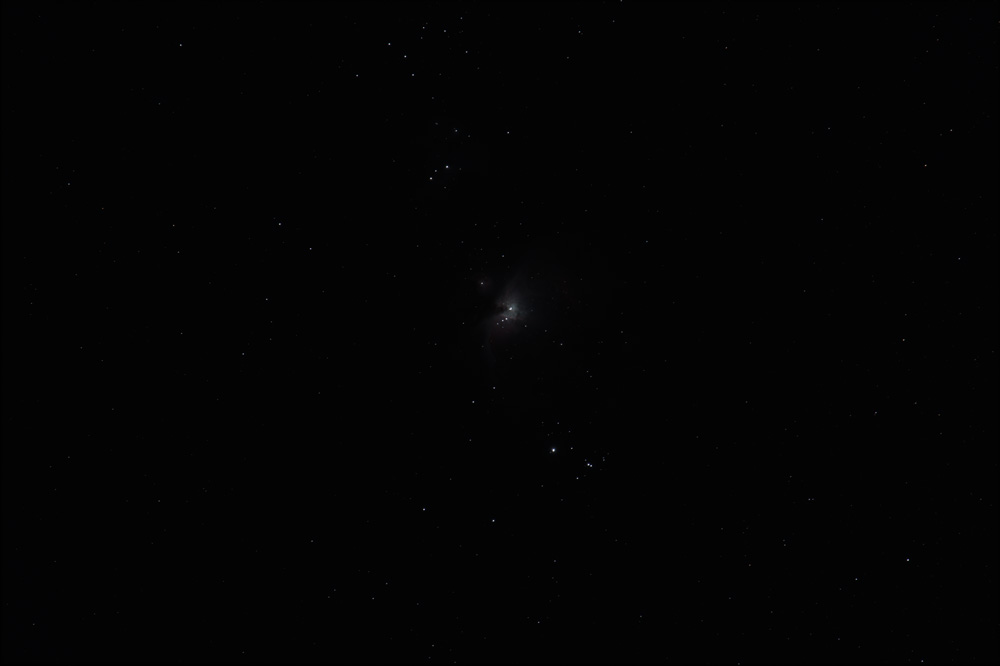
#2 - Graeme was asking about the Original, so here is the Original that was stacked in Deep Sky Stacker and includes the Lights, Darks, Flats and Bias frames. There has been no processing to this other then converting to 8bit and downsizing to 1000 pix wide.
Of course it's awesome that my Astro Lucky streak continues as I was lucky to be able to capture this one. I had gone out last Tuesday to Joshua Tree for a 2nd test on my new iOptron Gem28 Astro mount. I had a few things I needed to iron out, so that was my goal, I had figured I would wrap things up by 7:30pm or so and head back home. Of course if you have seen my timelapse, my eternal optimism had lead me to set up 2 of my cameras shooting timelapses in the night sky, also despite the 73% moon which was really washing out so many stars.
After I did my tests on the new Gem28, I decided what the heck, let me aim it at Orion and see how well it does at aiming at it and then tracking with it. When I saw Orion showing up really well after a test image, I decided that since I was already there and set up, I might as well take some more test images just to see. And anyway, I had 2 cameras doing timelapses, I might as well let me shoot a while longer...
So this is the result of imaging Orion. The main thing that struck me is that the color that surrounds the Orion core (normally blue for me) was not there. I could see the shape of the nebula, but it was absent of color in that outer area. The core area was still filled with a lot of red, which was awesome. So my guess for the lack of color in the nebula area surrounding it (along with Running Man) was that the moonlight washed it out. I have seen others come up with similar images, so I actually was quite happy with the look as it's again different. Not intentionally, but non the less, it is different and a bit cool to my thinking. Thankfully I was once again lucky!
iOptron Gem28 - Tracking
Nikon D850 - Not Modified
Tamron 150-600mm @ 600mm
30 - Light Frames @ ISO 64, 45 secs, f6.3
35 - Flat Frames
46 - Dark Frames
36 - Bias Frames
All comments are welcome,
Jim
#1 - Processed
#2 - Graeme was asking about the Original, so here is the Original that was stacked in Deep Sky Stacker and includes the Lights, Darks, Flats and Bias frames. There has been no processing to this other then converting to 8bit and downsizing to 1000 pix wide.
Last edited:


